How About An Adventure? Summer Reading to Take You Away.

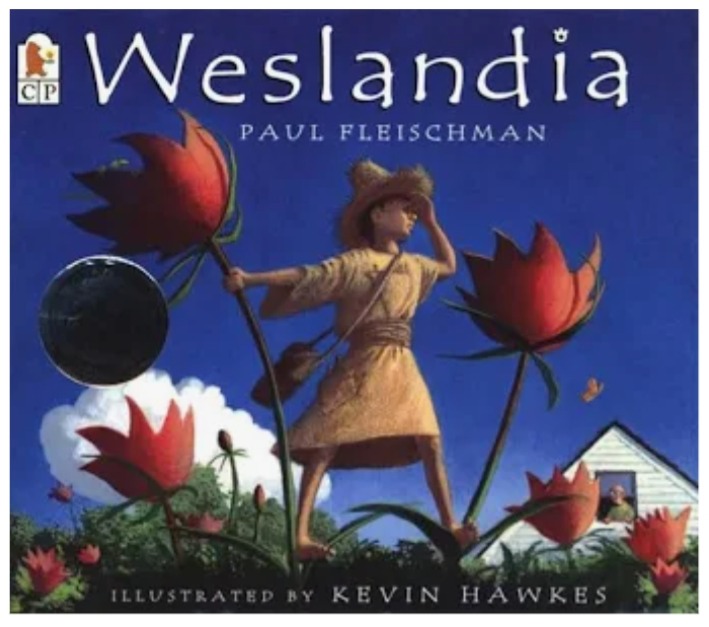
Weslandia by Paul Fleischman Illustrated by Keven Hawkes c2002 Candlewick Press

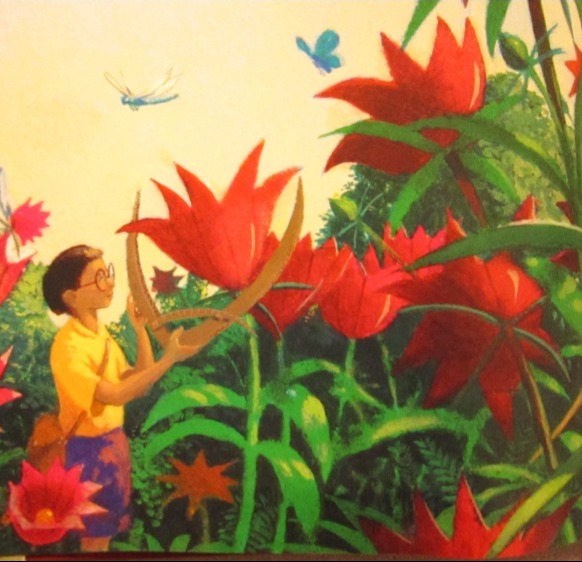
Some children spend summer vacation at soccer camp or on a family trip, but Wesley has a plan. Why not create your own civilization? Instead of hanging around with the schoolmates who torment him, Wesley tends a new crop of strange plants from which he creates special ink for writing a new language, uses the fibers to create cool and comfortable clothing, builds himself a shelter, and names his world Weslandia. New and challenging games are to be invented and creative possibilities present themselves each day. No boredom can exist for long in this fascinating and colorful neighborhood.

Wesley assesses the growth of his flourishing plants.

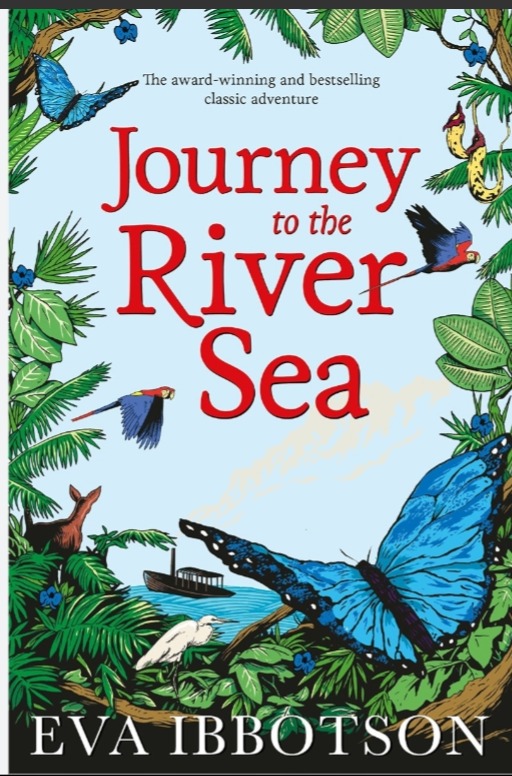
Journey to the River Sea by Eva Ibbotson Originally published by Macmillan Children’s Books : London c2001

Orphan Maia never dreamed she would be leaving her comfortable London boarding school to live with relatives in Brazil. When her relatives who live on a rubber plantation turn out to be unpleasant and unkind and have no interest in learning about the world of the Amazon river that surrounds them, Maia is very unhappy. Sometimes those who have courage and strength during difficulties are rewarded. New friends and a boat journey on the largest river system in the world bring Maia in touch with new possibilities. Eva Ibbotson takes her readers on an unforgettable trip.

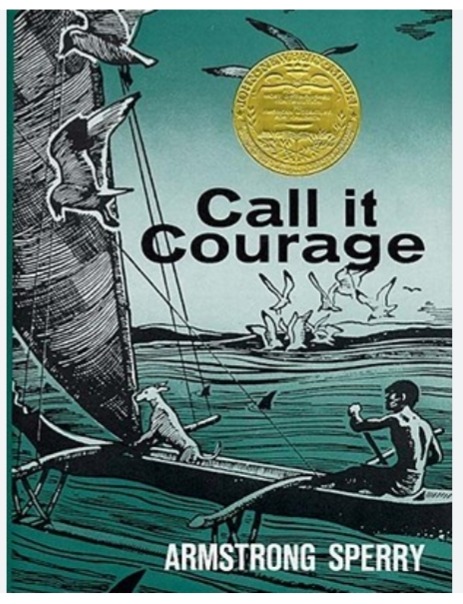
Call it Courage by Armstrong Sperry c1940 Currently available from Simon & Schuster

Teenager Mafatu has always been afraid of the sea. He has been teased and made to feel an outsider by the people on his South Pacific island of Hikueru. In order to redeem himself and make his father, the chief, less ashamed, Mafatu sets out to sea on a small boat with his dog as his only companion. He hopes to conquer his fear once and for all.

This is not a long book, but the story is one of those that lives long in the heart of readers. It is perfect for ages 9 to 12 and it is an excellent choice to read aloud at home or at school.
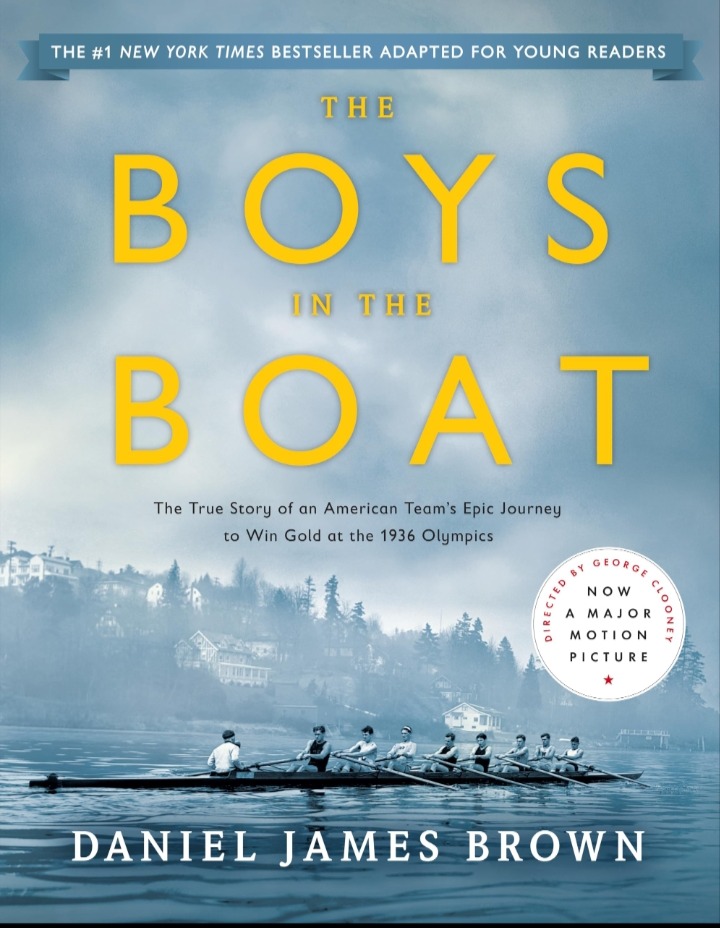
The Boys in the Boat by Daniel James Brown Young readers edition c 2015 by Viking Books for Young Readers also available from Puffin Books

The true story of the team that rowed to victory for America at the 1936 Olympics. No one expected that a crew of young men from Washington State would outperform the Ivy League teams from the Eastern US, let alone win at the Olympics. The story of how they got there is inspiring and uplifting and belongs on any list of books for students. I played the footage of the actual boat crossing the finish line for my classes when I book talked this at book fairs. It is always a winner!

Endurance by Alfred Lansing c1959 by McGraw-Hill Book Company : New York

The story for which the word EPIC was invented! Most junior high readers can enjoy this true tale of survival under extreme conditions during a Polar expedition to the Antarctic in 1914. That 28 men could live through the loss of their ship without any of the modern technologies we know today is one of the most remarkable survival stories of all time, and a testament to the difference good leadership can make. Expedition leader Ernest Shackleton made the men get rid of most of their possessions when they prepared to take to the ice as their ship began to be crushed, but he kept the banjo. He knew his crew would need every possible help to take their minds off the dire situation they were in. He also knew that in the days leading up to WWI, nobody was going to be interested in coming to their rescue. They had to save themselves. This is the story of how they did it. If your teenagers do not know this story, why not get them acquainted with Shackleton and his brave companions?

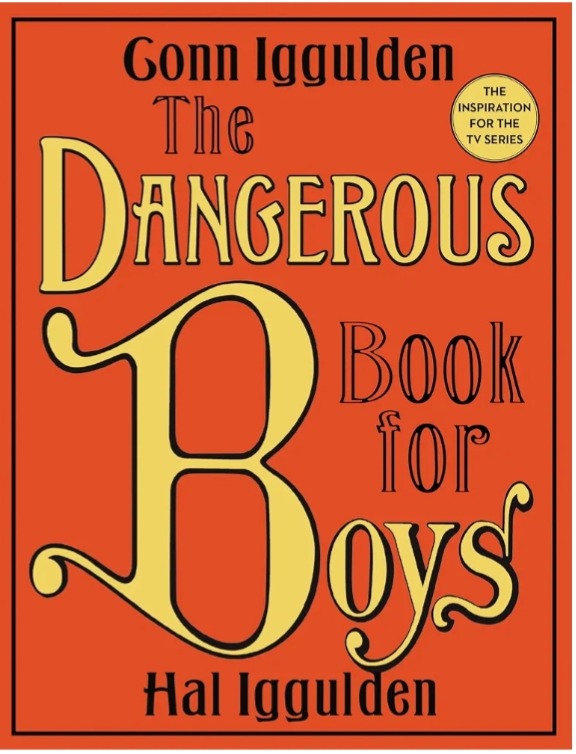
The Dangerous Book for Boys by Conn and Hal Iggulden c2006 by HarperCollins

A classic How-To book that covers building a treehouse, skimming stones, the five knots every boy should know, identifying fossils, basic fishing skills, and more ideas for enjoying life outside. There are also many useful lists and documents such as baseball’s most valuable players, a Navajo code talkers dictionary, The Declaration of Independence, and the Ten Commandments, least we forget a few. This book will help your young lads adventure well this summer.

Lost on a Mountain in Maine by Don Fendler and Joseph Egan Original c1939. Republished in 2013 by Harper Collins

Another true survival story. When he was twelve years old, Don Fendler became lost during a hike on rugged Mount Katahdin and managed to survive alone until he was found on day nine. Mount Katahdin is famous for being the northern endpoint of the Appalachian Trail. It is a strenuous and difficult hike with extreme weather changes, not a good place to lose your way. This book is a good companion to the Dangerous Book for Boys. Be prepared, as the scouts say.

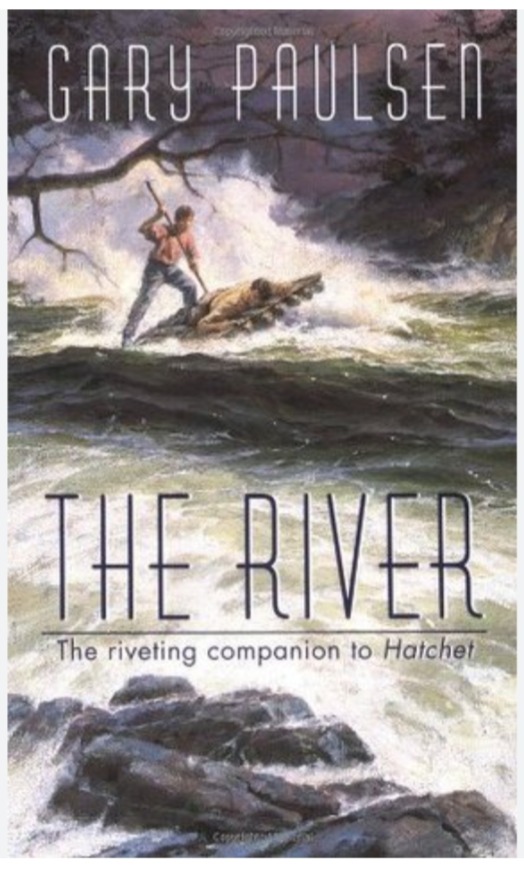
The River by Gary Paulsen c1991 Dell Publishing / Random House Children’s Books

The first sequel to Hatchet by Gary Paulsen. Brian returns to the wilderness with a psychologist to teach survival skills, but must navigate a raft downriver after his companion is injured in a storm. Gary Paulsen is THE young person’s wilderness adventure writer. The Hatchet series is probably the best known of his books, but there are shelves more to be enjoyed. I have given his book Winterdance : The Fine Madness of Running the Iditarod to outdoor fans in my family. Mr. Paulsen ran the Iditarod twice, and his tale of that experience as a rookie is enlightening, and a bit crazy.

Mrs. McNosh and Friends—-Books to Share with Ages 3-5

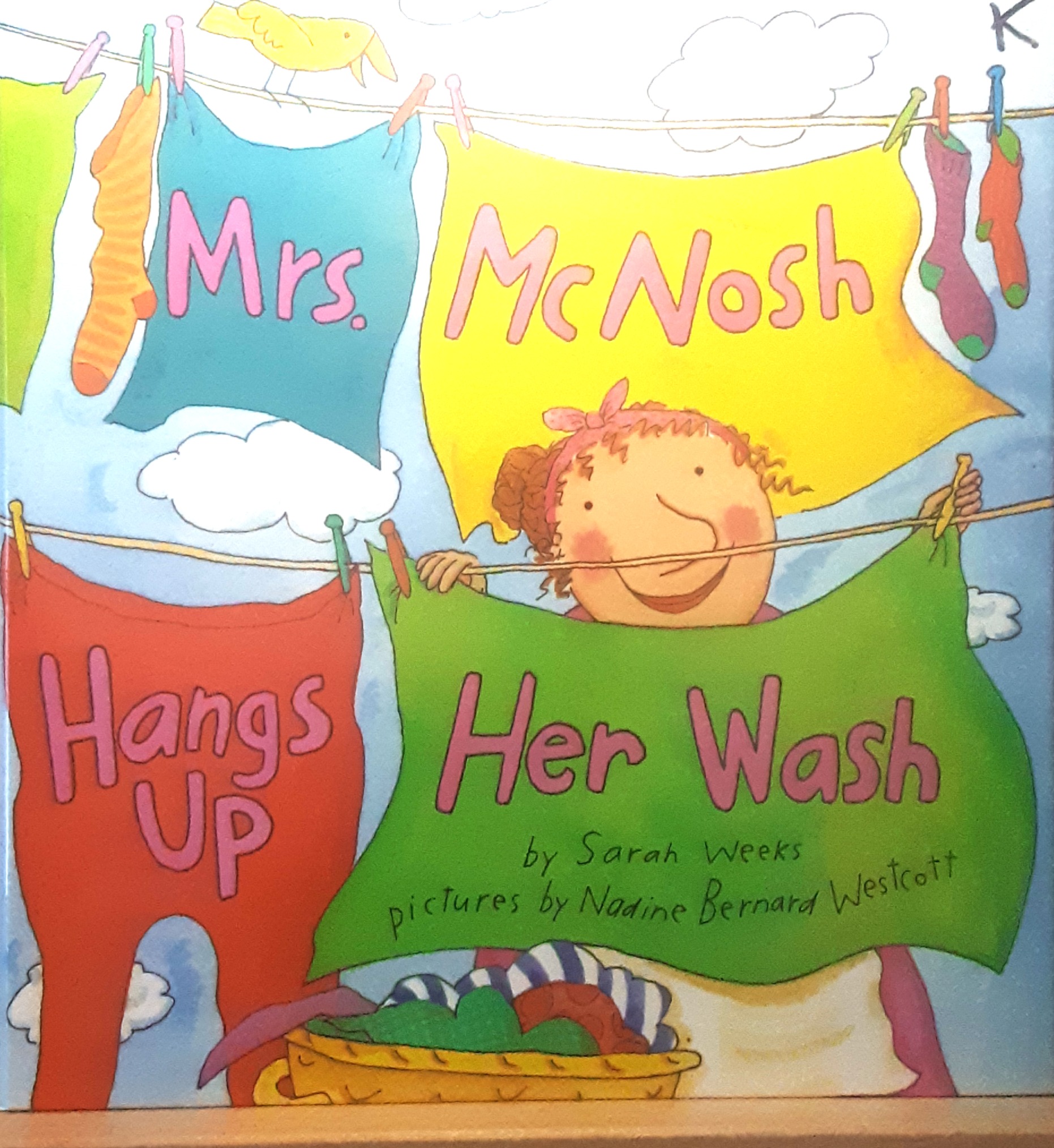
Mrs.McNosh Hangs Up Her Wash by Sarah Weeks with illustrations by Nadine Bernard Westcott c1998 Harper Collins

Here are a few books that four and five-year-old children enjoyed at story time. Most of them are suitable for younger children as well. My story programs with the four-year-old group lasted for 20 minutes and usually included some attention building nursery rhymes that might be sung or had accompanying actions. Today’s titles will appear on a longer reading list as a page soon, but with just the titles and authors, which should make it easy to print the list should anyone wish to. Picture books for older children will have their own lists, so stick around!

Mrs. McNosh does a big wash every Monday morning. Here are the author’s words:

“It takes her all morning, and when the sun’s high, she hangs what she’s washed on the clothesline to dry.”

Once Mrs. McNosh gets going there is no stopping her. All sorts of things besides laundry begin to appear. The dog, with his dish takes his place on the line, then a lamp, next two bats, which get hung upside-down. This brief, rhyming story will probably need to be read again because your audience will want more.

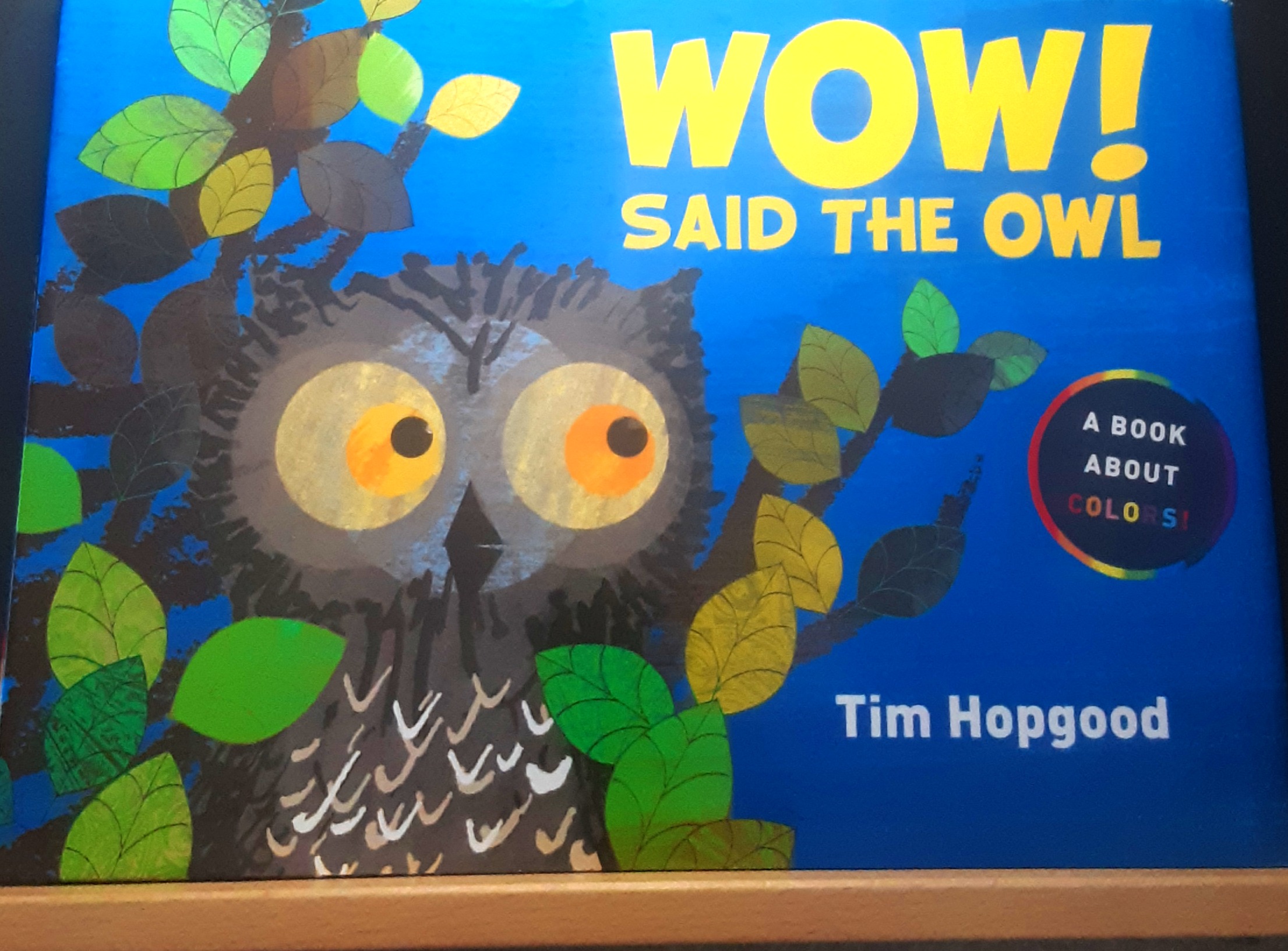
Wow! Said the Owl written and illustrated by Tim Hopgood c2009 Farrar, Straus and Giroux : New York

When a little owl decides to stay awake during the day, she experiences awe as colorful butterflies, green leaves, blue skies, and fluffy white clouds appear. The double page spreads in this book provide luscious expanses of bright color which just might elicit a “wow!” from viewers. Follow it up with a discussion of colors your audience has noticed indoors and out, and some paper and crayons.

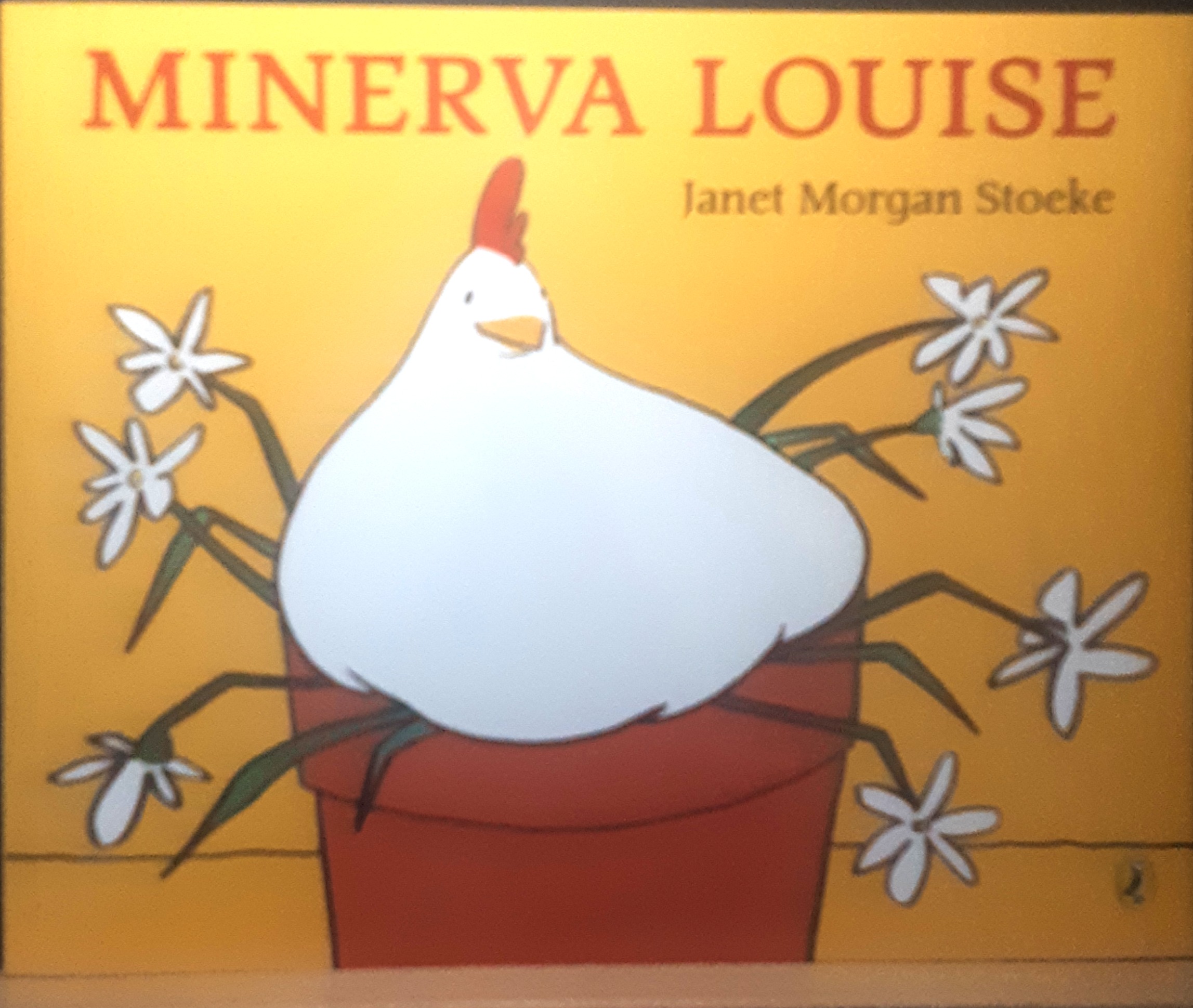
Minerva Louise written and illustrated by Janet Morgan Stoeke c1988 Penguin Young Readers : New York

Minerva Louise is a curious chicken. The house with the red curtains attracts her, so when a window is left open she decides to investigate. Since she is a creature of the farmyard, she is confused by some of the things found in a house. Could logs laid for a fire in the fireplace be a cozy nest? A tricycle looks like a tractor to Minerva Louise, and a flowered bedspread must be a meadow of flowers, that cat sleeping on the sofa could only be a cow…The large, simple pictures and brief text make this suitable for very young children. There are more stories featuring the adventures of Minerva Louise, and they are all just as funny and full of charm.

Grump Is His Name… The Midsummer Tomte and the Little Rabbits

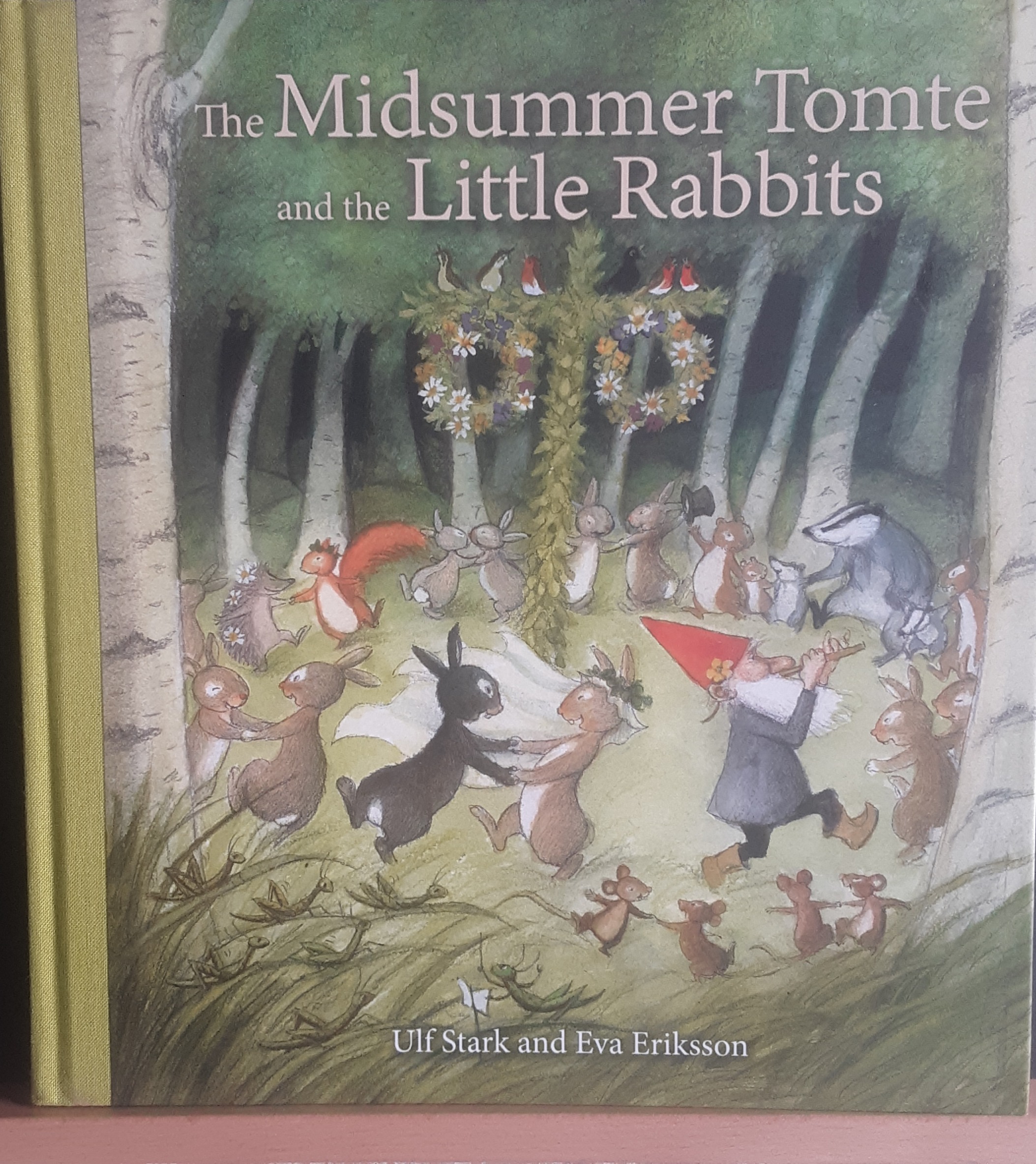
The Midsummer Tomte and the Little Rabbits by Ulf Stark with illustrations by Eva Eriksson English edition c2016 by Floris Books : Edinburgh

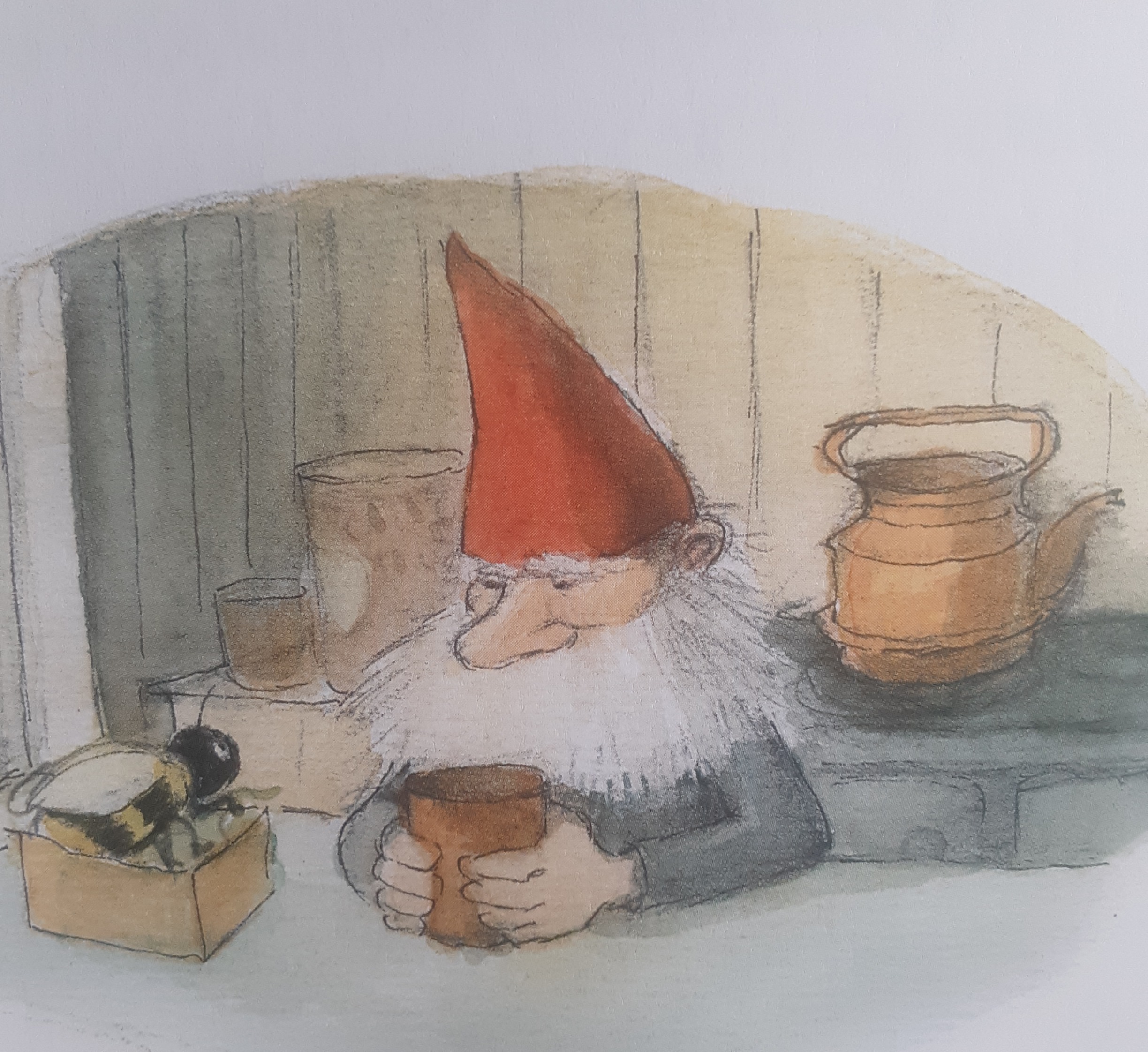
Grump is a house tompte. He lives in a dog kennel converted into a cozy home just the right size for a small being, and he looks after a cottage long empty of its happy family. His best friend is a bumblebee. Here are some of the author’s words:

“His friend the bumblebee was flying around looking for flowers that had come into bloom. It swooped over the nettles beside the pigsty.

“Soon it will be time to leave and find a home of my own,” thought the bumblebee.

Every time it mentioned leaving, Grump grunted and said it was too soon for that. “What are you thinking of, you bumblenoodle? There aren’t enough flowers yet. You’ll starve.” Then Grump sighed. “No, I’ll have to put up with you a bit longer, you nuisance.”

The bee looked down at the tompte and wondered, “How will I have the heart to leave the old crosspatch? He saved my life once. I don’t want to make him sad.”

Grump and Bumblebee have a serious chat. Illustration by Eva Eriksson

Grump knows that a house tompte should be a bit grouchy, but sometimes he forgets and ends up doing very kind and thoughtful deeds. A large and noisily happy rabbit family nearby has benefitted from having Grump in the neighborhood, and this summer will be no different.

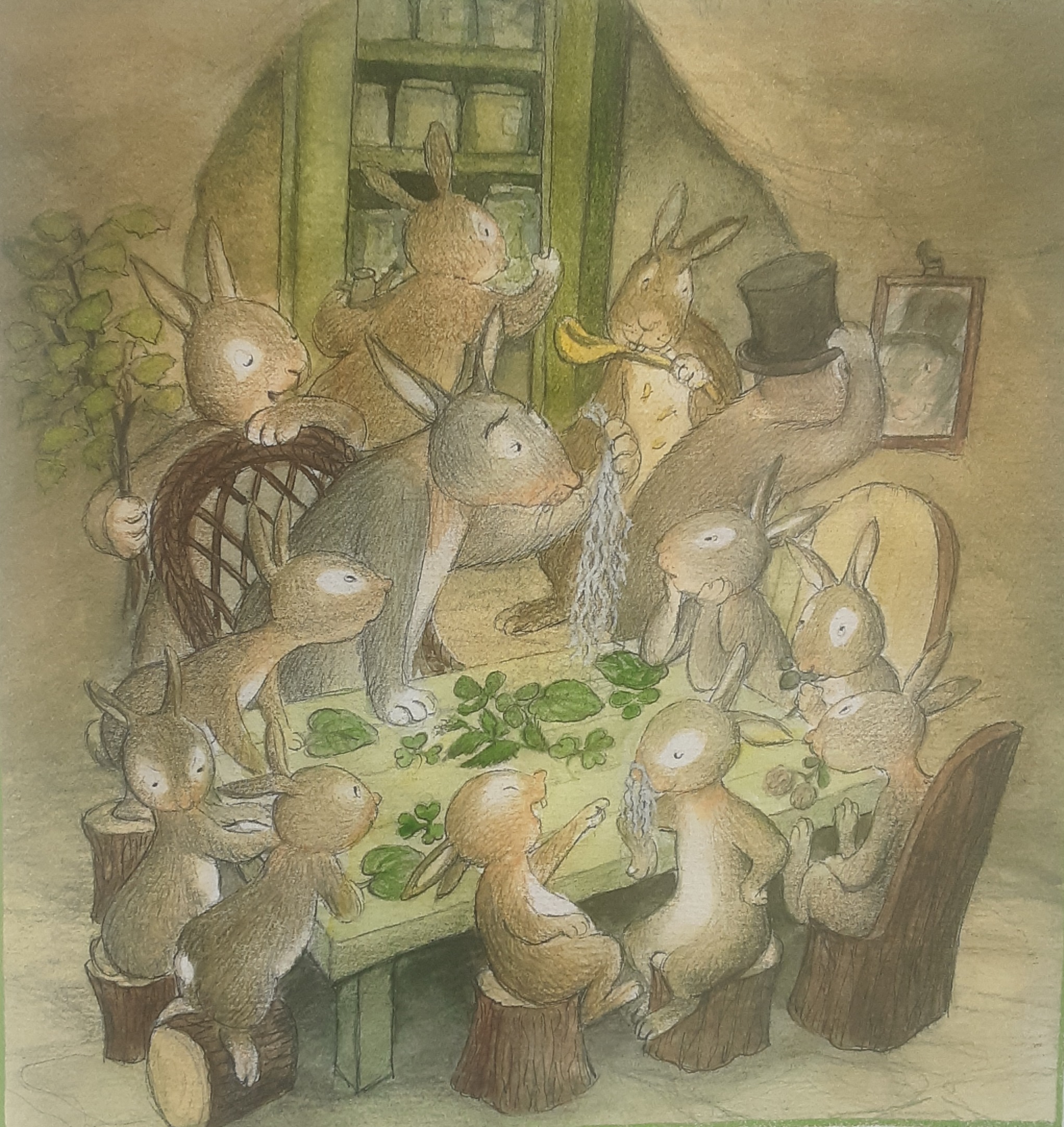
Father Rabbit is very proud of his top hat and wonders if an event called Midsummer might provide a chance to show it off, if only they knew how to celebrate it. Barty wonders if a tree is decorated. Grandfather wants to know if there are speeches given or poems written. Mother thinks dancing would be nice. Everyone hopes there will be tasty food to eat. Owl warns them that Midsummer is “Full of magic and love and mystery, so it’s best to watch out!”

So much can happen in the long days leading up to Midsummer’s Eve. There are storms, lots of time to play rabbit games, Grandfather’s lessons, perhaps even time to fall in love….There are 21 short chapters in this lovely book, perfect for reading one each bedtime right up to Midsummer’s longest day. Warm and gentle humor and scenes from happy family life are found throughout this story. It doesn’t matter that the family might be rabbits or mice. The characters are so like people you might know. Eva Eriksson’s pictures and page decorations make this a beautiful book to own.

Grandfather Rabbit teaches a lesson on plants, edible and otherwise. Illustration by Eva Eriksson

Grump turns to his “one and best book” In Praise of Solitude for solace when his friend leaves and learns that becoming attached to things leads to disappointment when they leave. Perhaps he will change his ways, or maybe the future will be better than he thinks. Better read this book and find out. The Yule Tomte and the Little Rabbits by the same two collaborators will be waiting for your young readers come Advent season. That is good news indeed.

Life on the Island…Northern Style

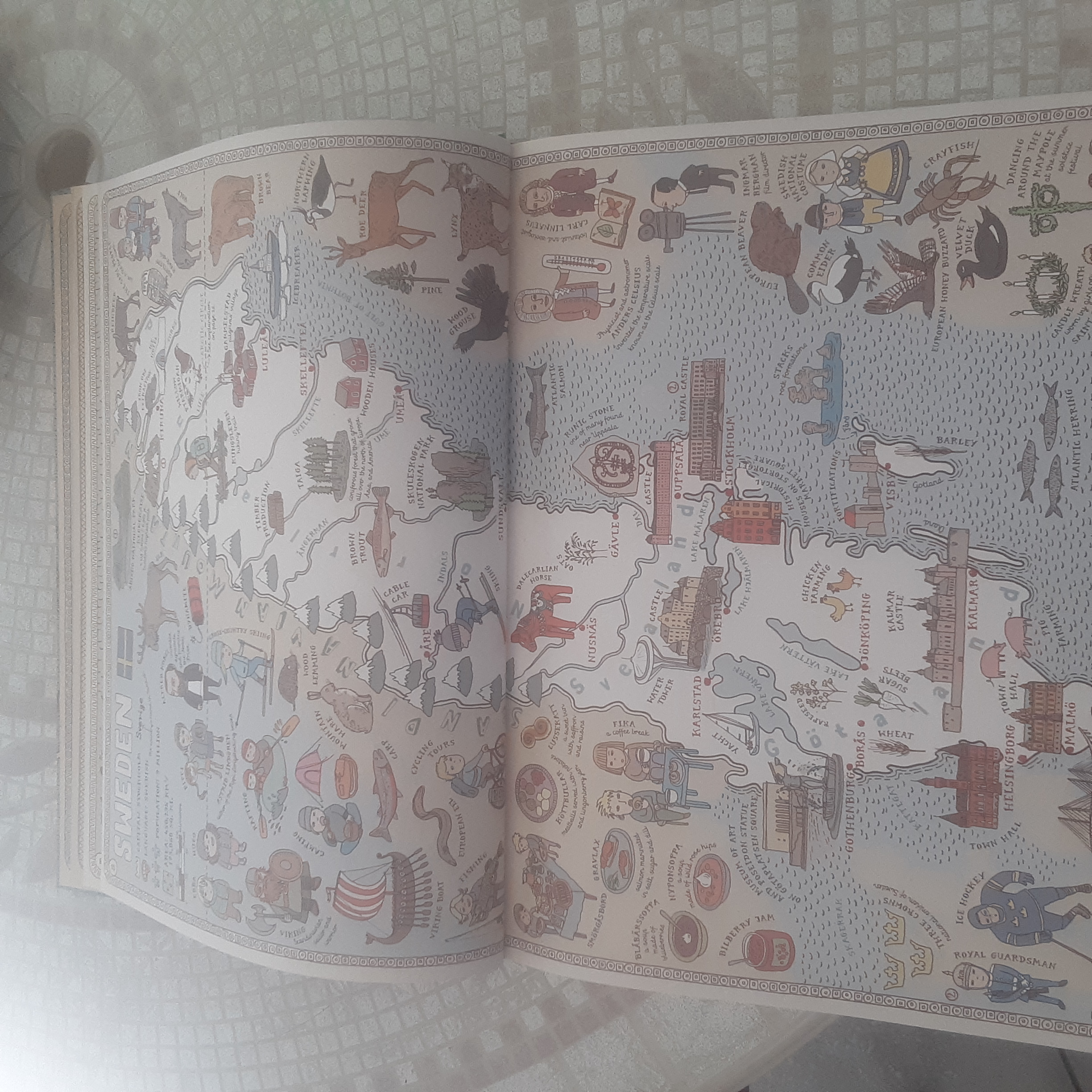
Here are five books where the story takes place on a Northern island. There are no tropical breezes, only cool, blustery Atlantic weather and shorter days. It is time to think about summer reading, and these titles will help to while away quiet afternoons or evenings when the lawns are mowed, dishes are washed, and a book is just the thing. As every good fiction reader knows, characters that land on an island must be about to have an adventure, with or without pirates….

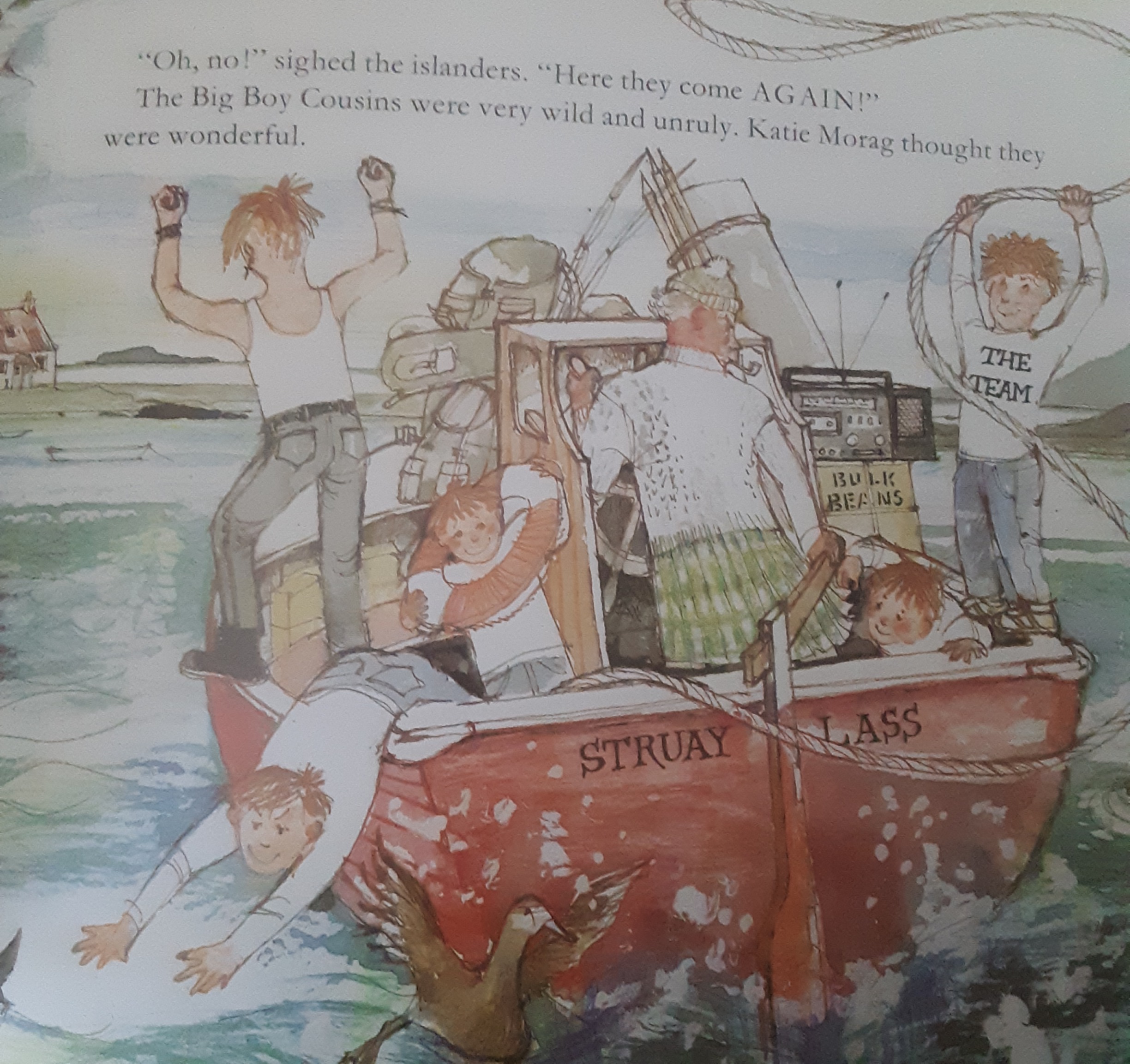
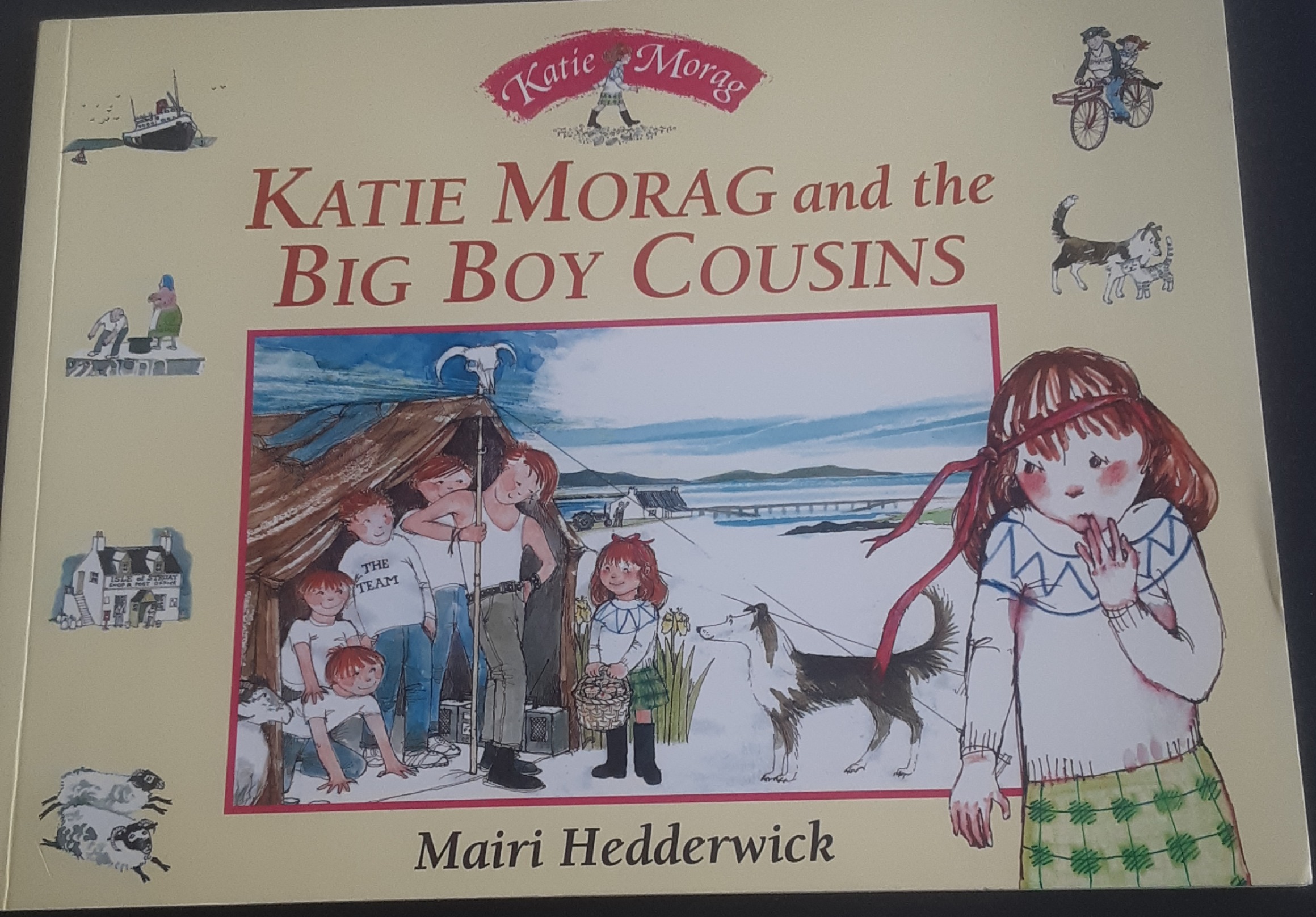
Katie Morag and the Big Boy Cousins by Mairi Hedderick c 1987 Random House Children’s Books : London This edition printed by Red Fox Books in 1999.

Katie Morag’s grandmother, who is known on the Isle of Struay, Scotland as Grannie Island, has invited a batch of Katie’s boy cousins for a visit. The cousins are full of mischievous pranks and out-of-bounds behavior that make the other islanders dread their annual appearance. Katie, however, is looking forward to some fun. How will Grannie Island handle this wild bunch?

Mairi Hedderwick paints the skies, sandy beaches, and small villages of an island in the Inner Hebrides for young readers. The Isle of Struay is based on the actual Isle of Coll. There are more adventures with Katie Morag to be had for readers ages 5-9.
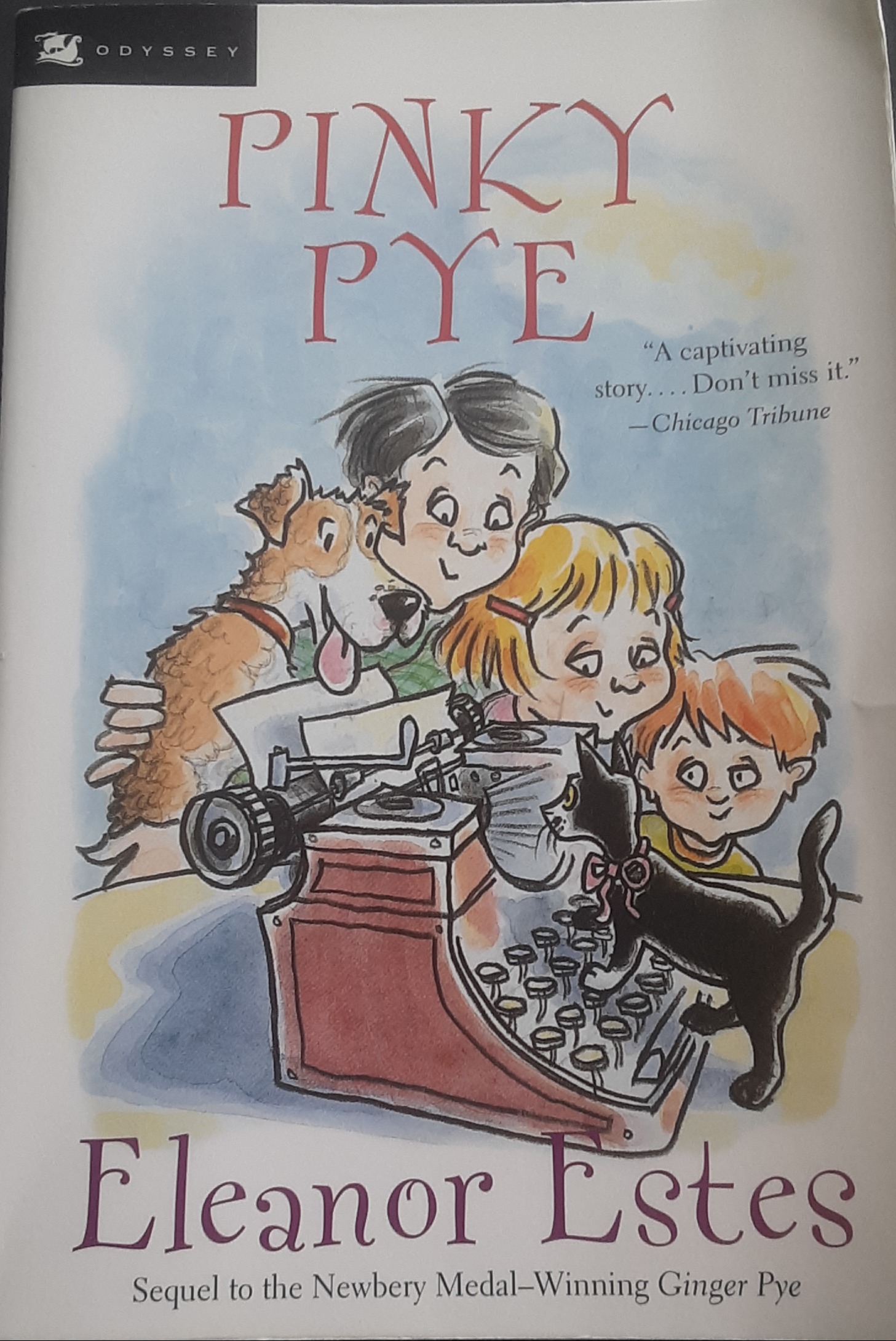
Pinky Pye by Eleanor Estes c1958 This edition Odyssey Classics by Harcourt printed in 2000 with original illustrations by Edward Ardizzone

The Pye family, including their famous dog Ginger and smart cat Gracie are headed off to Fire Island for the summer. Father Pye, a renowned ornithologist, has been asked by Washington to investigate the very unusual sighting of a puffin by a reliable bird watcher on Fire Island. The bird watcher agrees to rent a cottage to the Pyes for a reasonable price, so Mr. and Mrs. Pye, Jerry age ten, Rachel age nine, their small Uncle Bennie age three, their pets, and piles of luggage are soon waiting for the ferry that will take them to the island.

Soon after their arrival the Pyes add a kitten named Pinky, for her raspberry pink tongue, to the family. Pinky is the only cat ever known to possess the ability to type. Her messages are some of the best parts of the book.

The authors words: As typed by Pinky… ” The String Bean Game”

  • a. This important game HAS to be played with someone.
  • b. Go to the icebox , sit in front of it, say “Woe,” and Pye, or whoever you own will come. Pye will understand what you want, for you will have the eager string bean game expression on your face.
  • c. Now, crouch and wiggle This means you are ready for the throw.
  • d. Now. He throws Bean. Tear after it as though you have been shot out of a cannon. People are always surprised to see how fast you can get going without having to gather speed. Never let speed be ungathered. Race after Bean, bring it back and lay it at Pye’s feet. He throws Bean again. Race after it again. and if it has gone around a corner, knock recklessly into a wall as you make the speedy turn. Pick it up and trot back with it……….”Hurray!” the people will exclaim noisily. “She retrieves like a dog!” What nonsense! Dogs retrieve like dogs—huff, huff, pant. Cats retrieve like cats and bring variety to the game.

There is a mystery to be solved among other island events. Gracie the cat wants very much to gain entrance to the eaves to investigate. Everything that is good in a middle-grade book exists in this summer story. Give it a try.

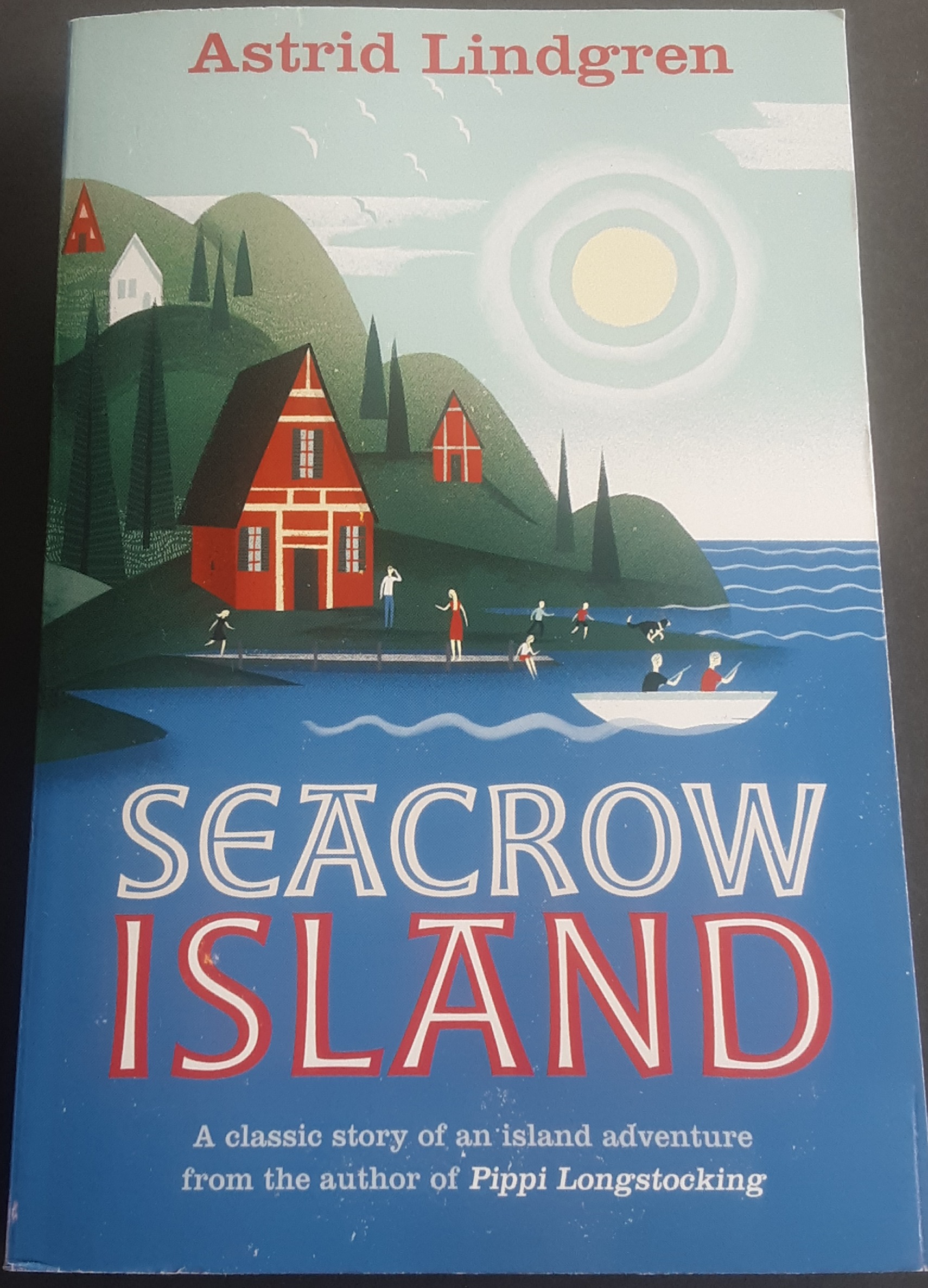
Seacrow Island by Astrid Lindgren. c1964. This edition published 2016 by Oxford University Press

The author’s words:

“If you go down to the quay in Stockholm on a summer morning and see a little white boat called Seacrow I lying there, that is the right boat to take and all you have to do is to go on board…….She crosses wide expanses of open water and steams through narrow channels, past hundreds of green islands and thousands of grey, bare rocks. She does not go fast and the sun is low when at last she reaches the quay at Seacrow Island. She has no need to go any further, for there is only the open sea beyond with its bare rocks and its islands where nobody lives except eider ducks, gulls and other sea birds.”

The Melkerson family is on their way to summer at a place they have never been before. Melker, the father, has rented a cottage sight unseen because he liked the name Seacrow Island. His family consists of Malin, his nineteen-year-old daughter and three sons, Johan, Niklas, and Pelle. Pelle is the youngest and he is seven. Will the unknown Carpenter’s Cottage turn out to be cozy? What is there to do on such a remote and quiet island? The Melkerson’s adventures are about to begin as they learn about sailing, fishing and the wildlife all around them. Ever since their mother died, the brothers hope that the young men who fall in love with Malin every quarter hour will not marry her and take her away. She is the support and heart of the family. New friends and interesting characters are always to be found in a story by Astrid Lindgren. This book has been a favorite in Sweden for generations of readers.
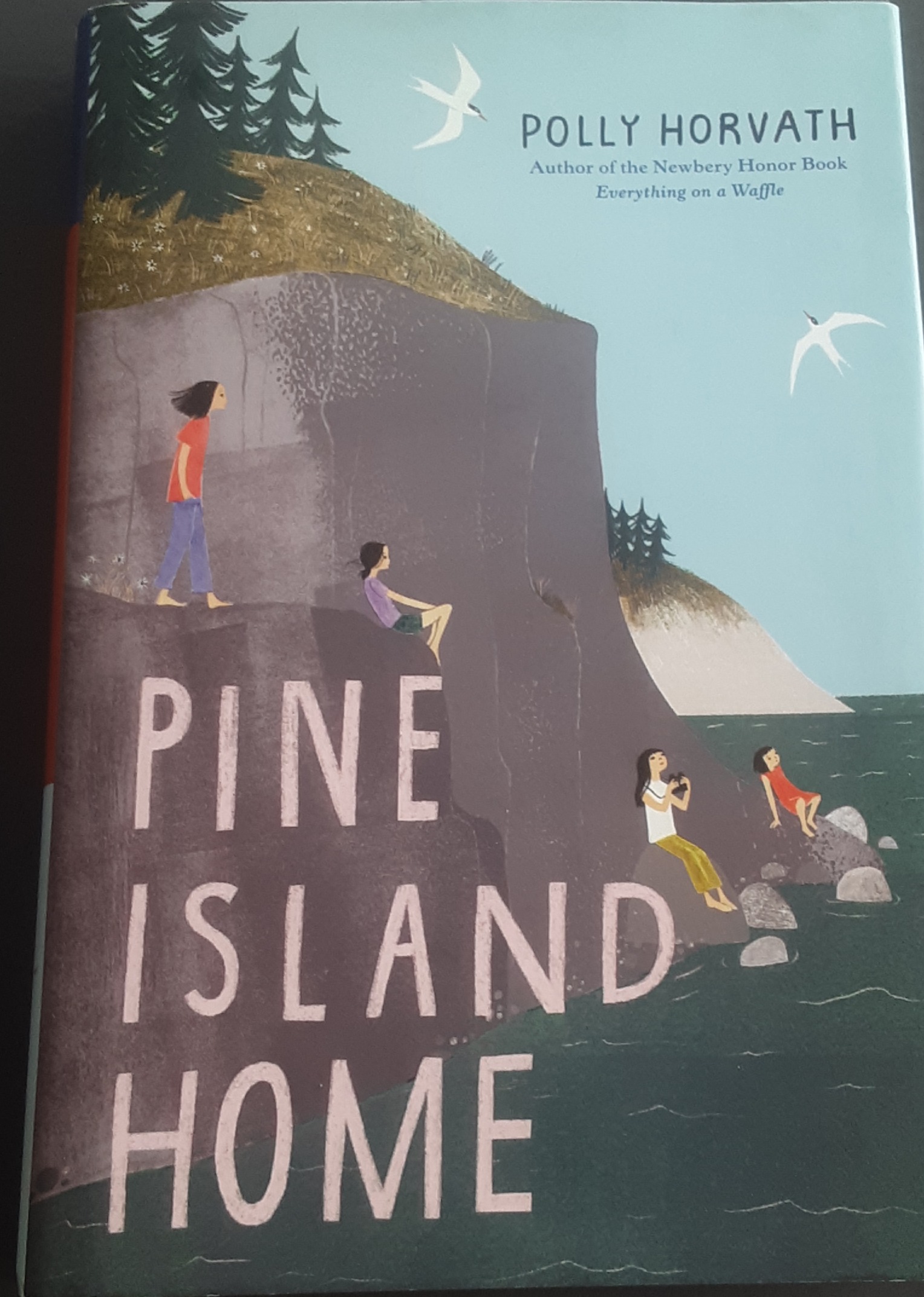
Pine Island Home by Polly Horvath. c2020 Holiday House

The adults in the lives of the McCready sisters have selfishly and thoughtlessly allowed themselves to be carried off by tsunamis and heart attacks, leaving the girls orphaned and alone. Fiona fourteen, Marlin, twelve, Natasha, ten, and Charlie, eight, have been raised in a missionary family and have learned to adjust to living in all sorts of places, but now they face new challenges at their Aunt Martha’s farm on an island in British Columbia, Canada. Fortunately Aunt Martha left them the farm, money, and a kitchen fully stocked with food, and even enrolled them in the local schools. The sisters are determined to hide the absence of a responsible adult from Social Services because they fear being separated. After all they have been through, that would be unendurable.

The McCready girls are a match for difficulties that would defeat less talented and intelligent children. Fiona makes a deal with cranky neighbor Al Farber to pose as their guardian in exchange for hot homecooked meals prepared by Marlin who is quickly becoming a proficient cook. The story of how the girls learn to cope is the main theme of this story, the island location is secondary. Helpful adults do turn up, and the strong bond between the sisters is reassuring. Tune in to the sequel, “Pine Island Visitors” for more Polly Horvath magic.

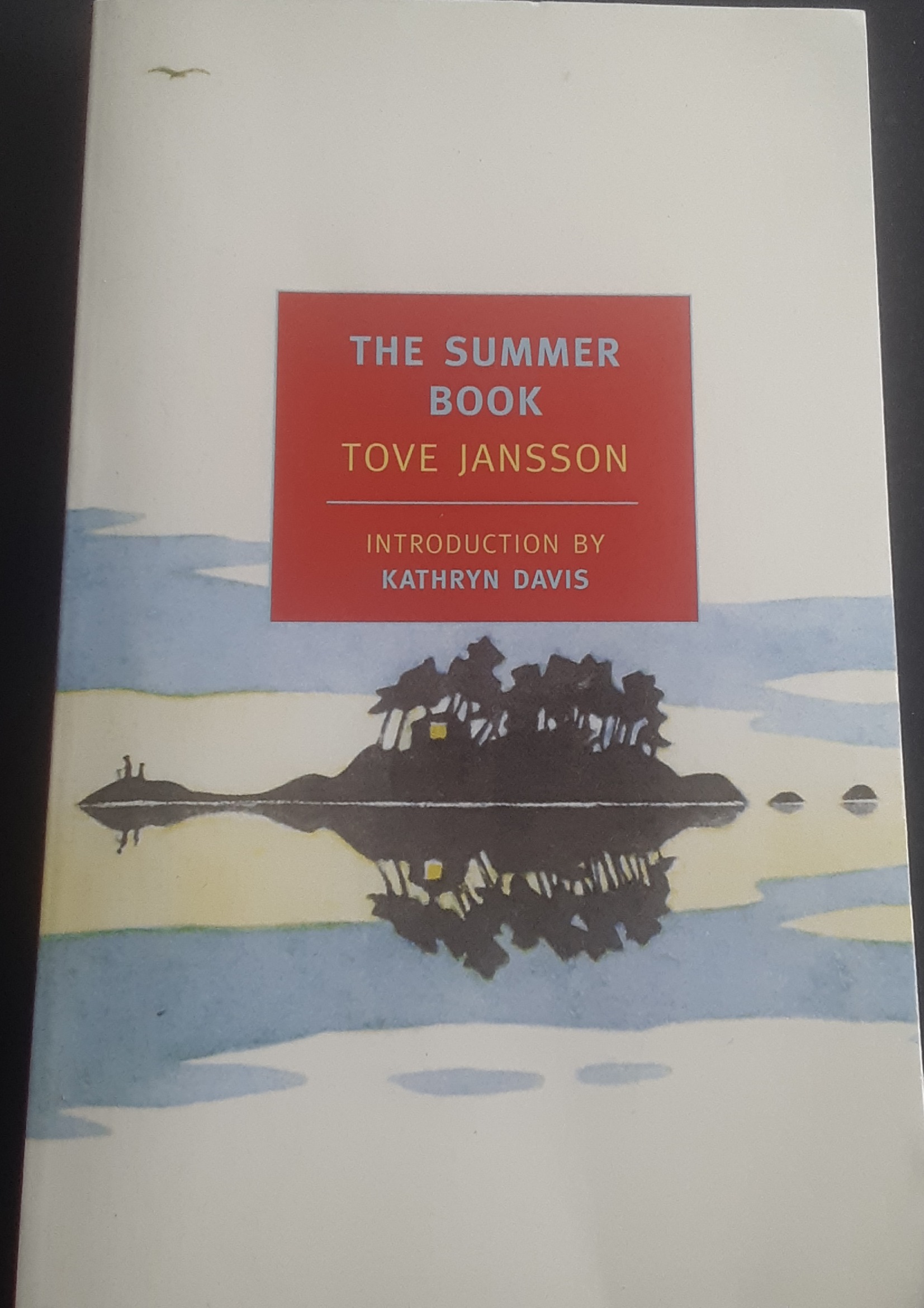
The Summer Book by Tove Jansson c1972 This edition published by The New York Review of Books in 2008.

This one is for the grown-ups. The setting is a tiny island in the Gulf of Finland. Six-year old Sophia, her father and grandmother are sharing a small cottage for the summer. There is no plot to follow, just the passage of a season on the island. Each chapter is a slice of life episode with weather, nature, an occasional visitor, and conversations between the child and her grandmother as the main events. Sound too quiet? Here are the authors words about a tremendous storm that broke as the family were fishing away from their own island:

“Papa broke the padlock on the door with a big stone. He did it to save his family. ……………….The walls of the house trembled steadily with the thundering of the sea, and it began to get cold. Spume from the breakers covered the windowpanes and ran over the sill and across the floor. Every now and then Papa would get up and go out to see to the boat.

The seas breaking against the sheer outer side of the island had grown. One after another, the waves rose up in their white immensity to a tremendous height, and foam hissed against the rocks like the blows of a whip. Tall curtains of water flew across the island and sailed on west. The storm was titanic!”

Islanders do not always welcome those who build large new houses that mar the view. Here are the author’s words when Sophia and Grandmother get caught checking out the new neighbor’s island and are invited in:

“Don’t look so cross,” Grandmother whispered. “This is socializing and you have to learn how to do it.” Malander came back with bottles and glasses and put them on the table. “Cognac, he said. “And whiskey. But I’m sure you’d rather have a lemonade. “I’m very fond of cognac,” Grandmother said. “A small glass and no water, thank you. Sophia? What would you like?”

“The other!” Sophia hissed in her ear. “Sophia would prefer a lemonade.” Grandmother said, and thought: We’ve got to teach her some manners. We’ve made a mistake. She has to spend more time with people she doesn’t like, before it’s too late.”

Sophia and her Grandmother talk about life, death, heaven, hell, and what happens when an angleworm gets cut in half. They build a miniature Venice, trade a cat that kills birds for a boring, soft lap cat, and have arguments. You are given the flavors, scenery, and essence of a Northern Island to dwell in and remember after this slim book ends. I recommend a second reading, maybe more.

Put Down that “100 Most Important Books of the 20th Century” list and Smile, Pardner: HOW TO TALK ABOUT BOOKS YOU HAVEN’T READ by Pierre Bayard

How to Talk About Books You Haven’t Read by Pierre Bayard. c2007 Published in the US by Bloomsbury USA Translated from the French by Jeffrey Mehlman

This was not the book I meant to talk about this week, but during a long overdue dusting, sorting and culling of my books, this one fell out on my foot. I don’t remember when I bought it, and somehow I had not read it. It was love at second sight! I still remember the day I was treated to a shocked silence in the bookstore where I worked, when I admitted to a co-worker that I had not read Ulysses by James Joyce. “But, it is a seminal work!”, I can hear the tone yet! I am sorry, people in Dublin, but after that I have been determined NOT to read it. You have a list in your head of books that you “should” have read but haven’t. Do you think that list will be posted on your gravestone? Mr. Bayard will set you free in this discussion of our current reading culture and how to navigate social or professional literary conversations around books you have not read or have forgotten.

The author’s words:

“There is a tacit understanding in our culture that one must read a book in order to talk about it with any precision. In my experience, however, it’s totally possible to carry on an engaging conversation about a book you haven’t read—-including, and perhaps especially with someone else who hasn’t read it either.”

“If we wish, then, to learn how to emerge unscathed from conversations about books we haven’t read, it will be necessary to analyze the unconscious guilt that an admission of non-reading elicits. It is to help assuage such guilt, at least in part that is the goal of this book.”

Analyze and assuage he does. Mr. Bayard is a literature professor and a psychoanalyst. His book is full of examples of types of non-reading from famous writers, ideas to ponder, and strategies to help you speak about books you haven’t read without shame.

Oscar Wilde, as quoted in the front of the book: “I never read a book I must review; it prejudices you so.”

Do read this book, really.

Medieval Flavored Fantasy: The Letter for the King

by Tonke Dragt. Publisher: Pushkin Children’s Books c 2017

Tonke Dragt’s “The Letter for the King” was first published in 1962, but readers of English had to wait until 2015 to get their hands on a translation of this splendid adventure story. Thanks to Pushkin Children’s books, ” The Letter for the King” and its sequel “The Secrets of the Wild Wood” are both available in fresh, attractive editions. They are fat books in which a young reader can dwell for a good length of time. The vocabulary is not difficult, and the story is divided into eight sections with short chapters that make it perfect to read aloud in a classroom. There are illustrations by the author at the start of each section. A map on the inside cover invites readers into this tale of two Kingdoms.

The story begins as five young men are keeping a vigil the night before they will become official Knights of King Dagonaut. They are to remain awake all night, without food or drink, and reflect on the task ahead. No one is allowed to enter their chamber, and the door must remain locked. Tiuri, son of highly respected Tiuri the Valiant, is the youngest at age sixteen. Daylight will be long in arriving and each of the young men know a knock on the door might tempt them to give up their chance at knighthood if they answer it. When a low voice at the window pleads, “In the name of God, open the door!” Tiuri’s mind is in turmoil. Can a knight pledged to defend and protect refuse to acknowledge a cry for help?

Tiuri accepts the responsibility of delivering an important and secret letter to a person known only as “The Black Knight with the White Shield”. The letter is meant to be delivered by the Black Knight to the king in the city of Unauwen, which lies on the other side of the Great Mountains. It should have been possible for Tiuri to put the letter in the correct hands and return by morning, but adventures never happen when things follow plans…

When I began to refresh my memory a bit with this book before writing my review, I got caught up in the story again. It really it is a page-turner! The author’s ability to create suspense will hold the reader completely. That is what I was looking for when I purchased this book with reluctant 7th grade boy readers in mind. Each of the challenges Tiuri faces, from traveling alone in strange places, to imprisonment in a castle, to loss of his companionable horse, are met with plenty of action. Helpful and honorable characters appear as well as a proper number of untrustworthy scoundrels. Tiuri bravely keeps his mission secret and wins respect from older, battle-tried knights. Yes, there are sword fights. These two richly satisfying books deserve a place in any royal banqueting hall or library serving Jr. High to Teen readers.
Tonke Dragt was born in Jakarta, Indonesia in 1930. When she was 12, her Dutch family began 3 years internment in a Japanese camp. She and a friend managed to produce her first book during that time. The family returned to the Netherlands after the war. The Letter for the King and its sequel have won awards and have had a loyal following in sixteen languages.