Hans Christian Andersen–The Essential Dane

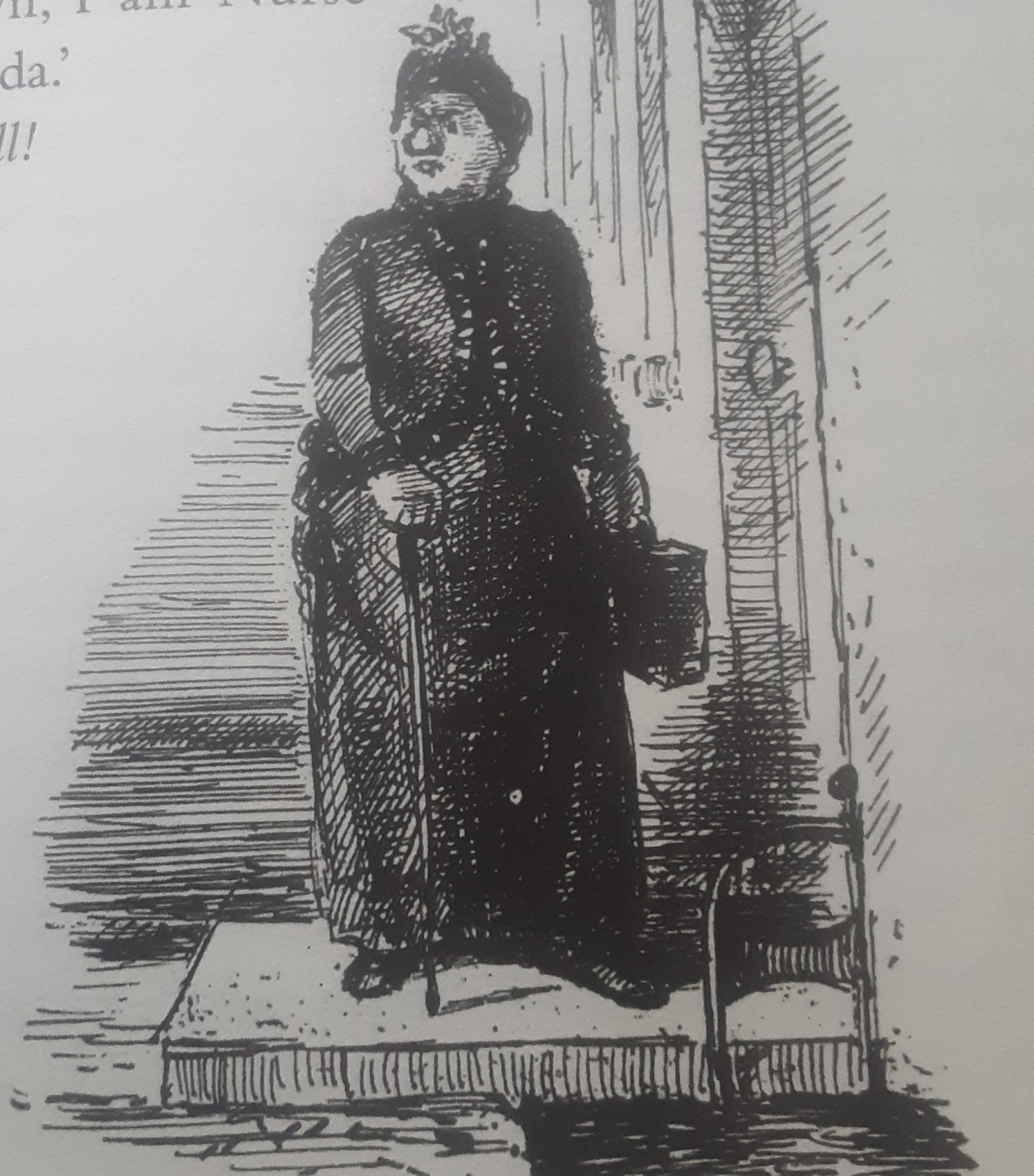
Illustration from The Nightingale by Hans Christian Andersen, retold by Stephen Mitchell and Illustrated by Bagram Ibatoulline Published by Candlewick Press c2002

Can we see ourselves with eyes glued to our cell phones just as this Emperor is gazing fondly at his mechanical nightingale? Anybody warning us about being overly beguiled by things artificial today?

Andersen’s tales still have a place in our world, and young readers have many options for encountering them. There seems to be always a new collection of his fairy tales in the works and there are also the ballets, plays, and films inspired by them. I remember adoring Liza Minnelli as the true princess in Faerie Tale Theatre’s TV production of The Princess and the Pea. Good one to share with the grandchildren some evening…

I sold an inexpensive hardcover edition of” The Emperor’s New Clothes”, illustrated by Virginia Lee Burton at book fairs. You know Virginia Lee Burton from” Mike Mulligan and his Steam Shovel”, and” The Little House”. There is probably an edition of “The Little Mermaid” for every taste and budget. My favorite collection is “Seven Tales by H.C Andersen” translated from the Danish by Eva Le Gallienne with pictures by Maurice Sendak. published in 1959. I have the 1991edition by Harper Trophy.

Illustration from “The Princess and the Pea” by Maurice Sendak from “Seven Tales by H.C. Andersen”

“The Ugly Duckling” was an important story to me as a child. I played that part in a school play, think the teacher sensed I needed to have the hope of a swan transformation in my future. Hans Christian Andersen’s tales are good companions. He put life in inanimate objects, and gave those lives meaning. A collection of his stories IS a home library essential.

On the Way to Growing Up: Jim The Boy by Tony Earley

Jim the Boy by Tony Earley c2000 Little, Brown and Company

The author’s words:

“Oh Jimmy,” she said. “How in the world did you get to be ten years old?”

“I don’t know, Mama,” Jim said, which was the truth. He was as amazed by the fact as much as she was. He had been alive for ten years; his father, who had also been named Jim Glass, had been dead for ten years and a week. It was a lot to think about before breakfast.

Mama put the biscuits she pulled from the oven into a straw basket. Jim carried the basket into the dining room. The uncles sat around the long table.

“Who’s that?” Uncle Coran said.

“I don’t know,” said Uncle Al.

“He sure is funny-looking, whoever he is,” said Uncle Zeno.

“Y’all know who I am,” said Jim.

“Can’t say that we do,” said Uncle Coran.

“I’m Jim.”

“Howdy,” said Uncle Al.

. “Y’all stop it,” Jim said.

Jim is being raised by his widowed mother with the help of Jim’s three bachelor uncles, who all live in the houses they have built nearby. The time is The Great Depression and the place is a small farming town called Aliceville, North Carolina. The story covers Jim’s tenth year, beginning with an account of Jim’s birthday, with some ups and downs. Jim attends the new consolidated school, where the first electric lights are soon to be connected. A baseball game between the “town” boys and the “mountain” boys brings an unexpected friendship. Jim begins to learn about the wider world on some excursions out of town with Uncles. There is a sobering event that brings the hard times of the Depression home, and some racial tension when Jim, a friend, and the black field hand Abraham are confronted by a gang of toughs. In each case, an adult is present to protect and guide. You will leave this book feeling that the world is inhabited by decent people, and wanting to work harder at being one yourself. Can’t ask more of any book. It is accomplished naturally, almost magically, by a very gifted writer.

There is so much to think about and appreciate in Tony Earley’s depiction of the concerns and feelings of a young boy beginning to leave childhood behind. The writing is plain and simply elegant.. The characters are authentic and will live with you long after you close the book. I would place it in the top tier of books for young adult readers, and their parents. There is some great modeling of how to help a child through those times when the consequences of their actions are painful. The tone of this book is not dour, but hopeful and full of humor. This book got great acclaim and praise from The New York Times Book Review, The Denver Post, Christian Science Monitor, The Boston Globe, Los Angeles Times Book Review, and many others at its publication. It is too good to be lost in the avalanche of titles published each year. If you know someone who wants to write, make sure they get their hands on this book.

Action and Adventure with Traction Man!

Traction Man Is Here! by Mini Grey Published by Dragonfly Books / Random House c2005

A boy receives a Traction Man Action Figure, and safety for all around the house is vastly improved. Arriving in his Combat Boots, Battle Pants, and Warfare Shirt, Traction Man gets to work immediately. Toast needs guarding and defenseless toy farm animals must be protected from being smothered by the Evil Pillows. Traction Man is going to be very busy. Fortunately, he has an outfit for every emergency. His wardrobe includes a diving suit, jungle pants for outdoors, and of course, a sweaty bandana. The life of an action figure is not supposed to be easy!

Creative play is the winner in this funny and very cleverly illustrated picture book. My listeners frequently laughed out loud when I shared the picture featuring the “Mysterious Toes”. Traction Man returns in “Traction Man Meets Turbodog” and “Traction Man and the Beach Odyssey”.

Medieval Flavored Fantasy: The Letter for the King

by Tonke Dragt. Publisher: Pushkin Children’s Books c 2017

Tonke Dragt’s “The Letter for the King” was first published in 1962, but readers of English had to wait until 2015 to get their hands on a translation of this splendid adventure story. Thanks to Pushkin Children’s books, ” The Letter for the King” and its sequel “The Secrets of the Wild Wood” are both available in fresh, attractive editions. They are fat books in which a young reader can dwell for a good length of time. The vocabulary is not difficult, and the story is divided into eight sections with short chapters that make it perfect to read aloud in a classroom. There are illustrations by the author at the start of each section. A map on the inside cover invites readers into this tale of two Kingdoms.

The story begins as five young men are keeping a vigil the night before they will become official Knights of King Dagonaut. They are to remain awake all night, without food or drink, and reflect on the task ahead. No one is allowed to enter their chamber, and the door must remain locked. Tiuri, son of highly respected Tiuri the Valiant, is the youngest at age sixteen. Daylight will be long in arriving and each of the young men know a knock on the door might tempt them to give up their chance at knighthood if they answer it. When a low voice at the window pleads, “In the name of God, open the door!” Tiuri’s mind is in turmoil. Can a knight pledged to defend and protect refuse to acknowledge a cry for help?

Tiuri accepts the responsibility of delivering an important and secret letter to a person known only as “The Black Knight with the White Shield”. The letter is meant to be delivered by the Black Knight to the king in the city of Unauwen, which lies on the other side of the Great Mountains. It should have been possible for Tiuri to put the letter in the correct hands and return by morning, but adventures never happen when things follow plans…

When I began to refresh my memory a bit with this book before writing my review, I got caught up in the story again. It really it is a page-turner! The author’s ability to create suspense will hold the reader completely. That is what I was looking for when I purchased this book with reluctant 7th grade boy readers in mind. Each of the challenges Tiuri faces, from traveling alone in strange places, to imprisonment in a castle, to loss of his companionable horse, are met with plenty of action. Helpful and honorable characters appear as well as a proper number of untrustworthy scoundrels. Tiuri bravely keeps his mission secret and wins respect from older, battle-tried knights. Yes, there are sword fights. These two richly satisfying books deserve a place in any royal banqueting hall or library serving Jr. High to Teen readers.

Tonke Dragt was born in Jakarta, Indonesia in 1930. When she was 12, her Dutch family began 3 years internment in a Japanese camp. She and a friend managed to produce her first book during that time. The family returned to the Netherlands after the war. The Letter for the King and its sequel have won awards and have had a loyal following in sixteen languages.

Favorite Baby Stories from Storytime (and one for bedtime)

Some of my former listeners are now parents themselves. This post is dedicated to them and the many happy readings we enjoyed together. Some of them might remember opening the magic cupboard to see what books were inside, or perhaps the moment a listener who was particularly attentive wore the Good Listener crown home. Here is a trio of their favorite stories featuring some unusual babies:

THE ELEPHANT AND THE BAD BABY by Elfrida Vipont with pictures by Raymond Briggs from Puffin Books

Once upon a time an elephant met a bad baby while taking a walk. When offered a ride, the bad baby said, Yes.” So begins a sneaky and wild romp as the elephant snatches various snacks from vendors, offers them to the baby, who always says yes, and nothing is legally purchased. A parade of angry people including the ice-cream-man, the grocer, the snack-bar-man, and others are soon running after the two who have not once said, “Please.” What will happen when the bad baby and all his his followers eventually meet up with his mommy?

One illustration shows a sly elephant trunk reaching for fruit from a cart, while the rest of his enormous bulk is hidden behind it. I read this to the kindergarten children, and toddlers will love it too. It has the predictable rhythm perfect for younger listeners. You will know illustrator Raymond Briggs from his marvelous wordless picture book “The Snowman”.

AVOCADO BABY by John Burningham, illustrations by the author Published by Random House Children’s Books

Mr. and Mrs. Hargraves and their two children cannot get the new baby to eat anything, and they are afraid it will turn out as weak as they all are. Things begin to improve when a mashed avocado is fed to the baby, and he likes it. Before you know it the baby is helping to carry in the groceries, move heavy furniture, and with each meal of avocado his strength increases. The Hargraves children have nothing to fear with Avocado Baby in the house, and perhaps outside as well….

One of my listeners gave avocadoes a try after we read this book. The idea of a baby with great strength was always incredibly funny to children sitting on the storytime carpet!

BABY BRAINS written and illustrated by Simon James Published by Candlewick Press

Mr. and Mrs. Brains took care to read aloud to their baby before he was born, turning up the news so baby Brains would be very smart from day one. When their baby was born, they were thrilled to bring home a new baby boy. “Sleep tight, Baby Brains,” his mother whispered as she put her baby to sleep in his brand new crib. The next morning she discovered Baby Brains sitting on the couch reading the morning paper. By evening Baby Brains was talking, and his first request was that he start school right away. News of this extraordinary baby brought an invitation for him to travel far from home. Will the parents accept and what is ahead for Baby Brains?

Baby Brains returns in two more books for his many fans. I shared this with second grade students and it kept their rapt attention to the gentle and sweet conclusion. Humor abounds in each detail of the illustrations which can be appreciated by readers of all ages.

WHAT DO YOU WANT? Written and illustrated by Lars Klinting Published by Groundwood Books/ House of Anansi Press

The artwork in this very simple BEDTIME STORY is so appealing, you can’t help picking it up and sharing it with someone. A first page shows a rooster who wants…..flip the page and the answer is, his hen. A chair wants its table, a foot wants its shoe, and so on. Each object is clearly depicted with plenty of white space around it. This is available as a board book, so your toddler can have their own sturdy copy. It is all a first book should be, pages that reveal surprises, and a perfect pace down to the last picture of a pillow and its sleeping child.

Friendly, inadequate lighting photo of Miss Tobey

Getting older, talking about it:

BILBO’S SONG

by J.R.R.Tolkien

I sit beside the fire and think
of all that I have seen,
Of meadow-flowers and butterflies
in summers that have been;

Of yellow leaves and gossamer
in autumns that there were,
With morning mist and silver sun
and wind upon my hair.

I sit beside the fire and think
of how the world will be
When winter comes without a spring
that I shall ever see.

For still there are so many things
that I have never seen:
in every wood in every spring
there is a different green.

I sit beside the fire and think
of people long ago,
and people who will see a world
that I shall never know.

But all the while I sit and think
of times there were before,
I listen for returning feet
and voices at the door.

It must seem odd to see a post on aging here. Children are mostly unaware of adult aging. I can remember wondering how adults could find someone the correct age to date, they all seemed about the same vintage to me. If all goes well, children do not have to realize that someday the world will go on without them in it, or without someone they love in it. Some children have to face loss, and how in the world do we help them?

It might help to have encountered a few stories where a character faces a sad event and gets through it. Stories appropriate to the age and sensitivity level of your child are out there, and you probably know a few. I will provide some of my favorite titles in the next post. Today, I wanted to share just one such story, in the above poem. It could be a good discussion starter for children in sixth grade or above.

For Tolkien people, this poem appears in “The Fellowship of the Ring”. Bilbo is outfitting Frodo for his quest, passing on to him his sword and cloak. Bilbo knows that his own adventuring days are over. If you want to avoid launching into distracting talk about how cool the movies were, don’t use Bilbo’s name at first, and let your students tell you what the poem is about. What age is the person in the poem? Who are the “people long ago”? Who will see a world that he will never know? Do they know anyone who might be thinking similar thoughts? Why not end with: Is there anyone they know who could use a visit or a letter? Have them write an actual letter in their own handwriting and introduce them to a postage stamp, grandparents will appreciate it.

Problems with Persistent Wolves

Well-worn wolf tales!

Wolves have probably been a part of storytelling since language began. I never set out to scare children at story time, but the occasional delicious thrill is just part of the activity. Here are two titles that always return the desired response, with a laugh thrown in.

Both of these books are reprints from the New York Review of Books, Children’s Collection. Great authors like T.H. White, Margery Sharp, Rumer Godden, Robert Lawson, Astrid Lindgren, E. Nesbit, Ingri and Edgar Parin D’Aulaire and many others are in the collection. If you have not already discovered these books, visit the NYRB site for titles that are golden standards in children’s literature.

“Wolf Story” by William McCleery with illustrations by Warren Chappell was originally published in 1947. This is the story of a father telling a bedtime story to his young son. It is told in 10 short chapters, which make it a good choice for reading at the end of class, or at bedtime.

The author’s words:

“Make it that a wolf lived in a deep dark forest,” said the boy

“Please,” said the man, “Anything but a wolf. A weasel, a ferret, a lion, an elephant….”

“A wolf,” said the boy.

“Well, all right,” groaned the man, “but please don’t sit up in bed. Put your head on the pillow and shut your eyes.”

“O.K.,” said the boy. He turned his pillow over so that it would be cool against his cheek.

“So,” said the man. “In the forest lived a stupid old wolf, too tired to do any harm.”

“No!” cried the boy, sitting up in bed again. “The wolf is fierce! Terribly terribly fierce!!”

“Haven’t we had enough stories about terribly fierce wolves?” cried the man.

“NO!”

The wolf is after Rainbow, a chicken owned by the Tractorwheel family. Five-year-old Jimmy Tractorwheel is not about to let him snatch her. I read this to second grade students. Chapter 10 is pure comedy just right for that age group! Don’t miss the joy of reading this one aloud.

“The Complete Polly and the Wolf” is all four of the” Polly and the Wolf” books written by Catherine Storr between 1955 and 1990. They began as stories for her youngest daughter Polly, who was convinced that a wolf lived under her bed. In each story Polly shows herself to be more than a match for a hungry wolf prowling the neighborhood. The wolf knows how things should work out, after all, he has read Little Red Riding Hood, the wolf version, in which the wolf enjoys a good meal…….

Here is an excerpt from “Little Polly Riding Hood” in book one:

“Where does your grandmother live, Polly Riding Hood?”

“Over the other side of town,” answered Polly.

The wolf frowned.

“It ought to be “Through the wood.” he said “But perhaps town will do. How do you get there, Polly Riding Hood?”

“First I take a train and then I take a bus,” said Polly.

The wolf stamped his foot.

“No, no, no, no!” he shouted. “That’s all wrong. You can’t say that. You’ve got to say, ‘By the path winding through the trees,’ or something like that. You can’t go by trains and buses and things, It isn’t fair.”

“Well, I could say that,” said Polly, “but it wouldn’t be true.”

Polly and the wolf enjoy a long relationship, Polly getting older and wiser as the stories progress, the wolf going hungry, always. It helps if your young listeners know their folk tales before embarking on adventures with Polly!

Eggs, Bunnies and Such…

Here are 4 seasonal books that have been popular with children at story time:

An Egg is Quiet by Dianna Aston and Sylvia Long  Published by Chronicle Books c2009

This team has produced a series of beautiful nature picture books.   An Egg is Quiet presents all sorts of eggs from birds, reptiles, insects, fish, even fossilized dinosaur eggs.  A short text in large print can be read to very young children, while blocks of smaller text contain more information.  A collection of eggs covers a two-page spread at the beginning of the book, and  similar double-pages at the end of the book show us the mature form of each creature that has hatched from those eggs. Illustrations are clearly labeled and notes indicate whether the drawing is smaller or larger than actual size. An ostrich egg is shown next to a nest full of hummingbird eggs. The texture, shape and markings that help camouflage eggs are also shown in the lovely and detailed artwork by Sylvia Long.  This book is a wonderful tool for exploring the natural world with children.  Other titles in the series include: A Seed is Sleepy,  A Butterfly is Patient, A Rock is Lively,  and coming in April, A Nest is Noisy.  You must read them all.


The Country Bunny and the Little Gold Shoes by Du Bose Heyward   Published by Houghton Mifflin

If I don’t have this on hand during the Spring book fair, grandparents who remember and love this book will frown.  Important Easter Bunny Lore must be passed on to the next generation!  Readers of this book will learn that there are actually 5 Easter Bunnies, and that a small, brown, country-girl rabbit can compete with very fast Jack Rabbits and large White Rabbits from town.

When the Country Bunny’s 21 rabbit babies grow big enough to take on household chores, she feels it is time to appear at the Palace of Easter Eggs where the five kindest, swiftest and wisest bunnies in the whole world are selected to work for the Grandfather Bunny delivering Easter eggs.

Hundreds of books about Easter Bunnies have been published since this one first appeared in 1939, but few have such devoted followers.


The Golden Egg Book by Margaret Wise Brown with illustrations by Leonard Weisgard.  Random House c1947

The large format (a BIG Little Golden Book) of this title makes it perfect for sharing with a group.  A baby bunny is curious about the sounds coming from an egg he finds, and performs various actions to try to speed along the hatching process. When the bunny tires and drops off to sleep,  the duck inside the egg hatches, finds the sleeping bunny and carries out the same actions until the bunny wakes up. When I read this to a group of preschool children,  they find the repeated actions hilarious and want to hear it again.  Try it and you’ll see!

Rechenka’s Eggs  written and illustrated  by Patricia Polacco       Published by Philomel Books, c1988

Old Babushka decorates eggs with intricate Ukrainian designs to sell at the Easter Festival in Moskva.  When an injured goose Babushka has rescued accidentally destroys the latest basket of eggs, an Easter miracle is needed.  All is fair in the universe when Patricia Polacco tells a story. Young listeners sigh with satisfaction when this one comes to a close.


Hurray for Hilary McKay

“Naomi Conroy crouched uncomfortably at the end of the garden reading a book. As usual she had spent her Saturday morning at the town library, searching the too-familiar shelves for something new. On her left was the stack of books she had read since she returned, and on her right the pile she hadn’t opened yet. She kept her elbow leaning on that pile to guard them from her permanently book-hungry sisters. Even now she could feel herself being watched, and without looking up knew that Ruth was hovering close by, waiting for her to finish. By the law of the family, the book would become then common property, free for everyone to read” From “The Exiles” by Hilary McKay c1991.

The three books in this series about four book-hungry sisters has been reprinted with colorful, attractive cover art, which should help new readers to pick them up, for they are very worthy. Hilary McKay has produced many good books since she wrote about the Conroys, but these three titles are probably my favorites, the reading experiences of the characters were very similar to those of my family. We supported our village library with small, but regular donations in overdue book fines. Any borrowed book had a chance of being read by at least three of the five young readers in our house. They always made it back to the library, but not in a timely fashion. I still remember visiting that little library after the absence of several years ( I had moved on to the bigger library in the next town) and the lady at the desk immediately began to flip through her index of delinquent borrowers, she knew our clan well.

I carry a vivid picture of that little children’s room forever in my mind. I can see the book of New England Ghost Stories I borrowed frequently, the two or three shelves of picture books, and Mrs. Emilio, who read “Yertle the Turtle” and “Horton Hatches the Egg” aloud to us as we sat in child-sized wooden chairs. It was a place of extreme happiness.

“The Exiles” is about the summer sisters Naomi, Ruth, Phoebe, and Rachel are sent to stay with “Big Grandma” while renovations are made to their home. Big Grandma’s house seems to be entirely empty of books, and she expects the girls to help with household chores, and to take nice, long healthy walks outdoors. The only reading material to be found are a few cookbooks. This is not a situation the sisters care for. Will rebellion break out and will Big Grandma pay a price for withholding literature? Hilary McKay’s characters are real, funny, and memorable. After you meet them, you will want more, fortunately “The Exiles at Home” and “The Exiles in Love” are ready for you.

End-of-Summer Deniers, Find Solace Here

It’s early August.  It will be hot, the hummingbirds are looking for fresh sugar-water and the geraniums are drooping.  Those are not backpacks and school supply ads in the paper, you do not hear a chorus of late summer crickets in the evenings. Just sit back, gather the kids, pick up one of these picture books and relive June…

Flashlight by Lizi Boyd.   c2014 Chronicle Books

Non-readers can peruse this  wordless book at bedtime.  A child goes out to explore a summer night by flashlight.  Many nocturnal creatures and activities are revealed in the bright beam of light.   Children will enjoy the action when the animals turn the flashlight beam back on the explorer. There is so much going on in each picture, many return viewings will be needed.

IMGP3398

Stars by Mary Lyn Ray and Marla Frazee.  c2011 Beach Lane Books/Simon and Schuster

This large format picture book suits the topic.  Stars can be found everywhere if you know where to look.  Tiny star flowers turn into strawberries, gold, silver, and blue stars show up on tooth-brushing charts.  Sheriffs wear a star, and a special paper star can be kept in a pocket. Sometimes you can’t see the stars, but they are always there.  Take your star-gazers out and search for shooting star showers this month.  The Perseid Meteor Showers peak August 12-13.  An eclipse is not the only astronomical wonder on the horizon.

King Jack and the Dragon by Peter Bently,  illustrated by Helen Oxenbury   c2011 Dial Books for Young Readers.

Friends Jack, Zach, and baby Caspar have built a fort in the backyard.   All day long they have defended it from dragons and other fierce beasts, but as the trio settle down to spend the night, some friendly giants seem to be getting the upper hand.

The Moon Jumpers by Janice May Udry with illustrations by Maurice Sendak.  c1959

This Caldecott Honor book is the perfect evocation of a summer evening and the games that develop spontaneously among children allowed to play outside after dark. “We climb the tree just to be in a tree at night. And we make a little camp and pretend we’re on an island for the night.  We make up songs, and poems, and we turn somersaults all over the grass.”  The parents can be seen reading in the house as the children play, and eventually Mother calls the children in to retire in a room where “The bed is white and cool and the pillow as soft as the night.”   Playing outside after dinner in the summer is better than Disneyland.

At Night by Jonathan Bean  c2007  Farrar Straus & Giroux

In a city apartment, a little girl can’t sleep. She can hear everyone else in the family peacefully breathing. A breeze from the window invites her to carry pillows and bedding to the rooftop.  Finally, surrounded by drying laundry and tomato plants, the girl drifts off to sleep.  In the last picture we see the bathrobe-clad mother sitting beside her daughter with a steaming cup in her hand.  The illustrations show details of family life, parents looking in to whisper goodnight to children, views of other rooftops and gardens, and the moon looking down over all.  This is a sweet, cozy bedtime book.

Thunder Cake by Patricia Polacco

When thunder rolls in at Grandmother’s farm, a girl becomes anxious.  Grandmother gets the child busy gathering things to make a genuine “Thunder Cake” with eggs from the chickens, milk from the cow, flour and sugar from the dry shed, and a secret ingredient from the garden.  While the storm comes closer, the cake is in the oven and the little girl has learned that a good way to dispel fear is to get to work.  This story is based on the author’s childhood in the Midwest.

Mud Pies and Other Recipes  by Marjorie Winslow  c1961  A New York Review of Books Children’s Book.  Illustrations by Erik Blegvad

From the introduction: “This is a cookbook for dolls. It is written for kind climates and summertime. It is an outdoor cookbook, because dolls dote on mud, when properly prepared.  They love the crunch of pine needle and the sweet feel of seaweed on the tongue. The market place, then, will be a forest or a sand dune or your own backyard.”

This cookbook suggests many delectable doll meals, from wood chip dip to pine needle upside-down cake.  Doll chefs are reminded not to taste for seasoning.  Master of detail, Erik Blegvad provides the illustrations for this treasure.  Bon Appetit!

IMGP3407

The Fairy House Handbook  by Liza Gardner Walsh. c2012 Down East Books

Another reason to get outside to gather natural materials and make stuff.  The first tiny houses were built to shelter fairies.  This book is brimming with photographs and suggestions that will inspire young builders.  The fairies are waiting for new homes lovingly furnished, get out there and get creating.