Life on the Island…Northern Style

Here are five books where the story takes place on a Northern island. There are no tropical breezes, only cool, blustery Atlantic weather and shorter days. It is time to think about summer reading, and these titles will help to while away quiet afternoons or evenings when the lawns are mowed, dishes are washed, and a book is just the thing. As every good fiction reader knows, characters that land on an island must be about to have an adventure, with or without pirates….

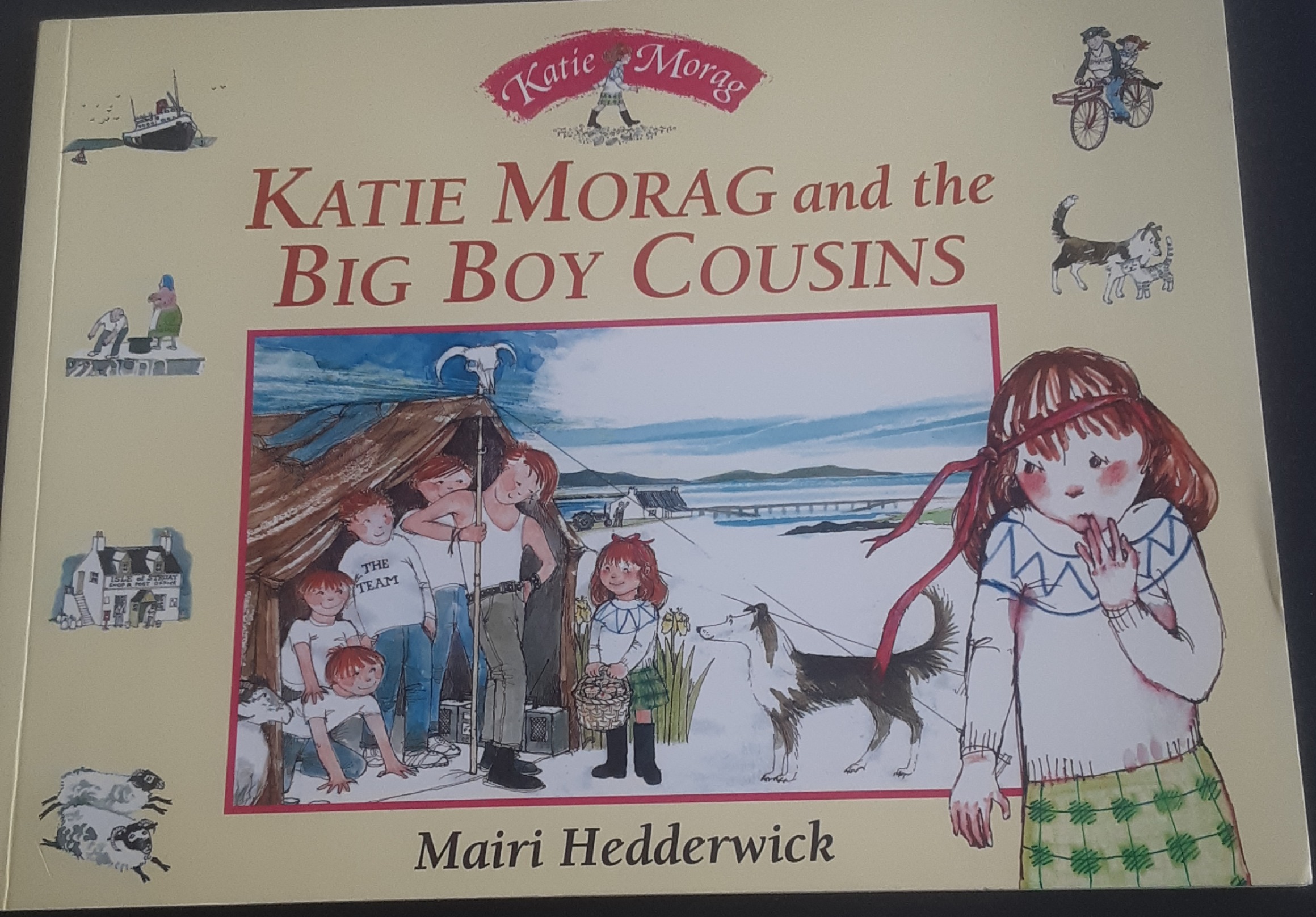
Katie Morag and the Big Boy Cousins by Mairi Hedderick c 1987 Random House Children’s Books : London This edition printed by Red Fox Books in 1999.

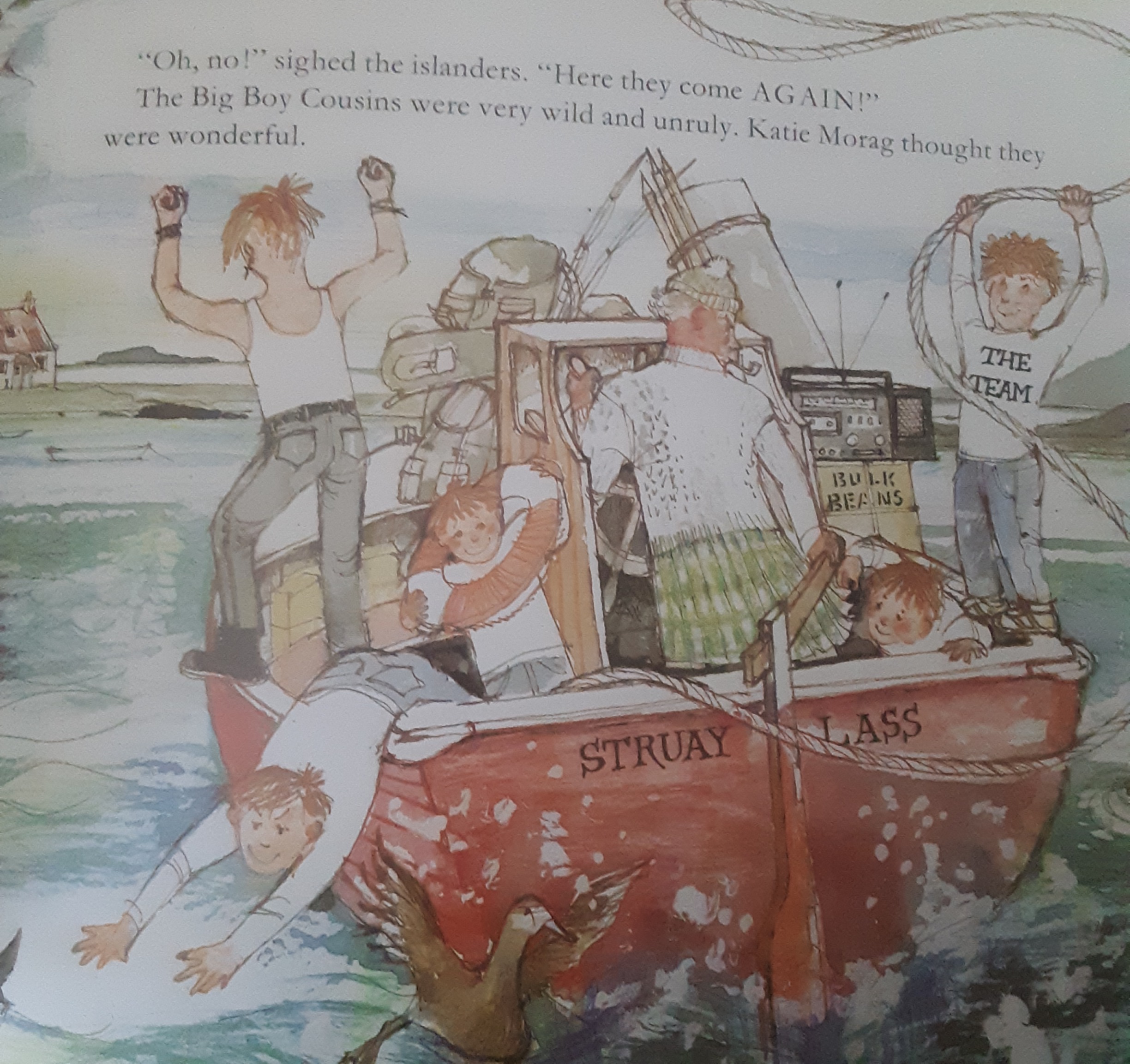
Katie Morag’s grandmother, who is known on the Isle of Struay, Scotland as Grannie Island, has invited a batch of Katie’s boy cousins for a visit. The cousins are full of mischievous pranks and out-of-bounds behavior that make the other islanders dread their annual appearance. Katie, however, is looking forward to some fun. How will Grannie Island handle this wild bunch?

Mairi Hedderwick paints the skies, sandy beaches, and small villages of an island in the Inner Hebrides for young readers. The Isle of Struay is based on the actual Isle of Coll. There are more adventures with Katie Morag to be had for readers ages 5-9.

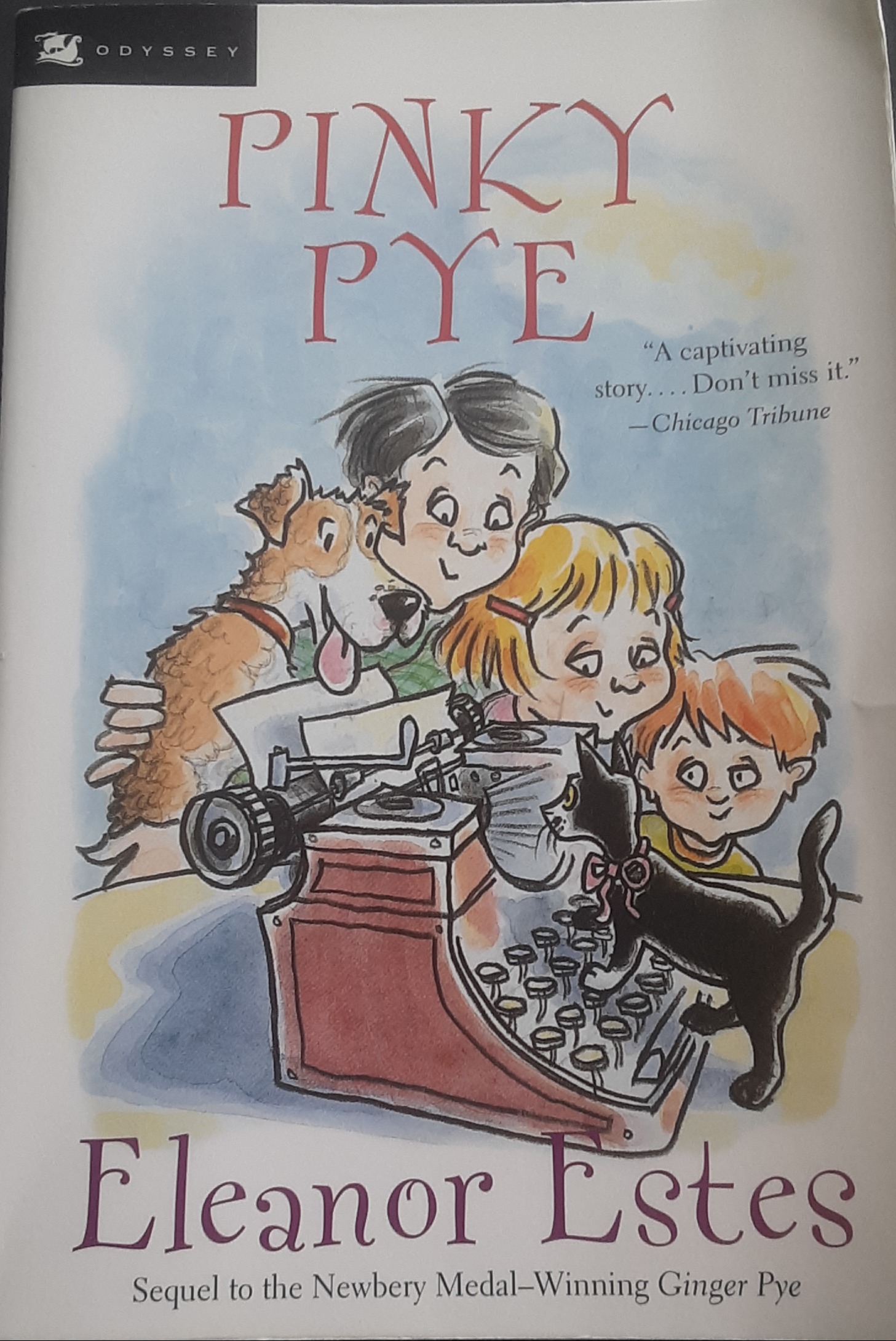
Pinky Pye by Eleanor Estes c1958 This edition Odyssey Classics by Harcourt printed in 2000 with original illustrations by Edward Ardizzone

The Pye family, including their famous dog Ginger and smart cat Gracie are headed off to Fire Island for the summer. Father Pye, a renowned ornithologist, has been asked by Washington to investigate the very unusual sighting of a puffin by a reliable bird watcher on Fire Island. The bird watcher agrees to rent a cottage to the Pyes for a reasonable price, so Mr. and Mrs. Pye, Jerry age ten, Rachel age nine, their small Uncle Bennie age three, their pets, and piles of luggage are soon waiting for the ferry that will take them to the island.

Soon after their arrival the Pyes add a kitten named Pinky, for her raspberry pink tongue, to the family. Pinky is the only cat ever known to possess the ability to type. Her messages are some of the best parts of the book.

The authors words: As typed by Pinky… ” The String Bean Game”

  • a. This important game HAS to be played with someone.
  • b. Go to the icebox , sit in front of it, say “Woe,” and Pye, or whoever you own will come. Pye will understand what you want, for you will have the eager string bean game expression on your face.
  • c. Now, crouch and wiggle This means you are ready for the throw.
  • d. Now. He throws Bean. Tear after it as though you have been shot out of a cannon. People are always surprised to see how fast you can get going without having to gather speed. Never let speed be ungathered. Race after Bean, bring it back and lay it at Pye’s feet. He throws Bean again. Race after it again. and if it has gone around a corner, knock recklessly into a wall as you make the speedy turn. Pick it up and trot back with it……….”Hurray!” the people will exclaim noisily. “She retrieves like a dog!” What nonsense! Dogs retrieve like dogs—huff, huff, pant. Cats retrieve like cats and bring variety to the game.
There is a mystery to be solved among other island events. Gracie the cat wants very much to gain entrance to the eaves to investigate. Everything that is good in a middle-grade book exists in this summer story. Give it a try.

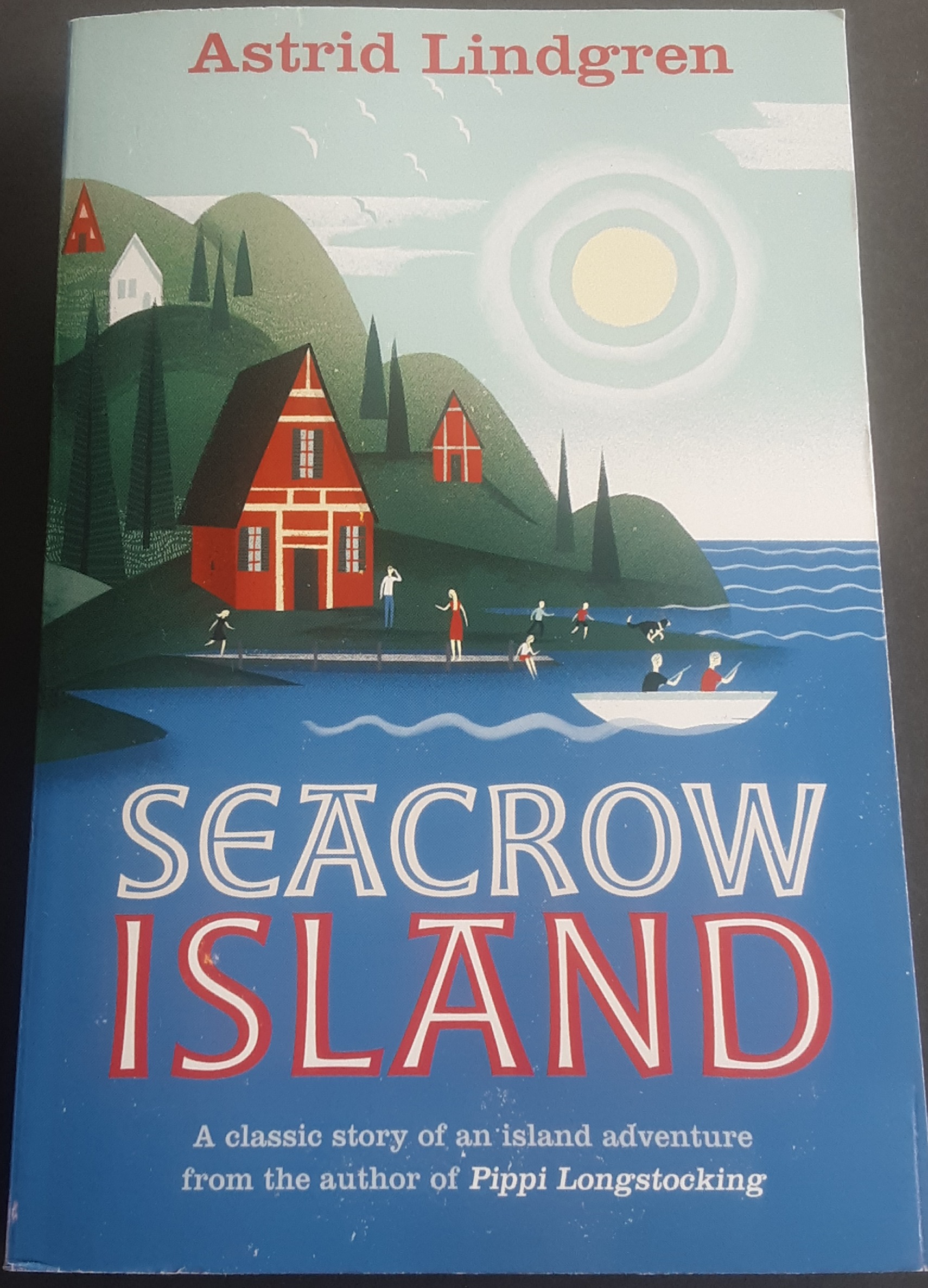
Seacrow Island by Astrid Lindgren. c1964. This edition published 2016 by Oxford University Press

The author’s words:

“If you go down to the quay in Stockholm on a summer morning and see a little white boat called Seacrow I lying there, that is the right boat to take and all you have to do is to go on board…….She crosses wide expanses of open water and steams through narrow channels, past hundreds of green islands and thousands of grey, bare rocks. She does not go fast and the sun is low when at last she reaches the quay at Seacrow Island. She has no need to go any further, for there is only the open sea beyond with its bare rocks and its islands where nobody lives except eider ducks, gulls and other sea birds.”

The Melkerson family is on their way to summer at a place they have never been before. Melker, the father, has rented a cottage sight unseen because he liked the name Seacrow Island. His family consists of Malin, his nineteen-year-old daughter and three sons, Johan, Niklas, and Pelle. Pelle is the youngest and he is seven. Will the unknown Carpenter’s Cottage turn out to be cozy? What is there to do on such a remote and quiet island? The Melkerson’s adventures are about to begin as they learn about sailing, fishing and the wildlife all around them. Ever since their mother died, the brothers hope that the young men who fall in love with Malin every quarter hour will not marry her and take her away. She is the support and heart of the family. New friends and interesting characters are always to be found in a story by Astrid Lindgren. This book has been a favorite in Sweden for generations of readers.

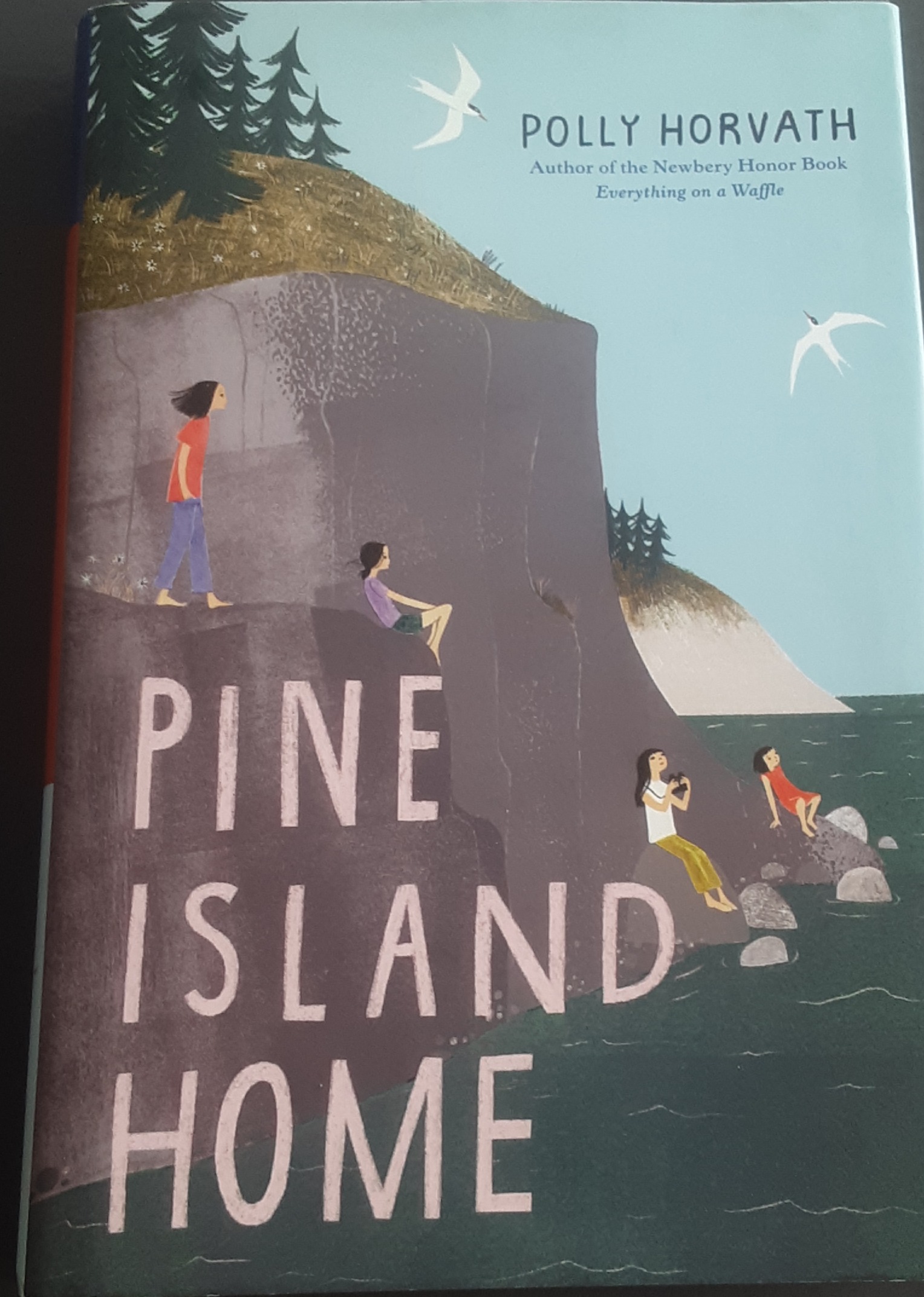
Pine Island Home by Polly Horvath. c2020 Holiday House

The adults in the lives of the McCready sisters have selfishly and thoughtlessly allowed themselves to be carried off by tsunamis and heart attacks, leaving the girls orphaned and alone. Fiona fourteen, Marlin, twelve, Natasha, ten, and Charlie, eight, have been raised in a missionary family and have learned to adjust to living in all sorts of places, but now they face new challenges at their Aunt Martha’s farm on an island in British Columbia, Canada. Fortunately Aunt Martha left them the farm, money, and a kitchen fully stocked with food, and even enrolled them in the local schools. The sisters are determined to hide the absence of a responsible adult from Social Services because they fear being separated. After all they have been through, that would be unendurable.

The McCready girls are a match for difficulties that would defeat less talented and intelligent children. Fiona makes a deal with cranky neighbor Al Farber to pose as their guardian in exchange for hot homecooked meals prepared by Marlin who is quickly becoming a proficient cook. The story of how the girls learn to cope is the main theme of this story, the island location is secondary. Helpful adults do turn up, and the strong bond between the sisters is reassuring. Tune in to the sequel, “Pine Island Visitors” for more Polly Horvath magic.

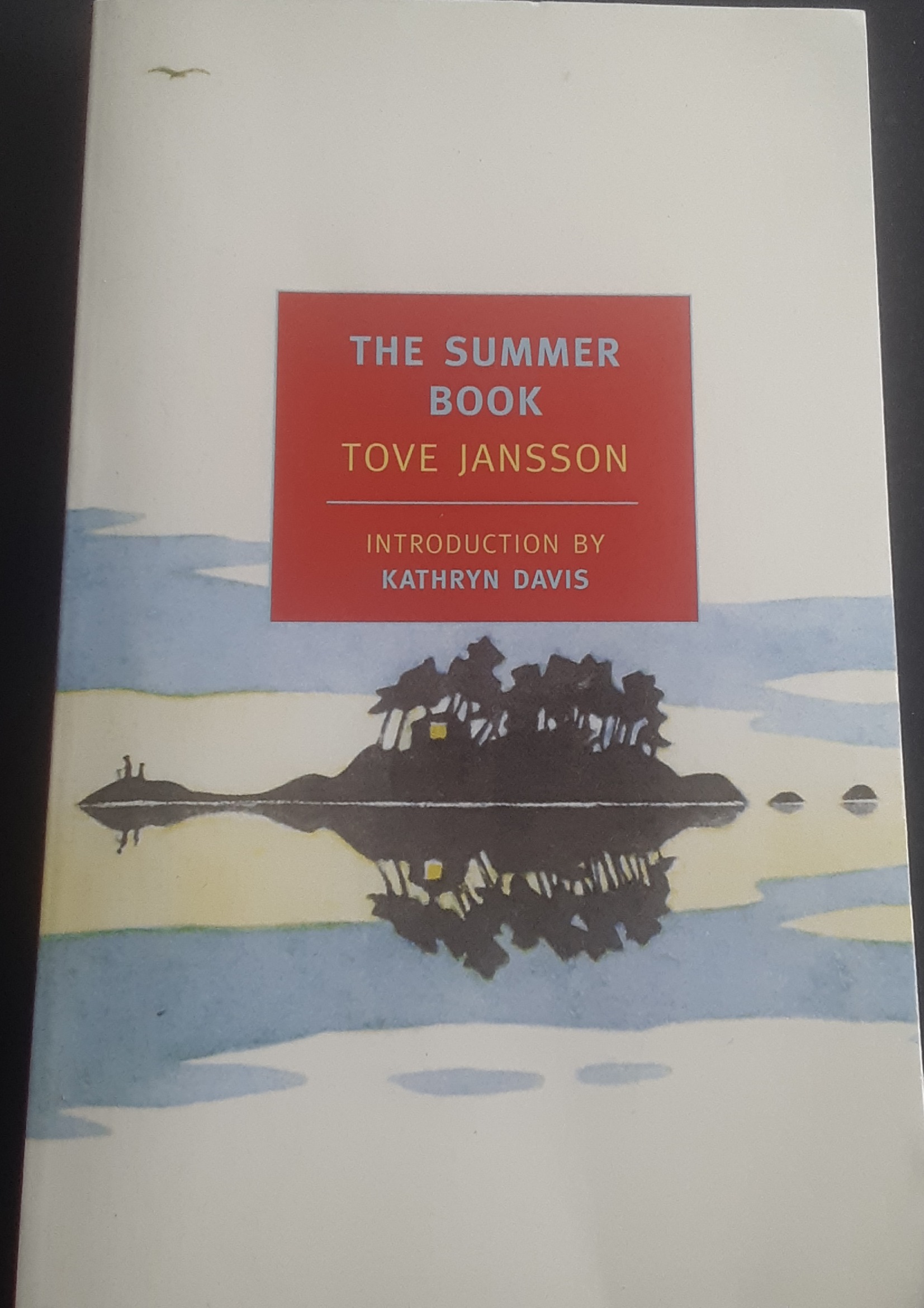
The Summer Book by Tove Jansson c1972 This edition published by The New York Review of Books in 2008.

This one is for the grown-ups. The setting is a tiny island in the Gulf of Finland. Six-year old Sophia, her father and grandmother are sharing a small cottage for the summer. There is no plot to follow, just the passage of a season on the island. Each chapter is a slice of life episode with weather, nature, an occasional visitor, and conversations between the child and her grandmother as the main events. Sound too quiet? Here are the authors words about a tremendous storm that broke as the family were fishing away from their own island:

“Papa broke the padlock on the door with a big stone. He did it to save his family. ……………….The walls of the house trembled steadily with the thundering of the sea, and it began to get cold. Spume from the breakers covered the windowpanes and ran over the sill and across the floor. Every now and then Papa would get up and go out to see to the boat.

The seas breaking against the sheer outer side of the island had grown. One after another, the waves rose up in their white immensity to a tremendous height, and foam hissed against the rocks like the blows of a whip. Tall curtains of water flew across the island and sailed on west. The storm was titanic!”

Islanders do not always welcome those who build large new houses that mar the view. Here are the author’s words when Sophia and Grandmother get caught checking out the new neighbor’s island and are invited in:

“Don’t look so cross,” Grandmother whispered. “This is socializing and you have to learn how to do it.” Malander came back with bottles and glasses and put them on the table. “Cognac, he said. “And whiskey. But I’m sure you’d rather have a lemonade. “I’m very fond of cognac,” Grandmother said. “A small glass and no water, thank you. Sophia? What would you like?”

“The other!” Sophia hissed in her ear. “Sophia would prefer a lemonade.” Grandmother said, and thought: We’ve got to teach her some manners. We’ve made a mistake. She has to spend more time with people she doesn’t like, before it’s too late.”

Sophia and her Grandmother talk about life, death, heaven, hell, and what happens when an angleworm gets cut in half. They build a miniature Venice, trade a cat that kills birds for a boring, soft lap cat, and have arguments. You are given the flavors, scenery, and essence of a Northern Island to dwell in and remember after this slim book ends. I recommend a second reading, maybe more.

Put Down that “100 Most Important Books of the 20th Century” list and Smile, Pardner: HOW TO TALK ABOUT BOOKS YOU HAVEN’T READ by Pierre Bayard

How to Talk About Books You Haven’t Read by Pierre Bayard. c2007 Published in the US by Bloomsbury USA Translated from the French by Jeffrey Mehlman

This was not the book I meant to talk about this week, but during a long overdue dusting, sorting and culling of my books, this one fell out on my foot. I don’t remember when I bought it, and somehow I had not read it. It was love at second sight! I still remember the day I was treated to a shocked silence in the bookstore where I worked, when I admitted to a co-worker that I had not read Ulysses by James Joyce. “But, it is a seminal work!”, I can hear the tone yet! I am sorry, people in Dublin, but after that I have been determined NOT to read it. You have a list in your head of books that you “should” have read but haven’t. Do you think that list will be posted on your gravestone? Mr. Bayard will set you free in this discussion of our current reading culture and how to navigate social or professional literary conversations around books you have not read or have forgotten.
The author’s words:

“There is a tacit understanding in our culture that one must read a book in order to talk about it with any precision. In my experience, however, it’s totally possible to carry on an engaging conversation about a book you haven’t read—-including, and perhaps especially with someone else who hasn’t read it either.”

“If we wish, then, to learn how to emerge unscathed from conversations about books we haven’t read, it will be necessary to analyze the unconscious guilt that an admission of non-reading elicits. It is to help assuage such guilt, at least in part that is the goal of this book.”

Analyze and assuage he does. Mr. Bayard is a literature professor and a psychoanalyst. His book is full of examples of types of non-reading from famous writers, ideas to ponder, and strategies to help you speak about books you haven’t read without shame.

Oscar Wilde, as quoted in the front of the book: “I never read a book I must review; it prejudices you so.”

Do read this book, really.

In the High and Far-Off Times… The Elephant’s Child

” The Elephant’s Child” from ” Just So Stories” by Rudyard Kipling originally published 1902. This edition Puffin Classics c2016

The Author’s Words:

“By and by, when that was finished, he came upon Kolokolo Bird sitting in the middle of a wait-a-bit thorn bush, and he said, ‘My father has spanked me, and my mother has spanked me; all my aunts and uncles have spanked me for my ‘satiable curiosity; and STILL I want to know what the Crocodile has for dinner!’

Then Kolokolo Bird said, with a mournful cry, ‘Go to the banks of the great grey-green, greasy Limpopo River, all set about with fever-trees, and find out.’ “

The Elephant’s Child had only a short, blackish, bulgy nose, and he left an untidy trail behind him of items he dropped because he had no way to pick things up. How he meets a crocodile and is given a new, much more useful appendage is a favorite Just So tale.

For richness of language, Kipling is your man. Has anyone enjoyed playing with words or reveled in the sounds of words more? “The Elephants Child” is fantastic fun to read aloud. Kipling’s words roll off the tongue, and adhere to the brain. I have had “The great grey-green, greasy Limpopo,etc.” phrase floating around in my mind since I first heard the words read aloud by my fifth-grade reading teacher. With a Kipling-enhanced brain, one can drift away to wonder what fever-trees look like and imagine the Bi-Coloured-Python-Rock-Snake and his scalesome, flailsome tail. There are picture book versions of this story, but perhaps something is lost if the listener is distracted from the charm and inventiveness of the language.

Reading the “Just So Stories” is reading for the ear. The listeners you share them with are introduced to poetry, exotic words and locations, and of course, all the fabulous origin stories. Try “The Sing-Song of Old Man Kangaroo” and “The Cat Who Walked by Himself”… “The wildest of all the wild animals was the Cat. He walked by himself, and all places were alike to him.”

Hans Christian Andersen–The Essential Dane

Illustration from The Nightingale by Hans Christian Andersen, retold by Stephen Mitchell and Illustrated by Bagram Ibatoulline Published by Candlewick Press c2002

Can we see ourselves with eyes glued to our cell phones just as this Emperor is gazing fondly at his mechanical nightingale? Anybody warning us about being overly beguiled by things artificial today?

Andersen’s tales still have a place in our world, and young readers have many options for encountering them. There seems to be always a new collection of his fairy tales in the works and there are also the ballets, plays, and films inspired by them. I remember adoring Liza Minnelli as the true princess in Faerie Tale Theatre’s TV production of The Princess and the Pea. Good one to share with the grandchildren some evening…

I sold an inexpensive hardcover edition of” The Emperor’s New Clothes”, illustrated by Virginia Lee Burton at book fairs. You know Virginia Lee Burton from” Mike Mulligan and his Steam Shovel”, and” The Little House”. There is probably an edition of “The Little Mermaid” for every taste and budget. My favorite collection is “Seven Tales by H.C Andersen” translated from the Danish by Eva Le Gallienne with pictures by Maurice Sendak. published in 1959. I have the 1991edition by Harper Trophy.

Illustration from “The Princess and the Pea” by Maurice Sendak from “Seven Tales by H.C. Andersen”

“The Ugly Duckling” was an important story to me as a child. I played that part in a school play, think the teacher sensed I needed to have the hope of a swan transformation in my future. Hans Christian Andersen’s tales are good companions. He put life in inanimate objects, and gave those lives meaning. A collection of his stories IS a home library essential.

On the Way to Growing Up: Jim The Boy by Tony Earley

Jim the Boy by Tony Earley c2000 Little, Brown and Company

The author’s words:

“Oh Jimmy,” she said. “How in the world did you get to be ten years old?”

“I don’t know, Mama,” Jim said, which was the truth. He was as amazed by the fact as much as she was. He had been alive for ten years; his father, who had also been named Jim Glass, had been dead for ten years and a week. It was a lot to think about before breakfast.

Mama put the biscuits she pulled from the oven into a straw basket. Jim carried the basket into the dining room. The uncles sat around the long table.

“Who’s that?” Uncle Coran said.

“I don’t know,” said Uncle Al.

“He sure is funny-looking, whoever he is,” said Uncle Zeno.

“Y’all know who I am,” said Jim.

“Can’t say that we do,” said Uncle Coran.

“I’m Jim.”

“Howdy,” said Uncle Al.

. “Y’all stop it,” Jim said.

Jim is being raised by his widowed mother with the help of Jim’s three bachelor uncles, who all live in the houses they have built nearby. The time is The Great Depression and the place is a small farming town called Aliceville, North Carolina. The story covers Jim’s tenth year, beginning with an account of Jim’s birthday, with some ups and downs. Jim attends the new consolidated school, where the first electric lights are soon to be connected. A baseball game between the “town” boys and the “mountain” boys brings an unexpected friendship. Jim begins to learn about the wider world on some excursions out of town with Uncles. There is a sobering event that brings the hard times of the Depression home, and some racial tension when Jim, a friend, and the black field hand Abraham are confronted by a gang of toughs. In each case, an adult is present to protect and guide. You will leave this book feeling that the world is inhabited by decent people, and wanting to work harder at being one yourself. Can’t ask more of any book. It is accomplished naturally, almost magically, by a very gifted writer.

There is so much to think about and appreciate in Tony Earley’s depiction of the concerns and feelings of a young boy beginning to leave childhood behind. The writing is plain and simply elegant.. The characters are authentic and will live with you long after you close the book. I would place it in the top tier of books for young adult readers, and their parents. There is some great modeling of how to help a child through those times when the consequences of their actions are painful. The tone of this book is not dour, but hopeful and full of humor. This book got great acclaim and praise from The New York Times Book Review, The Denver Post, Christian Science Monitor, The Boston Globe, Los Angeles Times Book Review, and many others at its publication. It is too good to be lost in the avalanche of titles published each year. If you know someone who wants to write, make sure they get their hands on this book.