November: Poetry and Picture Books for Early Winter.

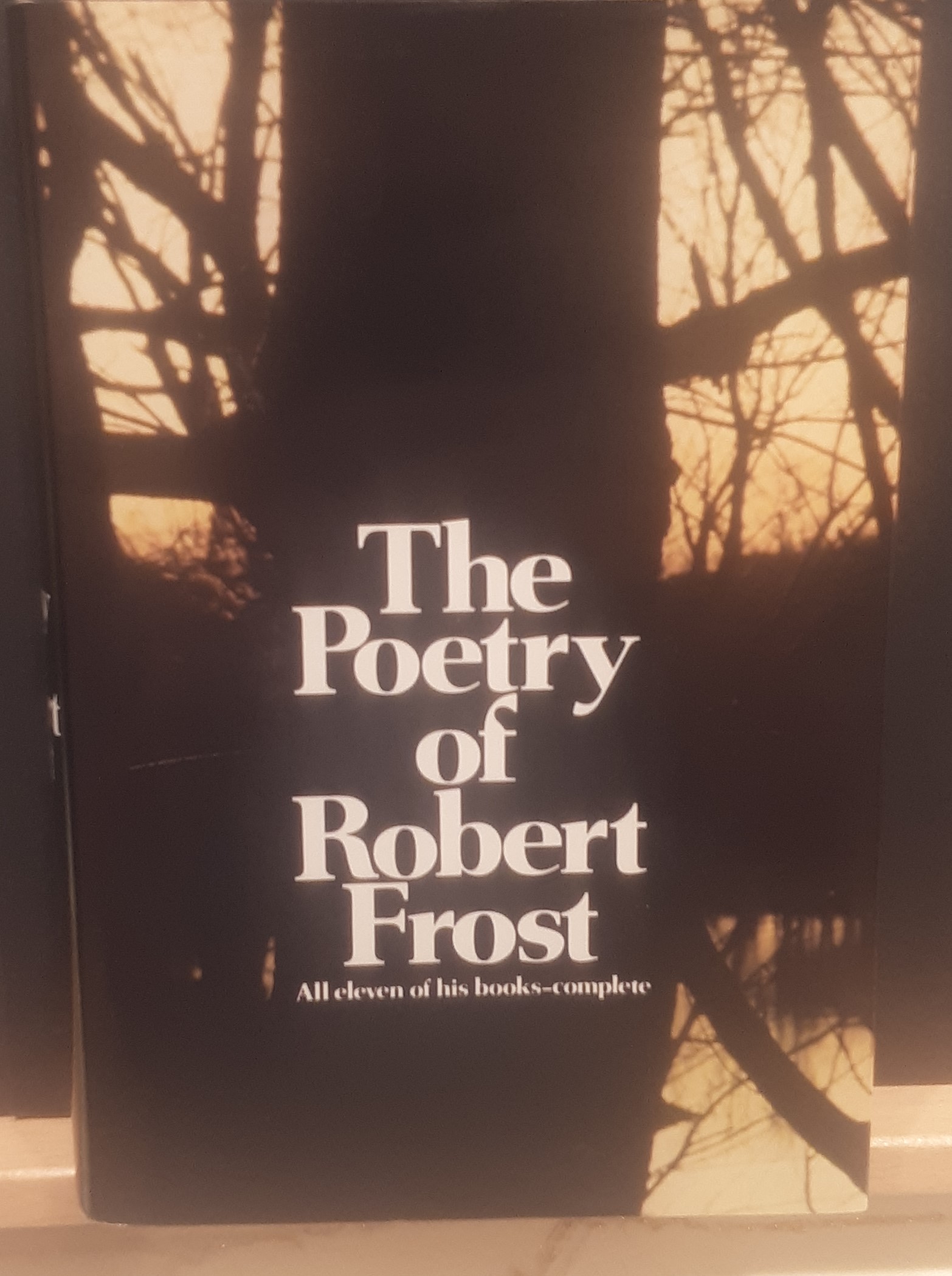
The Poetry of Robert Frost The complete poems c1969 Henry Holt & Co. New York

That IS November on the cover. You do not have to delve far into this volume to find My November Guest. It is right up front on page 6… If you are born in New England, you are required to know a few Frost poems by heart. We carry on about the weather as if there is no other topic of conversation, after we briefly go over the latest town meeting gossip, and Robert Frost is the best interpreter of how the weather contributes in making us the way we are. Read Brown’s Descent. We know it is colder and darker in Arctic regions, but they have the Northern Lights, don’t they.

My November Guest   by Robert Frost

My Sorrow, when she's here with me,
Thinks these dark days of autumn rain
Are beautiful as days can be;
She loves the bare, the withered tree;
She walks the sodden pasture lane.

Her pleasure will not let me stay.
She talks and I am fain to list:
She's glad the birds have gone away,
She's glad her simple worsted gray
Is silver now with clinging mist.

The desolate, deserted trees,
The faded earth, the heavy sky,
The beauties she so truly sees,
She thinks I have no eye for these,
And vexes me for reason why.

Not yesterday I learned to know
The love of bare November days
Before the coming of the snow,
But it were vain to tell her so,
And they are better for her praise.

This poem is followed shortly by Storm Fear, but let’s not cower in the cave yet. What are we supposed to think in the opposite to May month? Have we done everything we were supposed to in the proper season? Better get caught up! Did we forget to appreciate what we have, better get on that too, especially if we a are certain age. Time is running out…

Stop right there, friends, and take in these November authors and artists who help us see the beauty in this time at the end of the year. If you are one of those people who have your Holiday shopping done, fie on you, but go outside after dark and see which constellations are visible. Enjoy the feel of a warm sweater, take the kids for a walk and ask them what they see. Bake something and bring it over here!
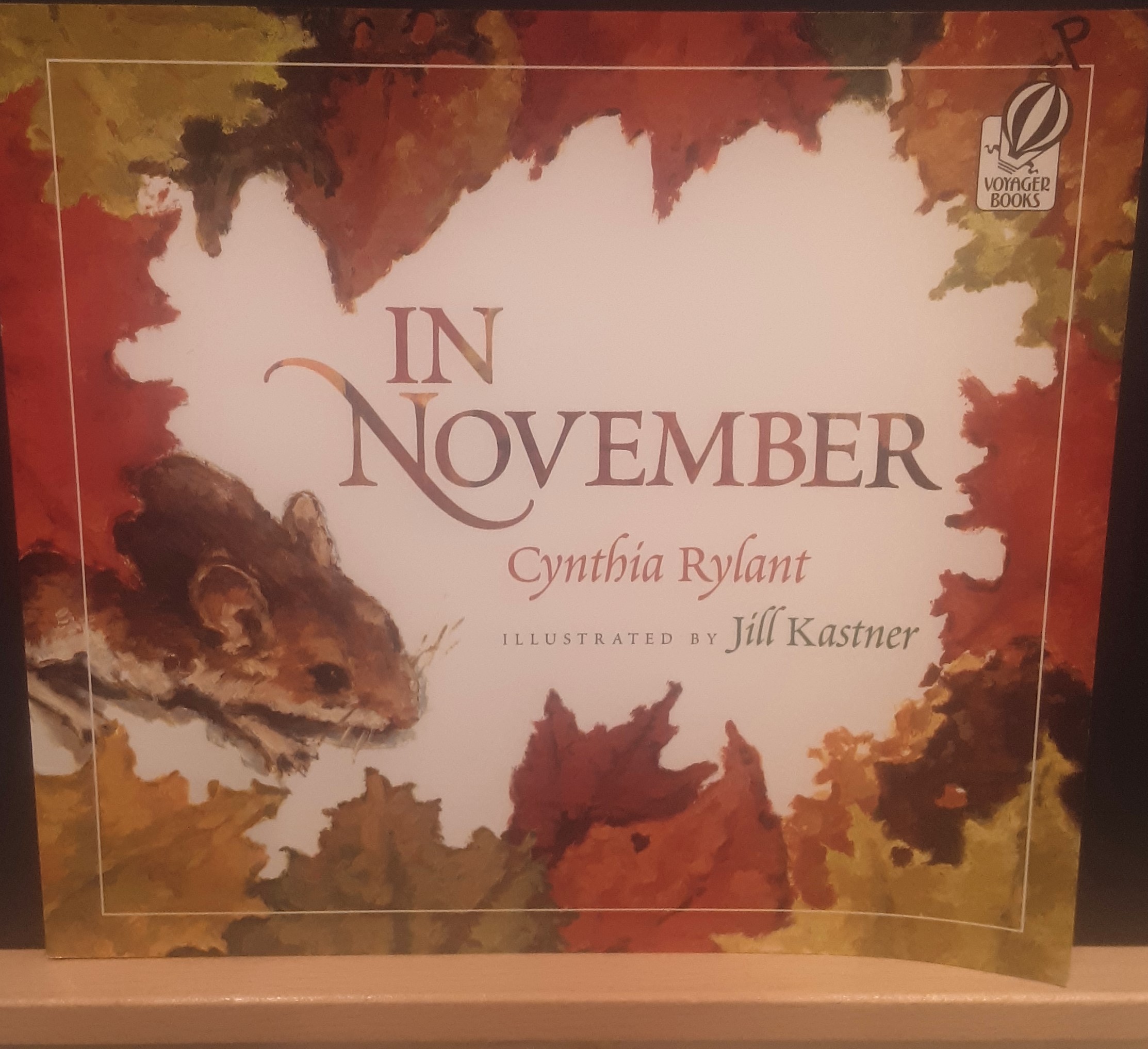
In November by Cynthia Rylant Illustrated by Jill Kastner c2000 Voyager Books / Harcourt Inc.

Cynthia Rylant takes the youngest children on a simple stroll through the month, visiting the animals, scents, crisp sounds, and sights of winter coming on. Whether you live where it snows or not, changes are going on and children like to help you notice them. It is good to take their minds off the advertising and noise of the approaching Holidays with a little walk outdoors and some quiet listening. This book sets the tone for seeing the particular beauty of early winter.
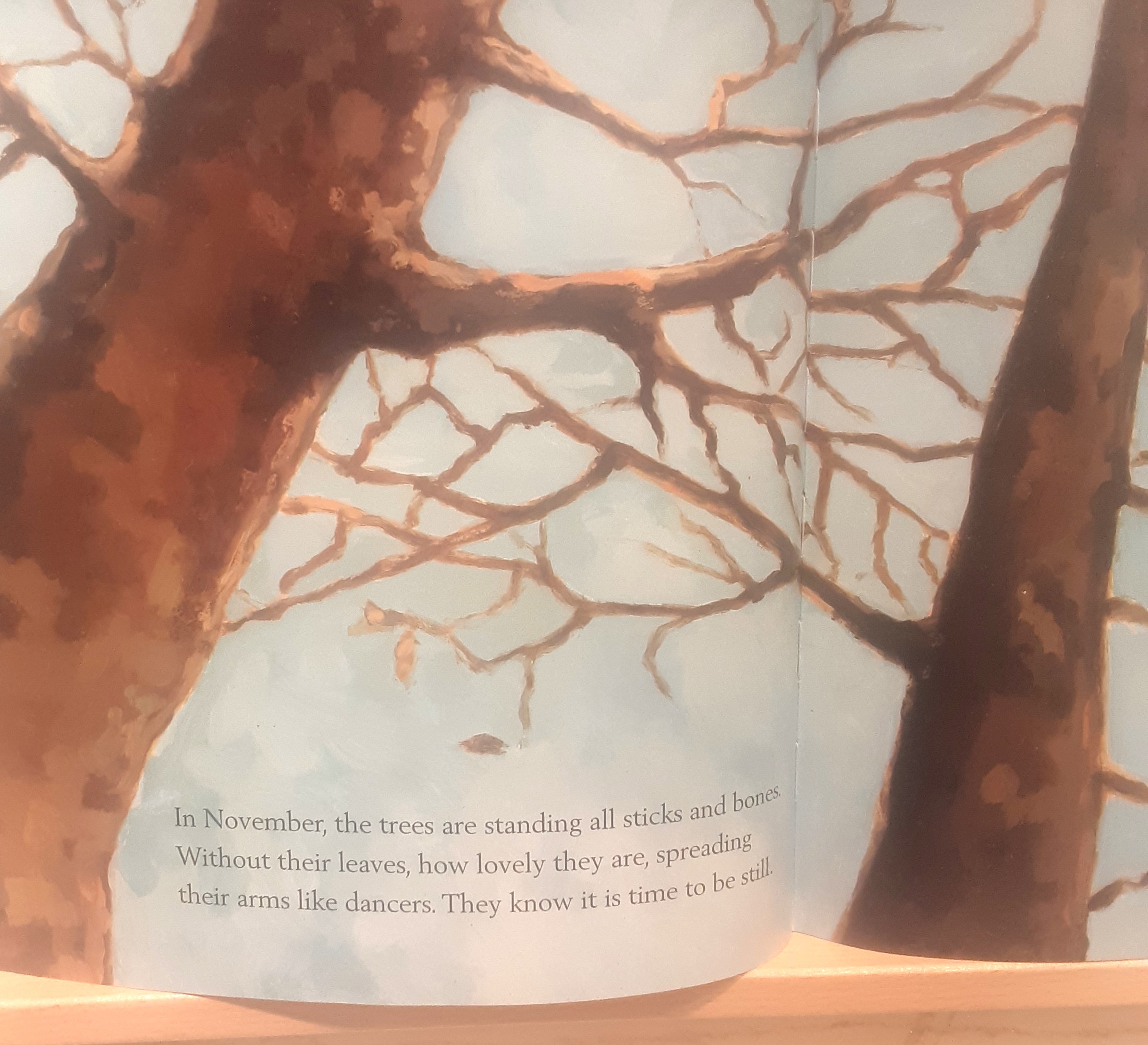
Illustration by Jill Kastner from In November written by Cynthia Rylant
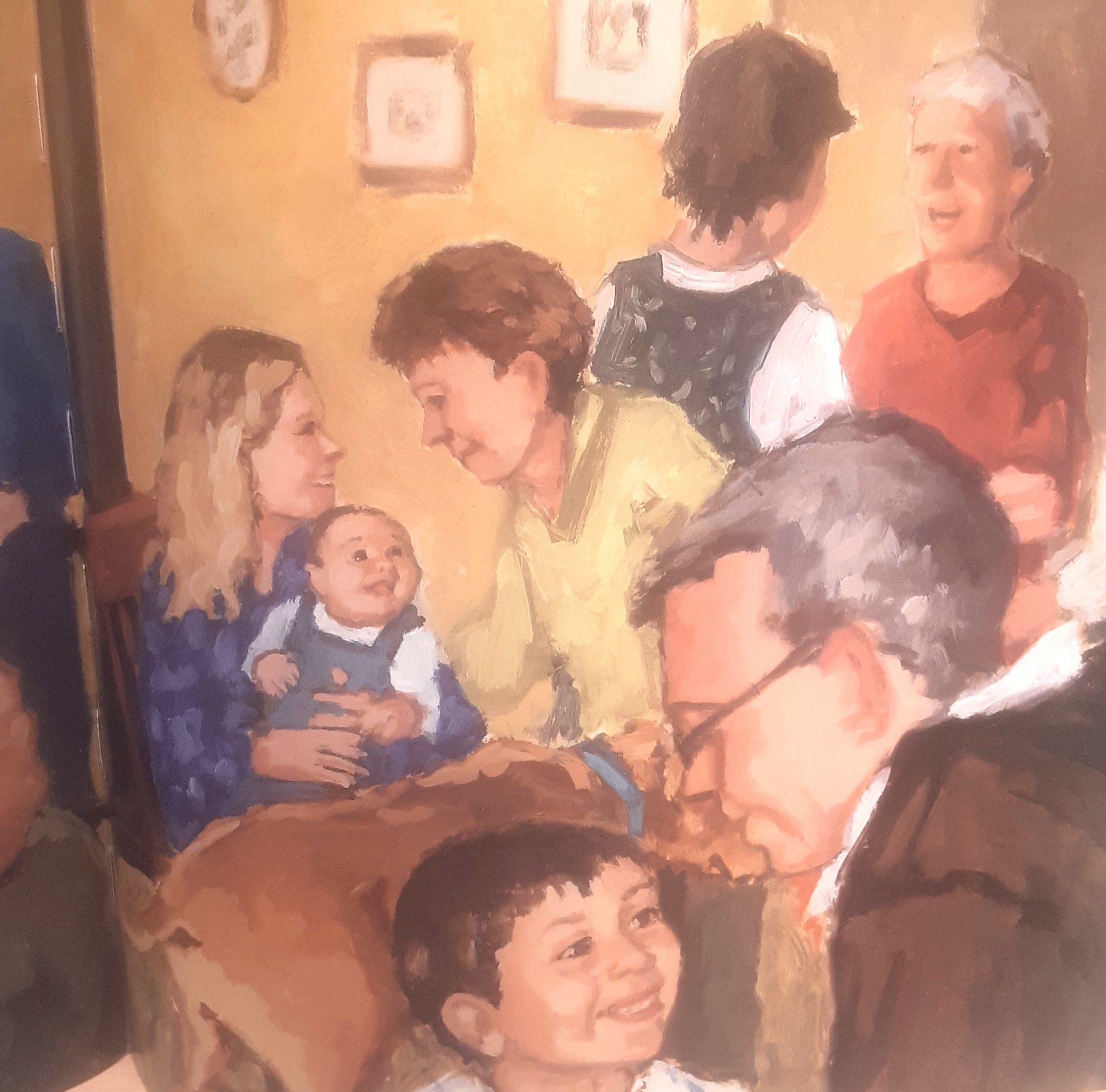
November is also warm inside with the folks.
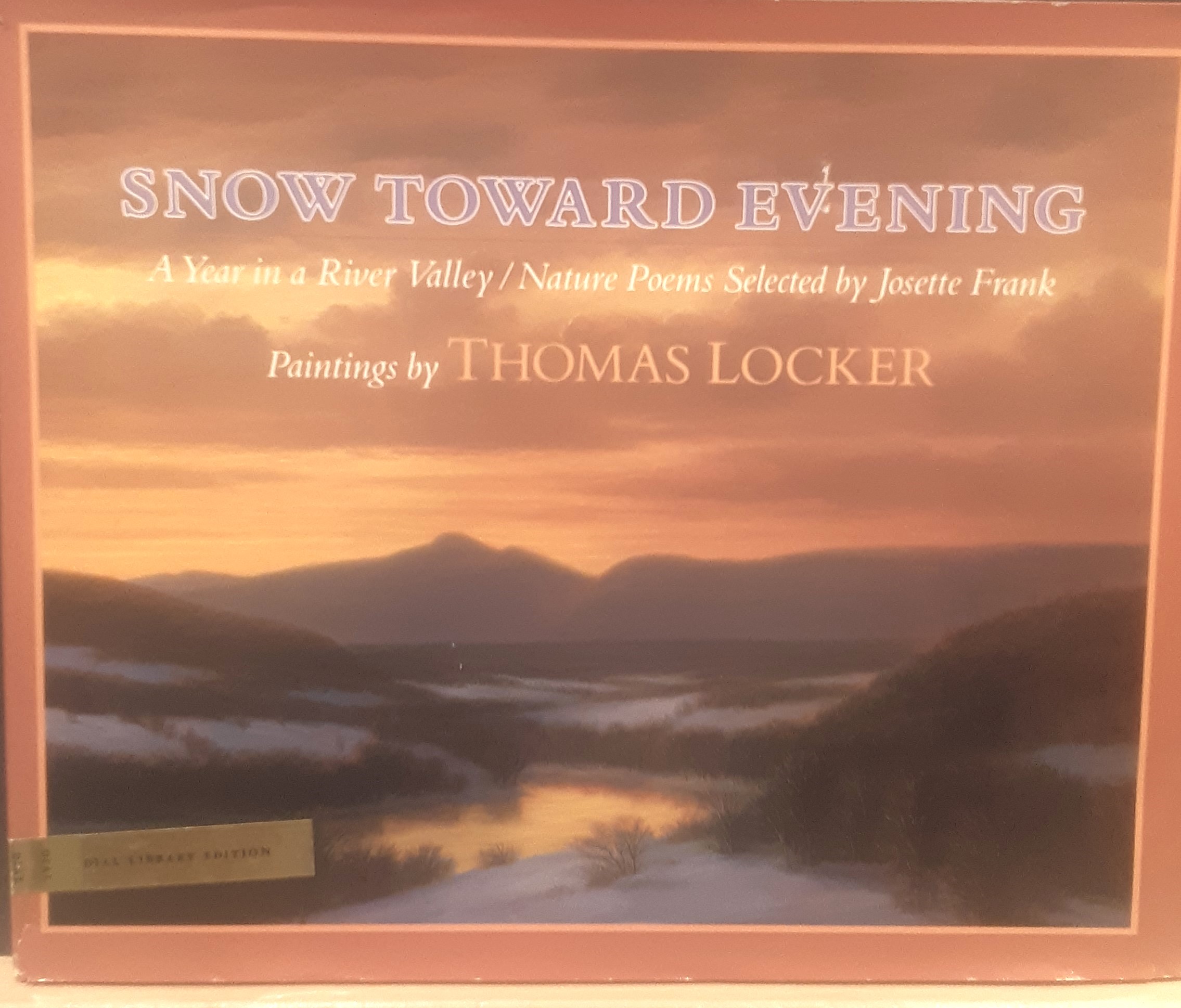
Snow Toward Evening : A Year in a River Valley Poems selected by Josette Frank with paintings by Thomas Locker c1990 Dial Books / Penguin Books : New York
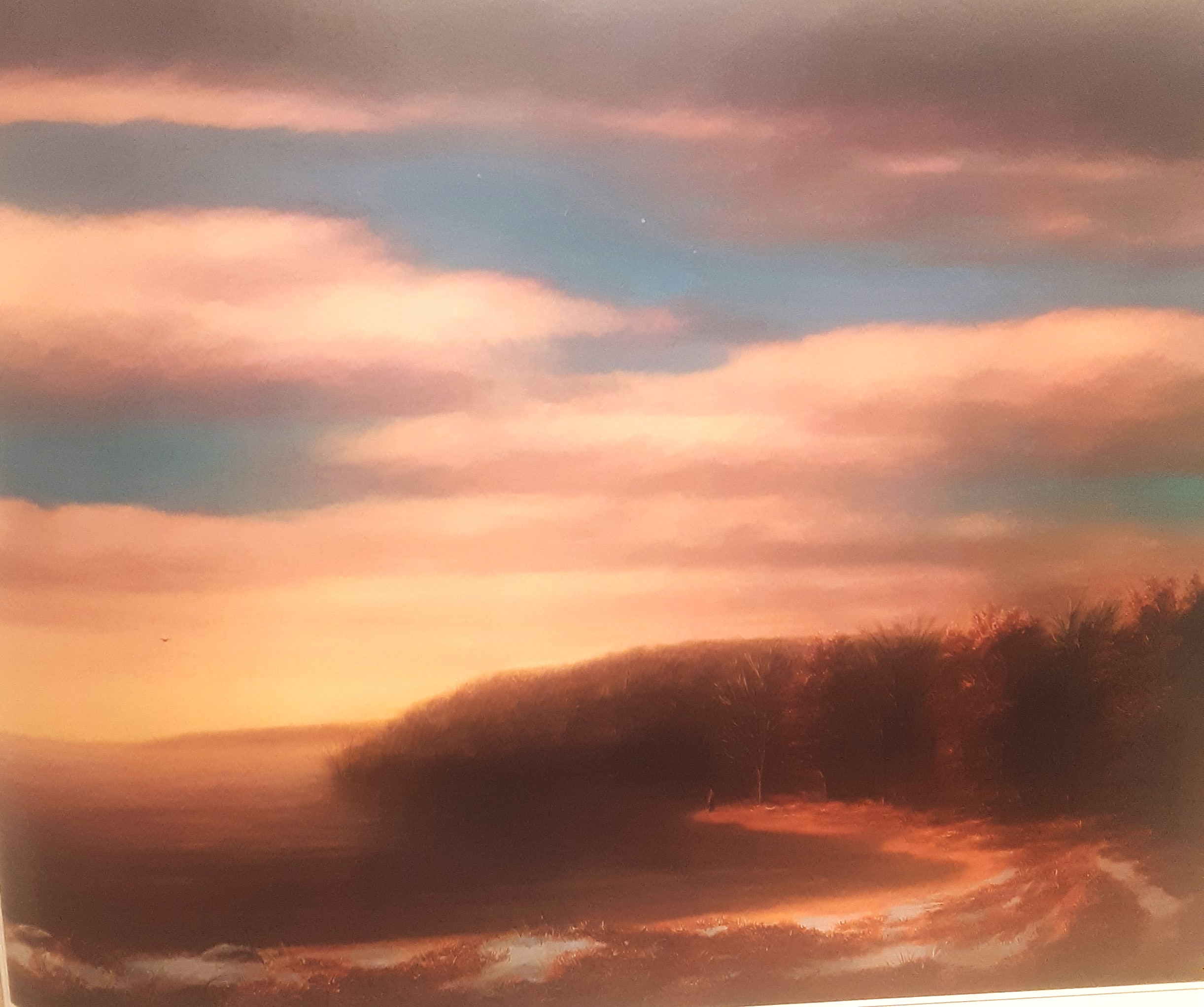
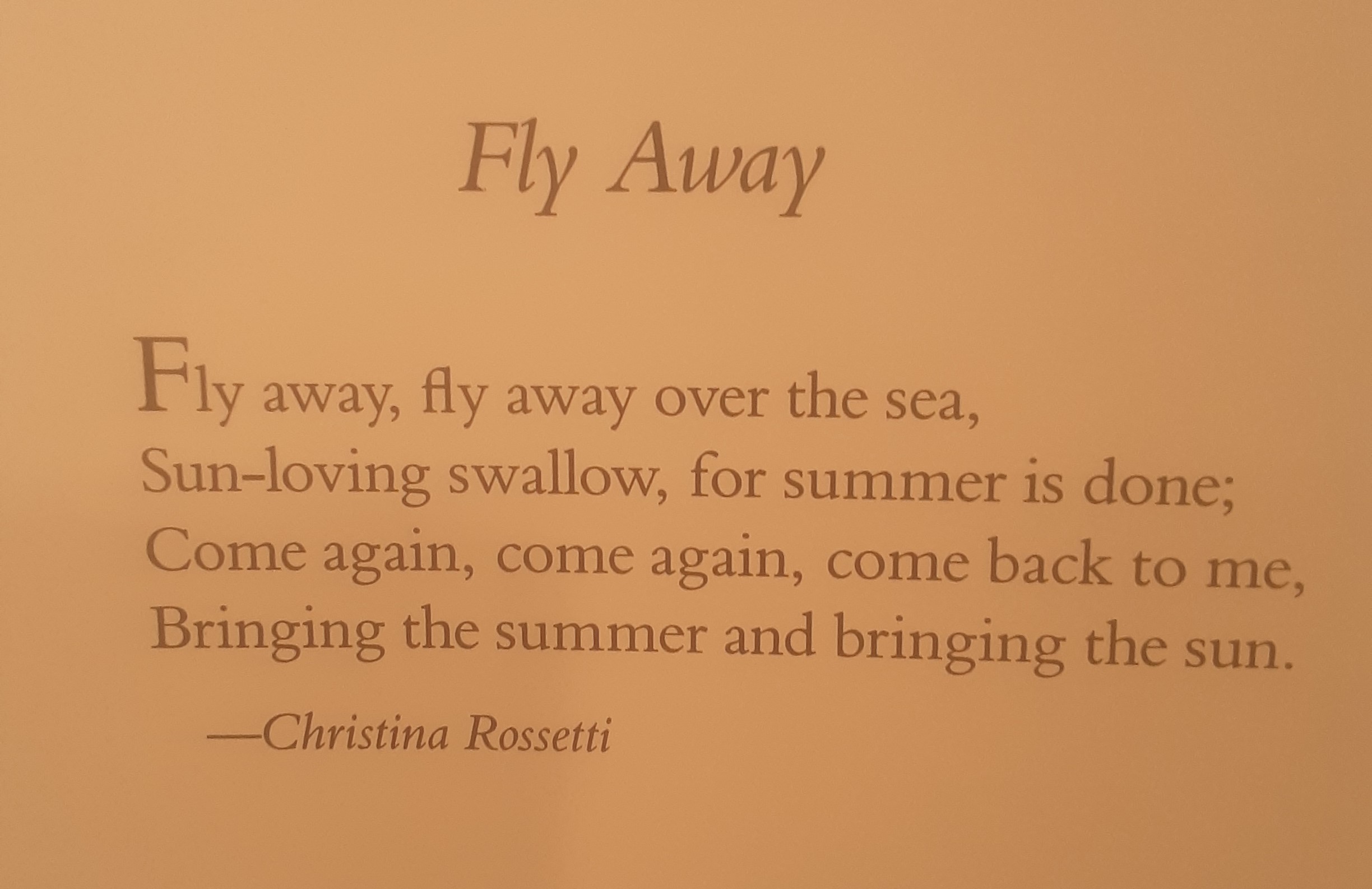
Short selections from famous poets and paintings by Thomas Locker showcase natural events in a river valley. There is a lovely view for each month of the year. From wild geese flying across cloudy skies in August, to golden leaves on the ground in October, and blue skies over daffodils in May, this book opens young eyes to beauty. November is featured above. Other books by Thomas Locker include: Where the River Begins, The Mare on the Hill, Sailing with the Wind and other lovingly illustrated titles.

Lest you become melancholy:
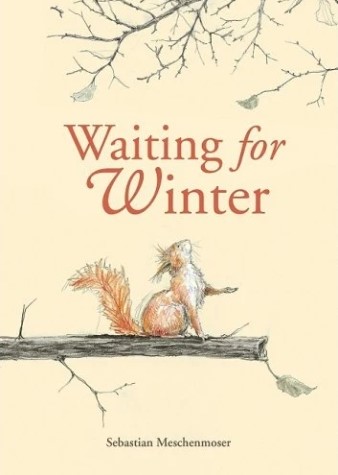
Waiting for Winter Written and illustrated by Sebastian Meschenmoser c2009 Kane Miller : Tulsa First published in Germany in 2007.

Three friends, Squirrel, Hedgehog, and Bear have never seen snow and they are determined not to miss it this year. Deer has told them that snow is white, wet, cold and soft. While waiting impatiently for snow to appear, the friends amuse themselves by singing sea shanties, and finding various objects that fit the description deer gave them, but are hilariously wrong. The animals pictured here are all a bit disheveled and that fits the comic tone of the story perfectly. This book always broke up my story time audience who were also very eager for the first flakes to fall.
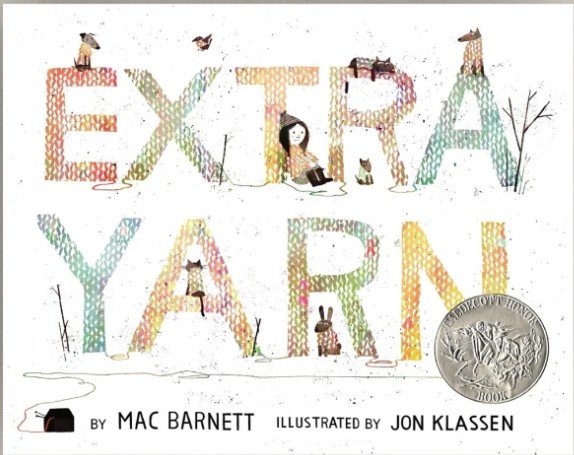
Extra Yarn by Mac Barnett Illustrated by Jon Klassen. c2012 HarperCollins : New York

November is sweater season. Annabelle is a knitter and her magic ball of yarn never runs out. She knits for friends, family, cats, dogs, and perhaps even large, inanimate objects that could use some new coverings. When her never ending ball of yarn is stolen by an evil archduke, Annabelle and her whole town are dismayed. Will the archduke’s new possession bring him what he desires?
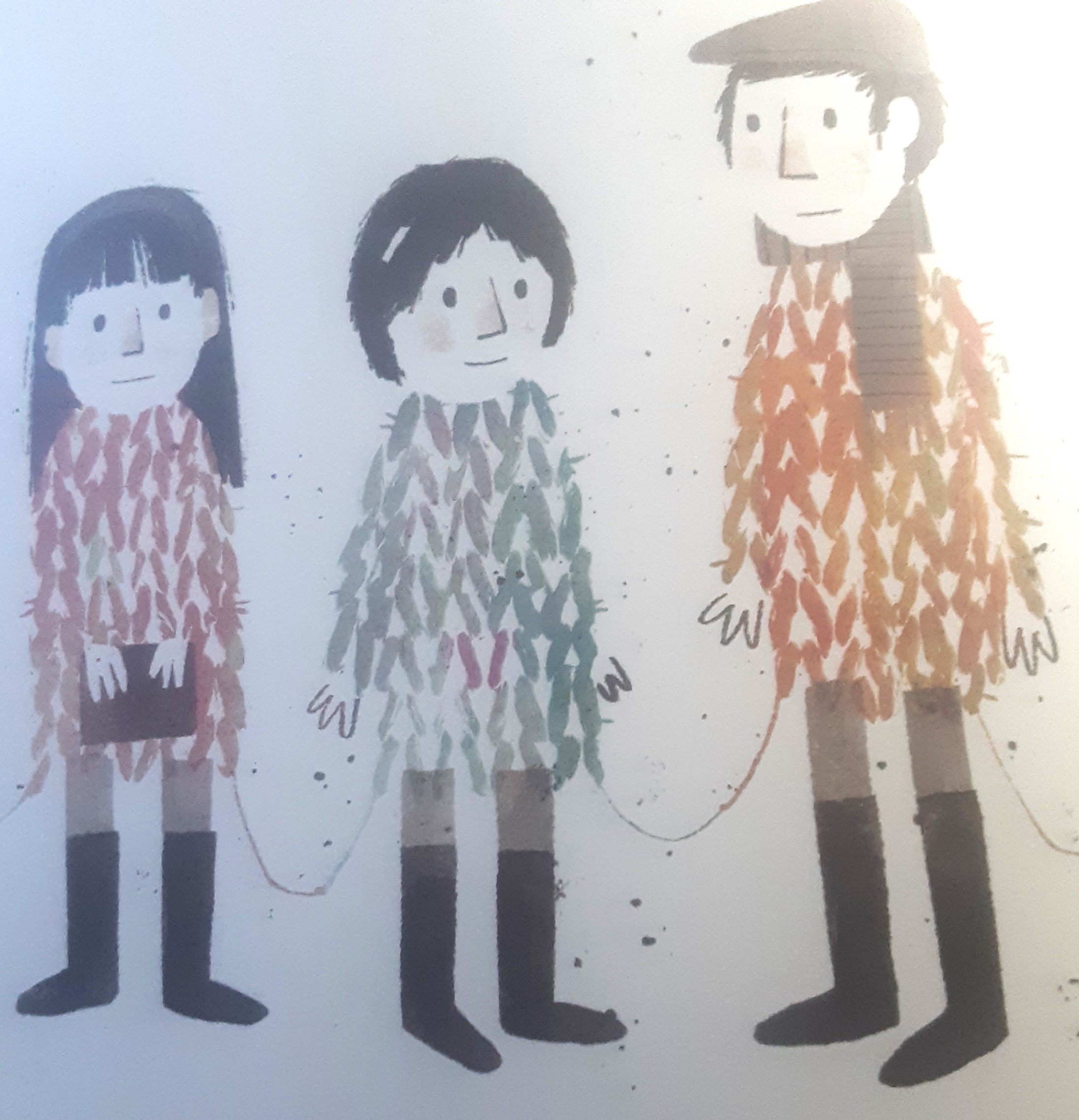
Friends of Annabelle in their new sweaters

Poetry for Regular People

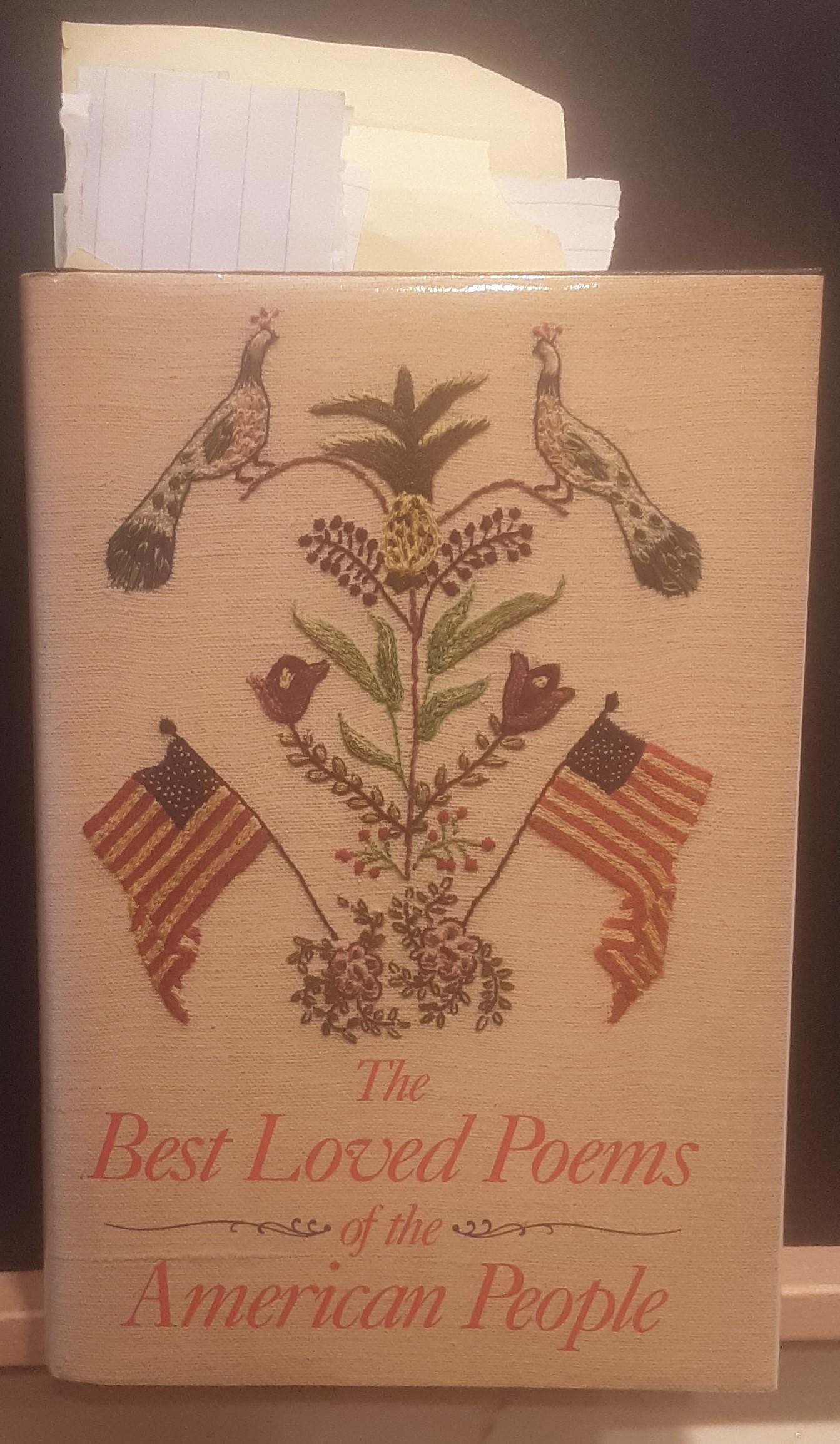
Best Loved Poems of the American People. Selected by Hazel Felleman

Best Loved Poems of the American People Selected by Hazel Felleman c1936 Doubleday & Company : New York

A Prayer

Lord, let me live like a Regular Man,
With Regular friends and true;
Let me play the game on a Regular plan
And play it all the way through;

Let me win or lose with a Regular smile
And never be known to whine,
For that is a Regular Fellow's style
And I want to make it mine!
 from the poem by Berton Braley


This book is a collection of poems put together by Hazel Felleman, who edited the Queries and Answers page of the New York Times Book Review. Her boss, Adolph S. Ochs, publisher of the New York Times, liked poetry and he set Miss Felleman to work locating poems for readers who might remember only a line or theme of a poem and wrote in for help finding the rest.

Once upon a time Americans memorized poetry. It was thought that A Fully Furnished Mind should contain a few inspirational, sentimental, maybe even patriotic poems that could be recited or recalled at appropriate moments. Nobody had cell phones in their pockets to rely on. Today, a dead battery puts a serious cramp in the dinner table conversation where a useful quote or poetic phrase is called for. Back in the day it was not embarrassing for a poem to rhyme. Memorization is much easier with a little rhythm and rhyme going for you. Poems could say simple things like "A smile is better than a frown", and still get published. This book is a collection of poems that were popular in 1935. It is a bit of a time capsule, a pretty hefty time capsule at 670 pages. You may locate Over the Hill to the Poor-House or The Charge of the Light Brigade and allow a young person to sit up on a literary booster seat at Thanksgiving dinner all at once.

I left the bookmarks intact in the picture of this book. It was my mother's copy, and some of those mark her favorites. It was hard for me to realize that a large collection of Americans favorite poetry did not include anything by Robert Frost. No Stopping by Woods? Many of the poems are by authors unknown, but like old folk songs, they have a life beyond the latest new thing. These are poems loved by regular people with regular themes like love, friendship, faith, home, childhood, nature, beauty, and grief. This volume has a place on the family bookshelf. Learn a few of the poems and be prepared for power outages. A poetry outage is unthinkable.

High, Dry, and Occasionally Very Wet : More About the West

It is not unusual for people who come to live in the Western states to acquire books about their new home. Fortunately there are many wonderful writers willing to interpret what it means to be part of this land and how to love it properly. The four books here are at the top of my stack. Their yellowing pages are crossed with underlining and their covers are creased and ragged, all signs of repeated readings. If you are meeting any of these writers for the first time, you youngish readers, I envy you your first acquaintance.

Where the Bluebird Sings to the Lemonade Springs : Living and Writing in the West by Wallace Stegner c1992

Frightening signs warning you of blinding dust storms and severe weather greet you on your first trip between Salt Lake City and Boise. There are few trees to seek shelter under out there beyond Rattlesnake Pass. The hills go on for miles and miles. It takes some time for an Easterner to learn to appreciate the openness. Here are the author’s words:

“You have to get over the color green; you have to quit associating beauty with gardens and lawns; you have to get used to an inhuman scale.”

From, “Thoughts in a Dry Land” included in Wallace Stegner’s collection of essays which make up “Where the Bluebird Sings..” The western landscape is not friendly, but people come from all over the world to walk around in it. They are not prepared for the heat or the lack of water. They frequently don’t take warnings from locals seriously. In some places that might cause inconvenience, out here, it can be deadly. Life is defined by the sparseness of water in the West. John Wesley Powell warned about it early on, but we don’t seem to be listening. Reading Wallace Stegner is going to help you get over the color green, and teach you indispensable truths.

The author’s words: “If there is such a thing as being conditioned by climate and geography, and I think there is, it is the West that has conditioned me. It has forms and lights and colors that I respond to in nature and in art. If there is a western speech, I speak it; if there is a western character or personality, I am some variant of it; if there is a western culture in the small-c, anthropological sense, I have not escaped it. It has to have shaped me.” It is these built in sensibilities that make Stegner’s the strong voice for thinking realistically about the West that his became.

There are personal stories of Stegner’s family, his “Letter, Much Too Late” to his mother is heart breaking and lovely. He writes about the western authors he admires. You will come away from this book with a longer reading list. If you want to learn about the real American West, Where the Bluebird Sings to the Lemonade Springs is a very good place to start.

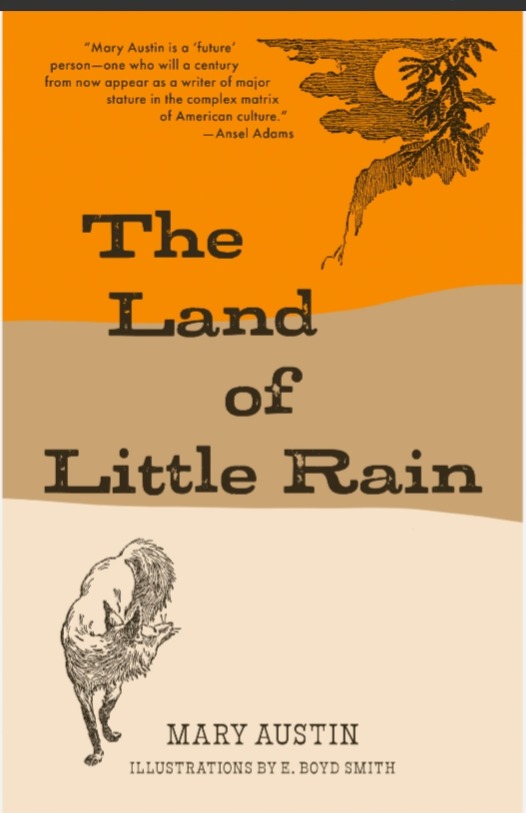
The Land of Little Rain by Mary Austin. First Published by Houghton, Mifflin and Company c1903. This edition Warbler Press Classics c2020.

No introduction I can give will beacon you in to read this book better than the authors words in her prelude:

“The real heart and core of the country are not to be come at in a month’s vacation. One must summer and winter with the land and wait its occasions. Pine woods that take two and three seasons to the ripening of cones, roots that lie by in the sand seven years awaiting a growing rain, firs that grow fifty years before flowering,–these do not scrape acquaintance. But if ever you come beyond the borders as far as the town that lies in a hill dimple at the foot of Kearsarge, never leave it until you have knocked at the door of the brown house under the willow-tree at the end of the village street, and there you shall have such news of the land, of its trails and what is astir in them, as one lover of it can give another.”

The desert region of which Mary Austin writes is the Owens Valley in California. It is surrounded by the Eastern Sierra Nevada and White Mountain Ranges. Death Valley and the Mojave Desert also make up the region. Her voice was one of the first to praise the beauty to be found in this desert, and to speak of the unusual animals and plants that manage to survive in such extreme aridity and heat. She includes stories about the human inhabitants, the Paiutes, Shoshones, Mexican and Chinese immigrants, miners, stagecoach drivers and others who eke out a precarious existence in this very dry land. Nobody else has described the desert who has had such a close and affectionate acquaintance with it. Her words are illuminating and poetic, old fashioned and painstakingly descriptive. You forget you are reading a work of non-fiction when you enter Mary Austin’s world.

The author’s words:

“The shape of a new mountain is roughly pyramidal, running out into long shark-finned ridges that interfere and merge into other thunder-splintered sierras. You get the saw-tooth effect from a distance, but the near-by granite bulk glitters with the terrible keen polish of old glacial ages. I say terrible; so it seems. When those glossy domes swim into the alpenglow, wet after rain, you perceive how long and imperturbable are the purposes of God.”

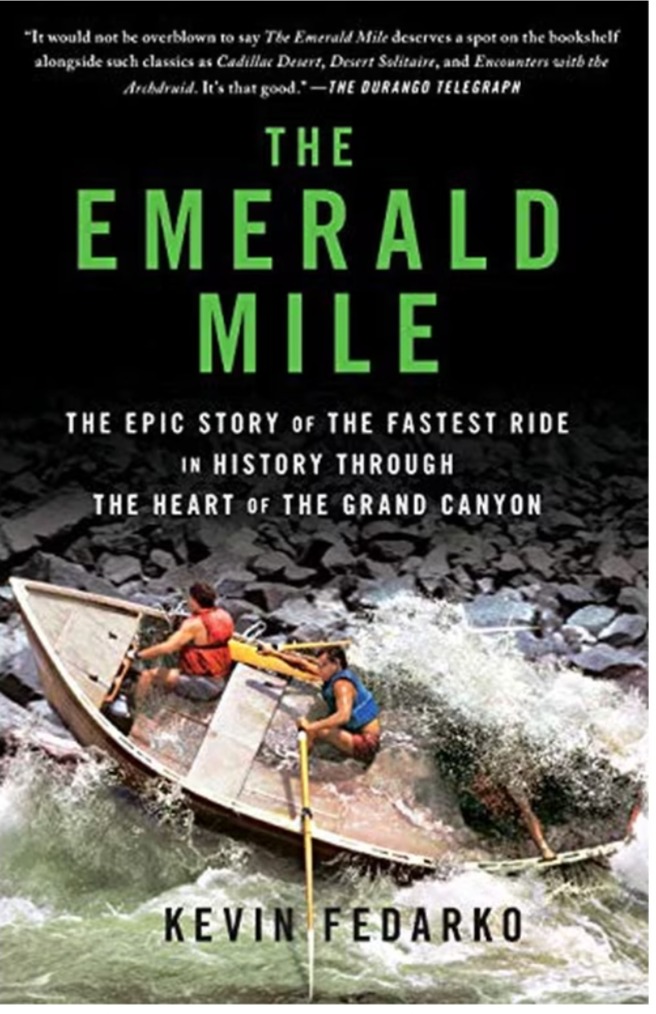
The Emerald Mile by Kevin Fedarko c2013 Scribner / Simon and Schuster : New York

Here comes the “occasionally very wet” part of today’s story. In 1983 a massive snowpack in the Rockies melted too quickly and floodwaters threatened to take out the Glen Canyon Dam and drown everything downstream with the entire contents of Lake Powell. Plywood flashboards atop the dam were holding on, for the moment.. While federal officials were busy figuring out what to do next, three Grand Canyon river guides launched their wooden dory The Emerald Mile into the wildest ride imaginable down the ferociously churning waters of the Colorado River. There are Youtube videos of that river in 1983 showing where beaches used to be, and wreckage of river running boats that didn’t get out of the way in time.

Kevin Fedarko tells this true story with all the facts and all the excitement in a well paced tale of adventure and natural forces out of control. All the people involved have their moments, and the reader is taken along on a very, very wild ride. It is history and legend combined for people who remember and for the grandkids who ought to know this story.

The Whistling Season by Ivan Doig c2006 Harcourt Books

As much as I usually don’t like the film versions of books I have loved, I can’t help saying that if anyone asked me, this would be THE book I would choose to make it to the big screen. Montana requires a big screen already. This is the story of a Marias Coulee, Montana homesteading family in 1909. The narrator Paul, his brothers Damon and Toby, and their father are living and housekeeping as best they can in the first year since their beloved wife and mother; Florence Milliron died. When the other students at their one-room school find out that Father has hired a housekeeper, name of Rose Llewellyn, to travel to Montana and take on the household chores, there is no end to the teasing and speculation about this new arrangement.

Ivan Doig creates characters so real and memorable you think you must have known them yourself. The main character Paul as an adult school superintendent is tasked with closing down the one-room schools in his territory. He looks back on his years in just such a school with fondness, humor, and a spot-on depiction of school age children in their training-up state. There are bullies and tattle-tale girls, fights, smart students, slow students, and a small girl who has to ride five miles to school with no companion but her horse. The Milliron household is about to change with the arrival of Rose Llewellyn and a few surprises. You do not need to be a fan of historical fiction to appreciate this book. Times change, but authors who can treat the human condition with understanding and clever storytelling never go out of style. This is one of Ivan Doig’s most loved novels. Join the fan club.

Poetry for Children : Begin Here!

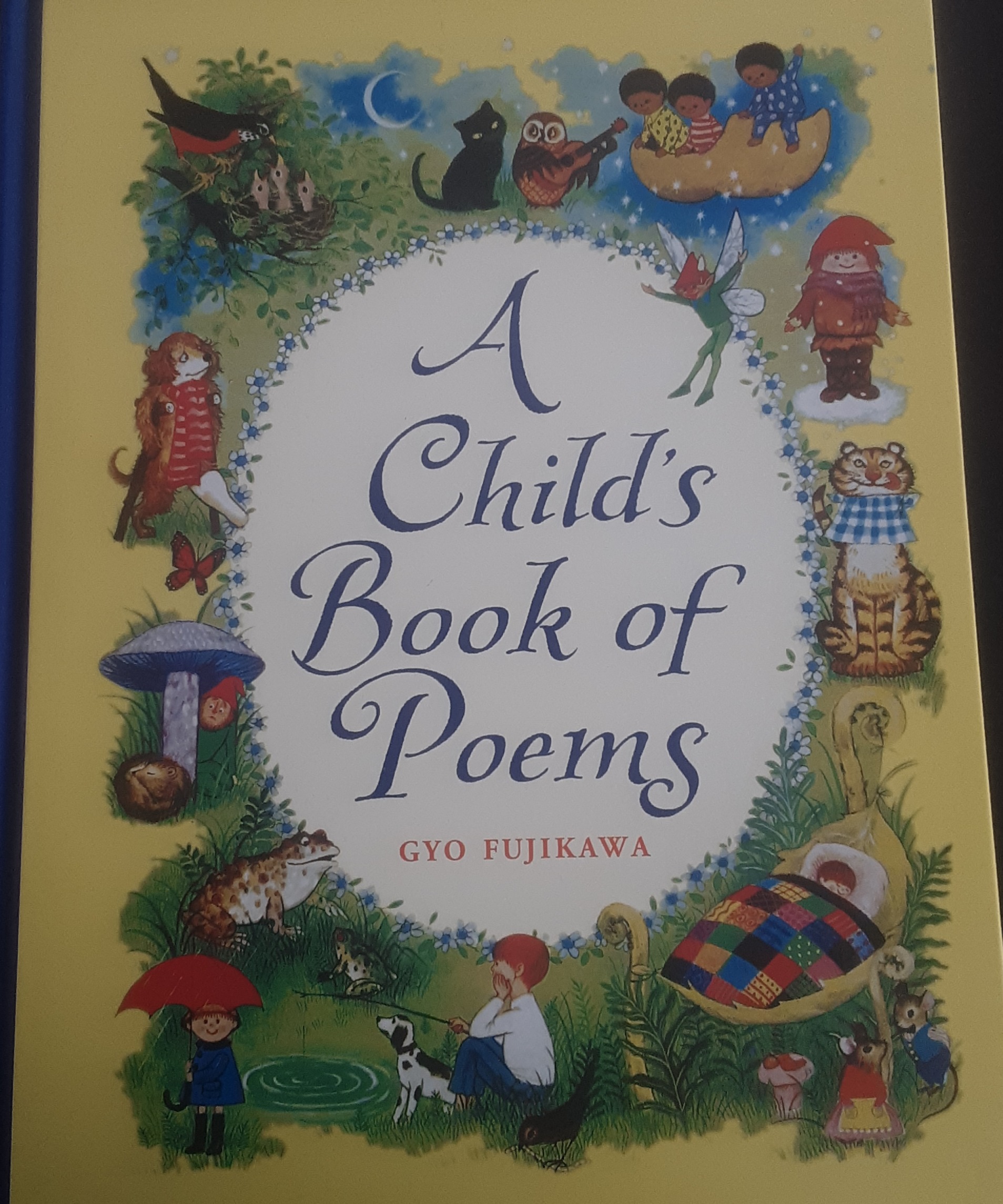
A Child’s Books of Poems Illustrated by Gyo Fujikawa Originally published by Grosset and Dunlap c1969 This edition c2007 by Ronald K. Fujikawa, Sterling Publishing Co. Inc.

This large format book of poems lovingly illustrated by Gyo Fujikawa is a perfect introduction to classic poetry for children. Young readers will meet Christina Rossetti, Ralph Waldo Emerson, William Blake, Robert Louis Stevenson, Emily Dickinson, Lewis Carrol, and many others. Each page of black and white illustrations is followed by a gorgeous double spread in full color. Poems are indexed by titles and first lines to help you find your favorites. I was very happy to see this collection back in print and it was offered at all my book fairs. It deserves a place in your family library. Other titles by Gyo Fujikawa are available from Sterling Publishing in reasonably priced hardcover editions.

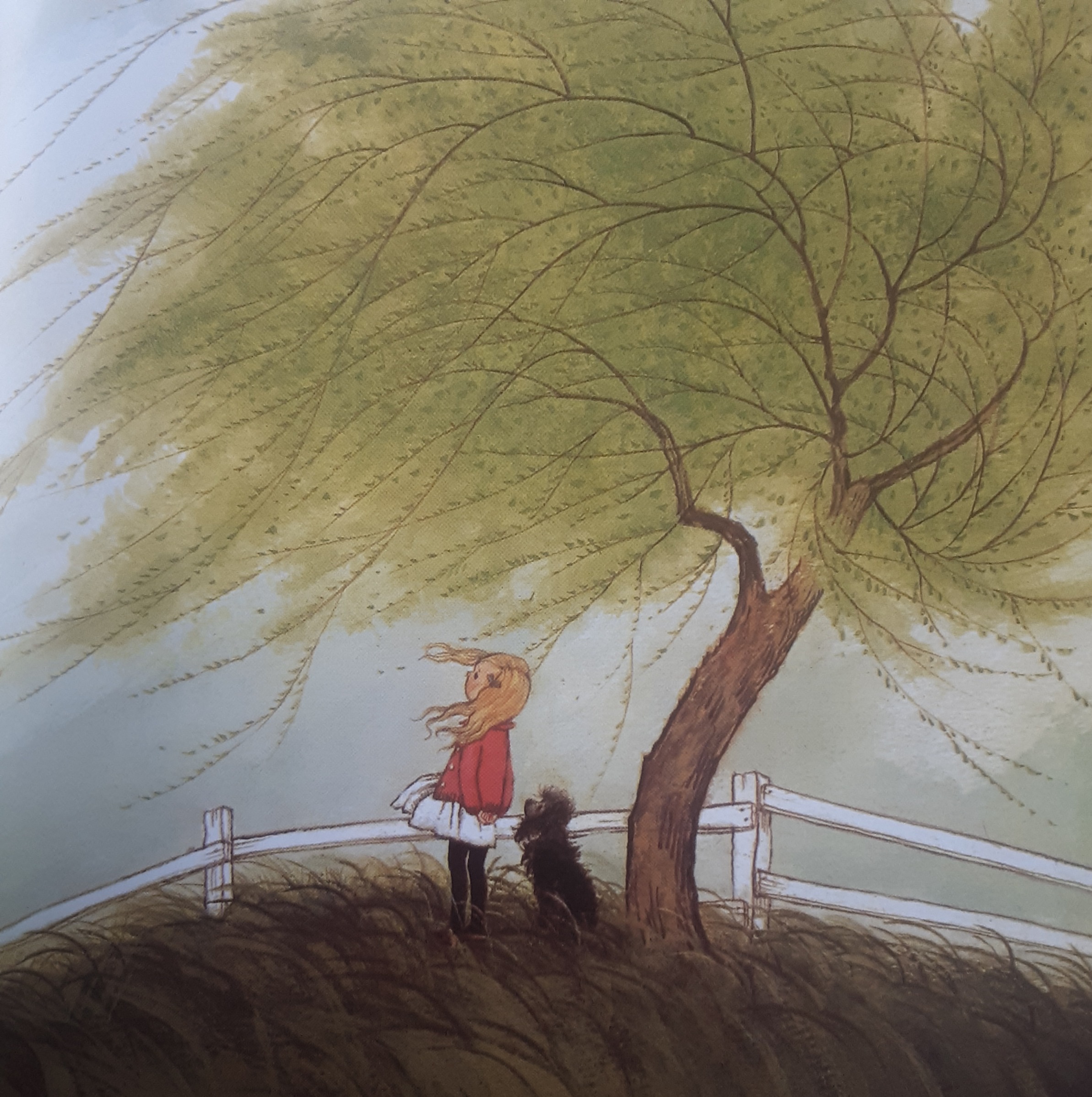
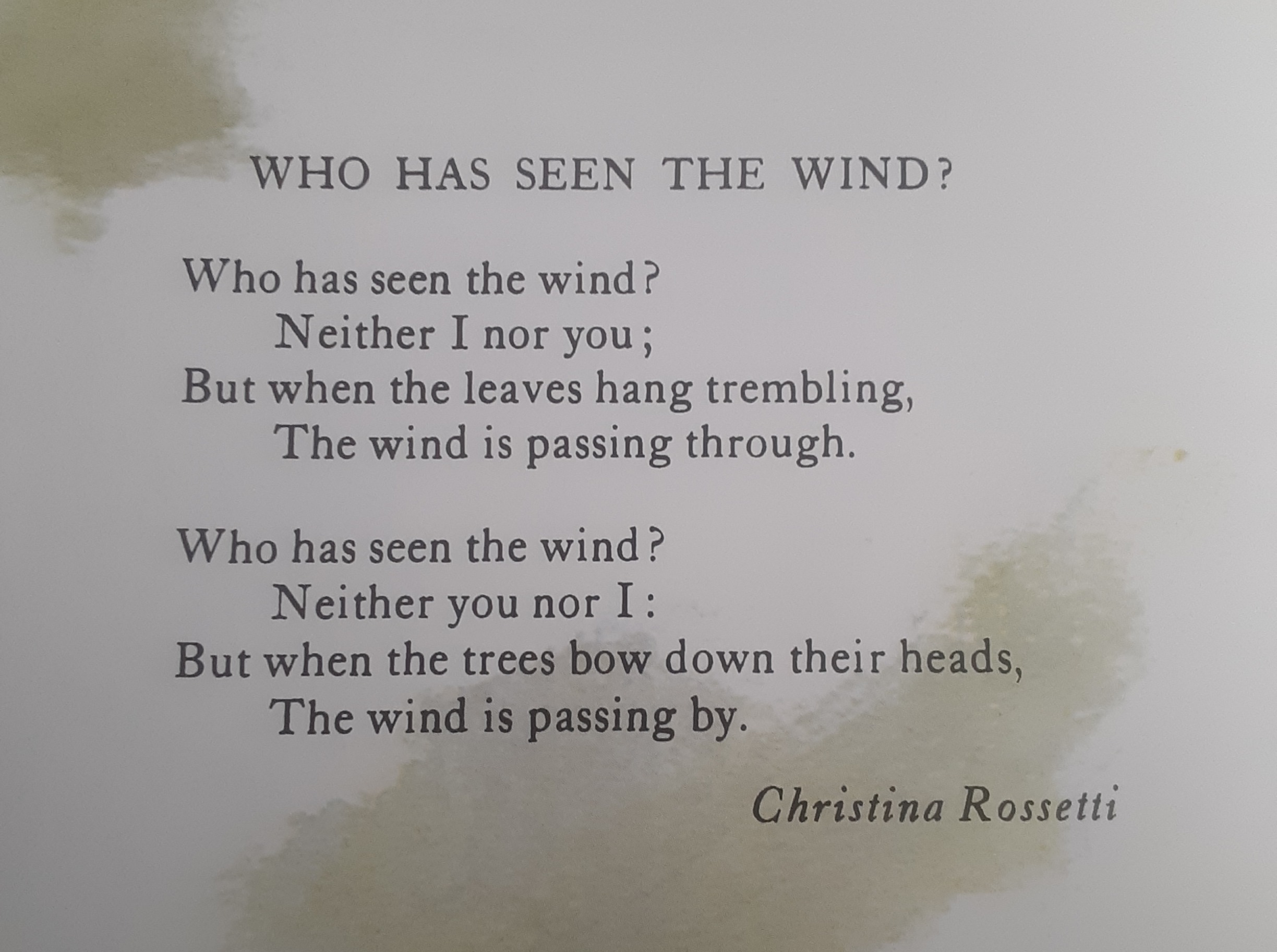
Who Has Seen the Wind by Christina Rossetti, illustrated by Gyo Fujikawa.

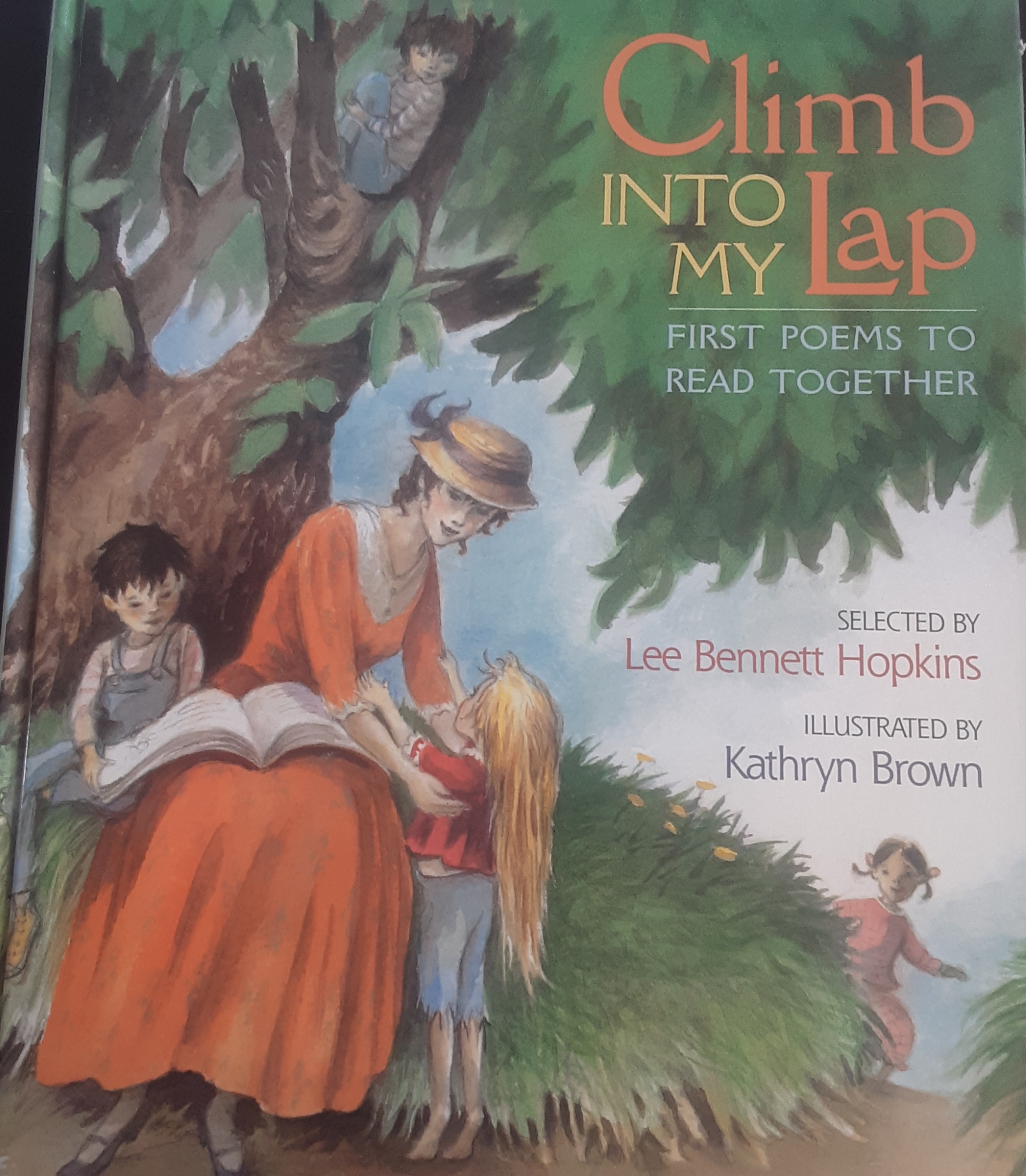
Climb Into My Lap: First Poems to Read Together Selected by Lee Bennett Hopkins and Illustrated by Kathryn Brown c1998 Published by Simon and Schuster Books for Young Readers : New York

Here is another tall book with 80 pages of poems by Mary Ann Hoberman, David McCord, Charlotte Zolotow, Nancy Willard, Lee Bennett Hopkins and others. Each page is colorfully illustrated and ready to be studied by the youngster on your lap. Lee Bennett Hopkins created many wonderful poetry anthologies for children and most of them should be available at your local library. Check one out soon.

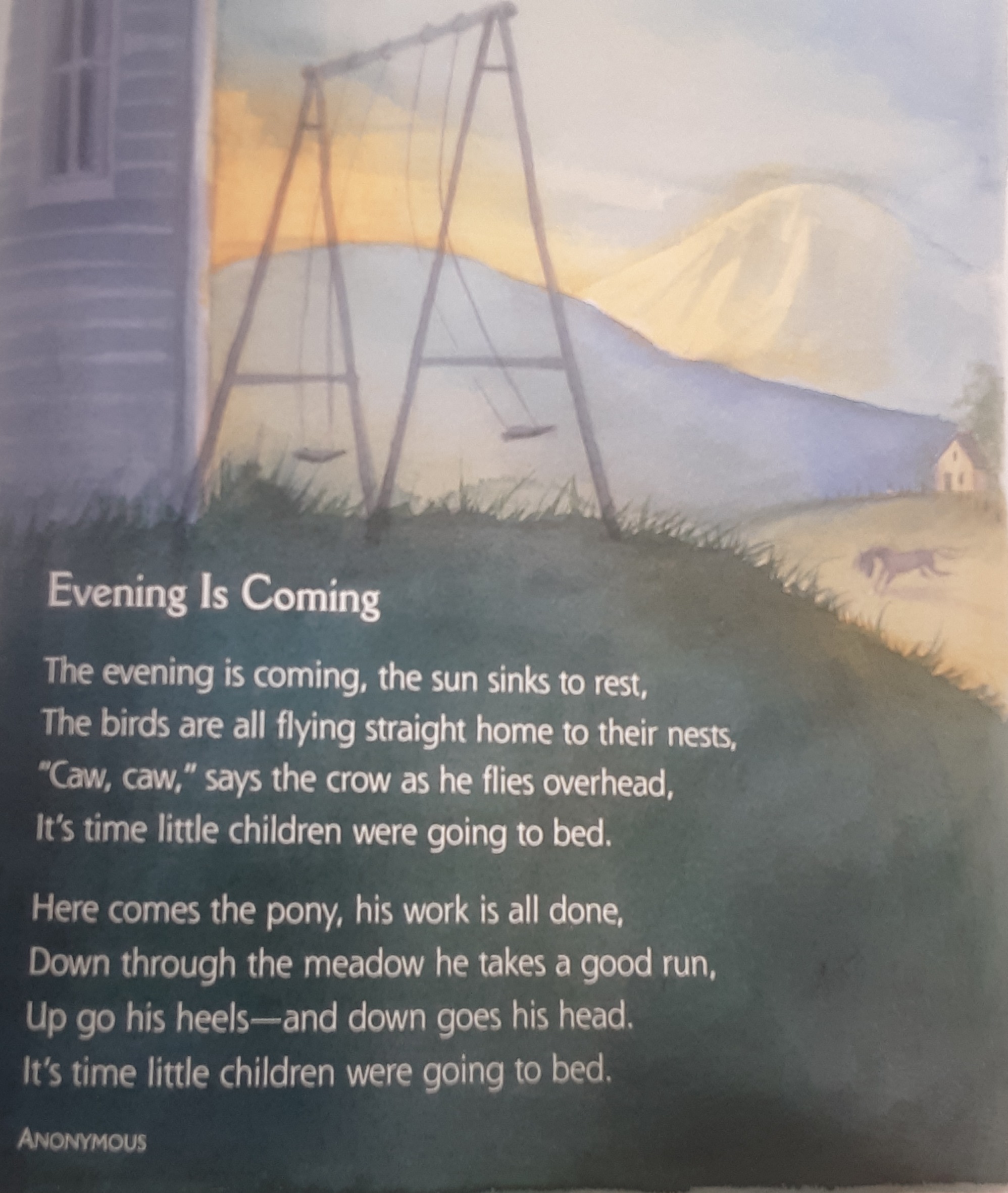
Page from Climb Into My Lap by Lee Bennet Hopkins. Illustration by Kathryn Brown

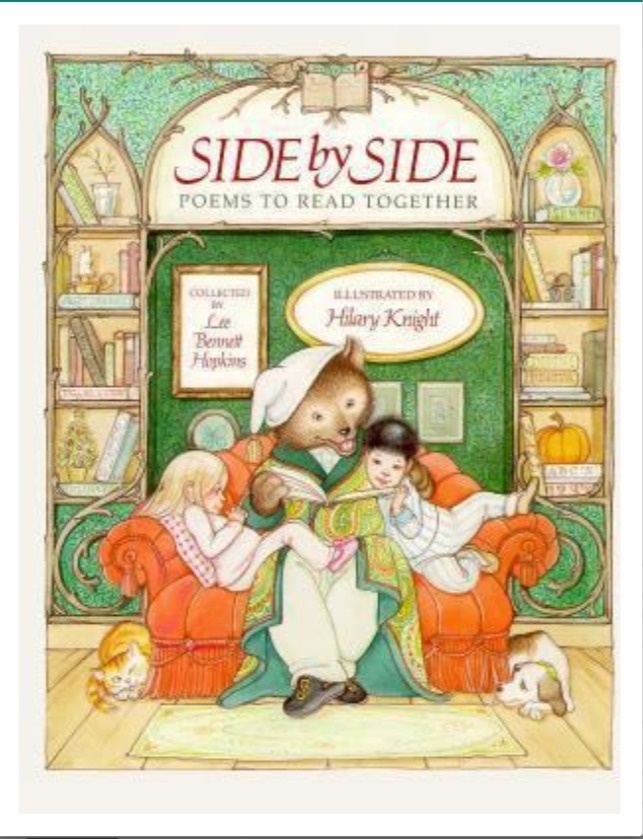
Side by Side : Poems to Read Together by Lee Bennett Hopkins with illustrations by Hilary Knight c1988 by Simon and Schuster Books for Young Readers.

Another great selection of poems from Lee Bennet Hopkins! You know Hilary Knight from his illustrations for Kay Thompson’s Eloise and the Mrs. Piggle-Wiggle books by Betty MacDonald.

In the High and Far-Off Times… The Elephant’s Child

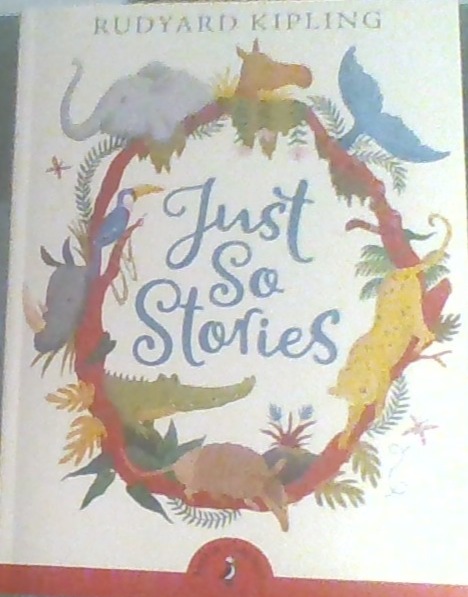
” The Elephant’s Child” from ” Just So Stories” by Rudyard Kipling originally published 1902. This edition Puffin Classics c2016

The Author’s Words:

“By and by, when that was finished, he came upon Kolokolo Bird sitting in the middle of a wait-a-bit thorn bush, and he said, ‘My father has spanked me, and my mother has spanked me; all my aunts and uncles have spanked me for my ‘satiable curiosity; and STILL I want to know what the Crocodile has for dinner!’

Then Kolokolo Bird said, with a mournful cry, ‘Go to the banks of the great grey-green, greasy Limpopo River, all set about with fever-trees, and find out.’ “

The Elephant’s Child had only a short, blackish, bulgy nose, and he left an untidy trail behind him of items he dropped because he had no way to pick things up. How he meets a crocodile and is given a new, much more useful appendage is a favorite Just So tale.

For richness of language, Kipling is your man. Has anyone enjoyed playing with words or reveled in the sounds of words more? “The Elephants Child” is fantastic fun to read aloud. Kipling’s words roll off the tongue, and adhere to the brain. I have had “The great grey-green, greasy Limpopo,etc.” phrase floating around in my mind since I first heard the words read aloud by my fifth-grade reading teacher. With a Kipling-enhanced brain, one can drift away to wonder what fever-trees look like and imagine the Bi-Coloured-Python-Rock-Snake and his scalesome, flailsome tail. There are picture book versions of this story, but perhaps something is lost if the listener is distracted from the charm and inventiveness of the language.

Reading the “Just So Stories” is reading for the ear. The listeners you share them with are introduced to poetry, exotic words and locations, and of course, all the fabulous origin stories. Try “The Sing-Song of Old Man Kangaroo” and “The Cat Who Walked by Himself”… “The wildest of all the wild animals was the Cat. He walked by himself, and all places were alike to him.”