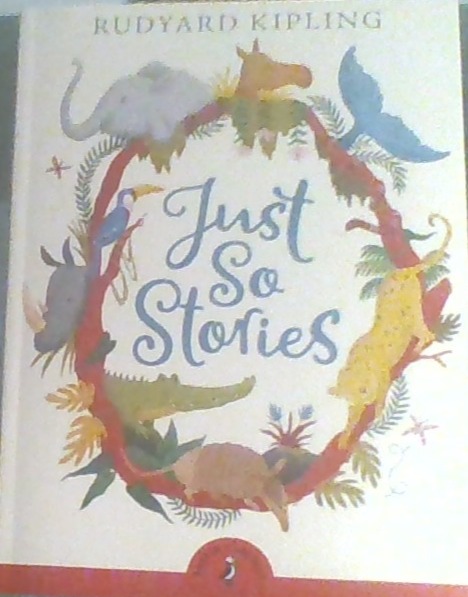
In the High and Far-Off Times… The Elephant’s Child

” The Elephant’s Child” from ” Just So Stories” by Rudyard Kipling originally published 1902. This edition Puffin Classics c2016

The Author’s Words:

“By and by, when that was finished, he came upon Kolokolo Bird sitting in the middle of a wait-a-bit thorn bush, and he said, ‘My father has spanked me, and my mother has spanked me; all my aunts and uncles have spanked me for my ‘satiable curiosity; and STILL I want to know what the Crocodile has for dinner!’

Then Kolokolo Bird said, with a mournful cry, ‘Go to the banks of the great grey-green, greasy Limpopo River, all set about with fever-trees, and find out.’ “

The Elephant’s Child had only a short, blackish, bulgy nose, and he left an untidy trail behind him of items he dropped because he had no way to pick things up. How he meets a crocodile and is given a new, much more useful appendage is a favorite Just So tale.

For richness of language, Kipling is your man. Has anyone enjoyed playing with words or reveled in the sounds of words more? “The Elephants Child” is fantastic fun to read aloud. Kipling’s words roll off the tongue, and adhere to the brain. I have had “The great grey-green, greasy Limpopo,etc.” phrase floating around in my mind since I first heard the words read aloud by my fifth-grade reading teacher. With a Kipling-enhanced brain, one can drift away to wonder what fever-trees look like and imagine the Bi-Coloured-Python-Rock-Snake and his scalesome, flailsome tail. There are picture book versions of this story, but perhaps something is lost if the listener is distracted from the charm and inventiveness of the language.

Reading the “Just So Stories” is reading for the ear. The listeners you share them with are introduced to poetry, exotic words and locations, and of course, all the fabulous origin stories. Try “The Sing-Song of Old Man Kangaroo” and “The Cat Who Walked by Himself”… “The wildest of all the wild animals was the Cat. He walked by himself, and all places were alike to him.”
Hans Christian Andersen–The Essential Dane

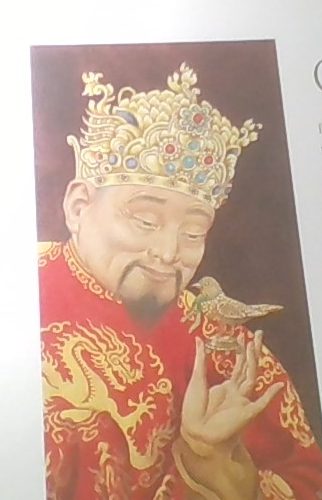
Illustration from The Nightingale by Hans Christian Andersen, retold by Stephen Mitchell and Illustrated by Bagram Ibatoulline Published by Candlewick Press c2002

Can we see ourselves with eyes glued to our cell phones just as this Emperor is gazing fondly at his mechanical nightingale? Anybody warning us about being overly beguiled by things artificial today?

Andersen’s tales still have a place in our world, and young readers have many options for encountering them. There seems to be always a new collection of his fairy tales in the works and there are also the ballets, plays, and films inspired by them. I remember adoring Liza Minnelli as the true princess in Faerie Tale Theatre’s TV production of The Princess and the Pea. Good one to share with the grandchildren some evening…

I sold an inexpensive hardcover edition of” The Emperor’s New Clothes”, illustrated by Virginia Lee Burton at book fairs. You know Virginia Lee Burton from” Mike Mulligan and his Steam Shovel”, and” The Little House”. There is probably an edition of “The Little Mermaid” for every taste and budget. My favorite collection is “Seven Tales by H.C Andersen” translated from the Danish by Eva Le Gallienne with pictures by Maurice Sendak. published in 1959. I have the 1991edition by Harper Trophy.

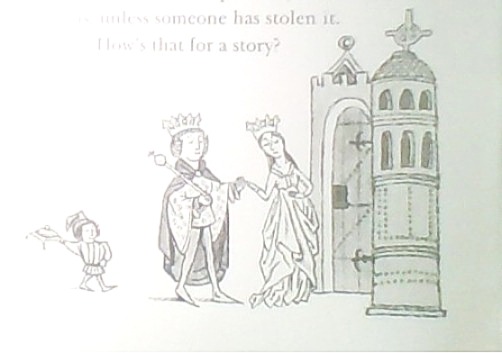
Illustration from “The Princess and the Pea” by Maurice Sendak from “Seven Tales by H.C. Andersen”

“The Ugly Duckling” was an important story to me as a child. I played that part in a school play, think the teacher sensed I needed to have the hope of a swan transformation in my future. Hans Christian Andersen’s tales are good companions. He put life in inanimate objects, and gave those lives meaning. A collection of his stories IS a home library essential.

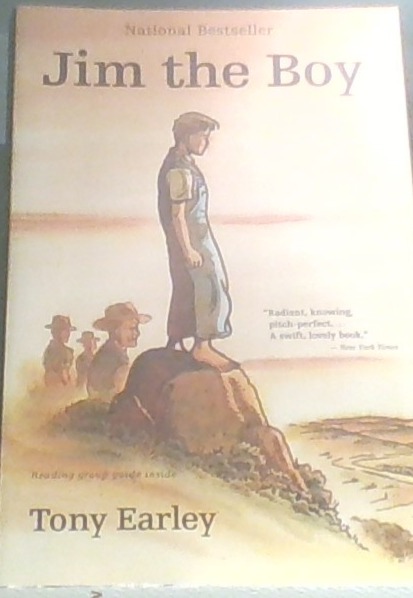
On the Way to Growing Up: Jim The Boy by Tony Earley

Jim the Boy by Tony Earley c2000 Little, Brown and Company

The author’s words:

“Oh Jimmy,” she said. “How in the world did you get to be ten years old?”

“I don’t know, Mama,” Jim said, which was the truth. He was as amazed by the fact as much as she was. He had been alive for ten years; his father, who had also been named Jim Glass, had been dead for ten years and a week. It was a lot to think about before breakfast.

Mama put the biscuits she pulled from the oven into a straw basket. Jim carried the basket into the dining room. The uncles sat around the long table.

“Who’s that?” Uncle Coran said.

“I don’t know,” said Uncle Al.

“He sure is funny-looking, whoever he is,” said Uncle Zeno.

“Y’all know who I am,” said Jim.

“Can’t say that we do,” said Uncle Coran.

“I’m Jim.”

“Howdy,” said Uncle Al.

. “Y’all stop it,” Jim said.

Jim is being raised by his widowed mother with the help of Jim’s three bachelor uncles, who all live in the houses they have built nearby. The time is The Great Depression and the place is a small farming town called Aliceville, North Carolina. The story covers Jim’s tenth year, beginning with an account of Jim’s birthday, with some ups and downs. Jim attends the new consolidated school, where the first electric lights are soon to be connected. A baseball game between the “town” boys and the “mountain” boys brings an unexpected friendship. Jim begins to learn about the wider world on some excursions out of town with Uncles. There is a sobering event that brings the hard times of the Depression home, and some racial tension when Jim, a friend, and the black field hand Abraham are confronted by a gang of toughs. In each case, an adult is present to protect and guide. You will leave this book feeling that the world is inhabited by decent people, and wanting to work harder at being one yourself. Can’t ask more of any book. It is accomplished naturally, almost magically, by a very gifted writer.

There is so much to think about and appreciate in Tony Earley’s depiction of the concerns and feelings of a young boy beginning to leave childhood behind. The writing is plain and simply elegant.. The characters are authentic and will live with you long after you close the book. I would place it in the top tier of books for young adult readers, and their parents. There is some great modeling of how to help a child through those times when the consequences of their actions are painful. The tone of this book is not dour, but hopeful and full of humor. This book got great acclaim and praise from The New York Times Book Review, The Denver Post, Christian Science Monitor, The Boston Globe, Los Angeles Times Book Review, and many others at its publication. It is too good to be lost in the avalanche of titles published each year. If you know someone who wants to write, make sure they get their hands on this book.